BNET Briefing

Why Do CEOs (Still) Love Ayn Rand?

Tags: Ingersoll-Rand, Alan Greenspan, Objectivist, Kent, Entrepreneurship, Internet, Sales Strategy, Management, Sales, Ayn Rand, Capitalism, Atlas Shrugged, The Fountainhead, Objectivism, BNET Briefing, Kim Girard

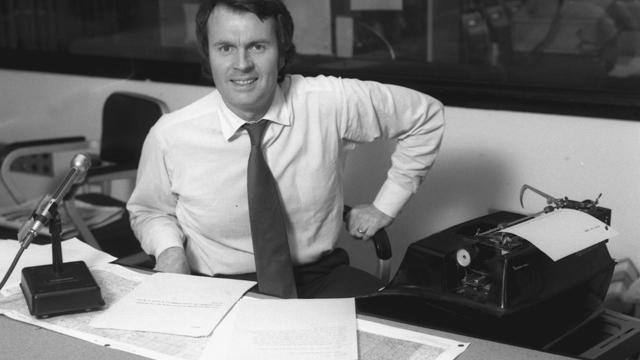
How did a Russian-born novelist become such an influential “thought leader” for American CEOs, entrepreneurs, and MBAs — and even Alan Greenspan? Consider the message behind Ayn Rand best sellers The Fountainhead and Atlas Shrugged, which speaks to anyone with ambition and a big ego: The gifted should do what’s in their self-interest. If you have a sharp mind, it is your moral responsibility to make yourself happy. The weak are not your problem. “I am for an absolute laissez-faire, free, unregulated economy,” Rand told CBS interviewer Mike Wallace in 1959. “If you separate the government from economics, if you do not regulate production and trade, you will have peaceful cooperation, harmony, and justice among men.”

Rand’s critics claim that the current financial crisis proves her theories unrealistic and selfish. “Her economic ideas were never really relevant or workable,” says Rick Wilson, a sociology instructor at Marshall University in Huntington, W.Va., which offers a class on Rand’s writings. “The time we’re living through is just another example of that.” And yet 51 years after Atlas Shrugged was published, Rand’s writing still wields considerable influence in business.

Key Stats

  • Name: Ayn (pronounced “eye-n”) Rand
  • Birthplace: St. Petersburg, Russia, in 1905. Died in 1982.
  • Who she is: Mother of Objectivism, a philosophy that claims:
  • 1) Reality is an objective absolute. Facts trump man's feelings, wishes, hopes, and fears.
  • 2) Reason is the only way to perceive reality and the sole knowledge source. It is man's only guide to action and means to survival.
  • 3) Every man exists for his own sake. Pursuit of his own rational self-interest and his own happiness is his life's moral purpose.
  • 4) The ideal political-economic system is laissez-faire capitalism.
  • Best known for: Two best-selling novels, The Fountainhead and Atlas Shrugged
  • Most famous follower: Alan Greenspan
  • download
  • Print
  • Recommend
  • 9

Rand’s Philosophy

Rand’s Objectivist philosophy — which calls for facts over feelings, reason over mysticism, individual over state, and selfishness before altruism — wouldn’t have reached the masses if not for her books. Her first best seller, The Fountainhead, weaved those Objectivist beliefs into the speeches of the book’s hero, architect Howard Roark. Roark, who faces trial for dynamiting a building that he designed after his architectural plans were changed behind his back, tells the jury that he lives on his own terms, with no obligation to men except “to respect their freedom and to take no part in a slave society.”

Drafts of Atlas Shrugged were read by the young Alan Greenspan, who belonged to Rand’s exclusive “Collective,” a group that evangelized Rand’s writings and, in Greenspan’s case, politicized them. Greenspan managed the economic boom of the 1990s on the strength of these ideas, fighting regulatory controls that threatened the free market. But with the Internet bust and corporate scandals that followed, even Greenspan relented as economists scratched their heads over what went wrong. “An infectious greed seemed to grip much of our business community,” Greenspan told The New York Times in 2002. But didn’t Objectivists believe greed is good?

Rand wasn’t the first to argue that government control destroys the entrepreneurial spirit. But it was Rand who went a step further to claim that men are morally obligated to fight for these freedoms.

How She Built a Following

Critics initially slammed Rand’s novels. “Remarkably silly,” “bumptious,” and “preposterous,” the National Review wrote of Atlas Shrugged. But they became best sellers anyway. Readers loved the tart-tongued Rand, with her severe bob and her dollar-sign broaches, not only for her subversive message but for her rebel persona. Business students found Rand through word of mouth, passing around dog-eared copies of Atlas, with its 1,075 pages of plot twists and turns that portray CEOs as heroes instead of villains.

Hugh Hefner and Supreme Court Judge Clarence Thomas found Rand fascinating. Dallas Mavericks owner Mark Cuban and Whole Foods CEO John Mackey both cite Rand’s books as influential, though Mackey has said he doesn’t believe businesses exist solely to make a profit and selfishness is a virtue. In Silicon Valley, Rand’s ideas appeal to generations of entrepreneurs who built the computer industry and the Internet. T.J. Rodgers, CEO of Cypress Semiconductor, is a notorious Rand fan; Patrick W. Grady named his company Rearden Commerce after the steel magnate Hank Rearden from Atlas.

John Allison, the former CEO of banking giant BB&T, has called Atlasthe best defense of capitalism ever written.” Ironically, the bank has taken $3 billion in the recent government bailout. Still, BB&T’s charitable arm donated several million dollars to start classes devoted to Rand’s philosophy on university campuses. At Marshall University’s Lewis College of Business, which received a $1 million BB&T grant, Cal Kent teaches a course that studies Atlas alongside Adam Smith’s The Wealth of Nations. Kent says the class uses Rand to compare and contrast economic theories from around the world.

Why She Still Has Fans

In the past year, Rand’s brand of unbridled capitalism has taken a beating. Greenspan, likely Rand’s most famous follower, admitted in October 2008 to a “flaw” in free-market ideology, and Objectivists have since distanced themselves from him. “The bulk of the blame for this crisis should be on the Federal Reserve,” says Yaron Brook, president of the Ayn Rand Institute.

Still, sales of Atlas are stronger than ever. Following media coverage last year of the 50th anniversary of the book’s publication, sales rocketed to 185,000 copies, an all-time high.

Many executives are taking refuge in Rand’s heroes today — just as some did in the wake of the Enron scandal, when suddenly all CEOs were painted as villains by an angry public. Her books offer reassurance that self-interest makes the most sense both economically and morally. Entrepreneur Joshua Zader named his two companies after Rand’s work: Atlas Web Development and Atlasphere, an online meeting and dating site for Objectivists, which is currently connecting nearly 10,000 admirers of her philosophy. Anne Omrod, CEO of Chicago-based John Galt Solutions, read Atlas in 1997 and named her company for the novel’s hero. Omrod says C-level execs, now more than ever, approach her at conferences to chat about the company name and Rand. She estimates that a third of her staff of software implementers have read the book and swears she can tell when they have: They perform better. “We don’t make it a requirement to read it,” she says. “You can definitely tell the folks who are reading it. They change their mentality to do good work.”

Another reason Rand is as popular as ever: She was right, argue her followers. They say that much of what she railed against — incompetent CEOs, federal bailouts, bloated government— has become our economic reality today. But was Rand right about the solution? If so, it would take nothing short of a John Galt-inspired strike of the entrepreneurs and the dog-eat-dog capitalists to save this economy.

Photo courtesy of the Ayn Rand Institute.

 
Reply to Story

BNET TalkbackShare your ideas and expertise on this topic

Subscribe to this discussion via Email or RSS

  •  
    1

    pgaluszka

    02/26/09 | Report as spam

    RE: Why Do CEOs (Still) Love Ayn Rand?

    Besides advocating total selfishness as being
    in the best interests of everyone (including
    yourself), Rand had some very interesting
    political views.

    Her Leningrad experiences made her very anti-
    Communist and her Hollywood days made her loath
    what she determined a pro-Communist view among
    producers, writers and actors.

    She testified before the House Un-American
    Activities Committee in its red-baiting days of
    the late 1940s. After her testimony a tough
    news reporter stopped her and demanded:

    "Miss Rand, do you have any regrets about yours
    testimony?"

    Her reply: "They didn't give me enough time."


  •  
    2

    h2oclk

    02/26/09 | Report as spam

    RE: Why Do CEOs (Still) Love Ayn Rand?

    It appears Kim Gerard has not actually read Rand's
    novels, and is not really that familiar with the
    concepts. Greenspan strayed from Objectivism while in
    his job at the Fed. His policies for the most part were
    contrary to Objectivist principles, although I believe he
    still felt strongly about minimizing government
    regulatory interference.

    Gerard's comment on Rand's testimony is quite
    deceitful as presented. Rand was asked to, and solely
    testified about, life under Communism in the USSR -
    where she grew up. She had, and would have nothing
    to do with the witch hunt that ensued.

  •  
    3

    h2oclk

    02/26/09 | Report as spam

    RE: Why Do CEOs (Still) Love Ayn Rand?

    It appears Kim Gerard has not actually read Rand's
    novels, and is not really that familiar with the
    concepts. Greenspan strayed from Objectivism while in
    his job at the Fed. His policies for the most part were
    contrary to Objectivist principles, although I believe he
    still felt strongly about minimizing government
    regulatory interference.

    Gerard's comment on Rand's testimony is quite
    deceitful as presented. Rand was asked to, and solely
    testified about, life under Communism in the USSR -
    where she grew up. She had, and would have nothing
    to do with the witch hunt that ensued.

  •  
    4

    MarioSmario

    02/26/09 | Report as spam

    RE: Why Do CEOs (Still) Love Ayn Rand?

    Notice how the only people who denounce Rand as "silly" and who claim that capitalism no longer works (as if socialism does???) are those who work within the insulated confines of humanities departments in universities across the globe. Rick Wilson, the sociology instructor, most likely still insists that Europe's welfare system is successful and that Fidel's Cuba is a model for the world! They have no understanding of how the real world works, and they live in their college bubble of self-congratulatory narcisism--but little of it can apply to the real world.

  •  
    5

    drylemming@...

    02/26/09 | Report as spam

    She would have hated week greed

    To those who have read _Atlas Shrugged_, we remember it is not a story of unbridled greed and egoism. The four super heroes, Galt, D'Anconia, (the Icelandic pirate/philosopher I can't pronounce), and Atkinson each had opportunities for getting-"rich" quick. The richness wasn't about accumulating dollars at all costs. They struck for a stable order where excellence and productivity was enshrined. They would have despised vultures who devoured the source of future profits, IMO.

  •  
    6

    mrcogito

    02/26/09 | Report as spam

    RE: Why Do CEOs (Still) Love Ayn Rand?

    I only read the first sentence and was confounded. I will read the entire article after this email. Using the word "faith" when speaking about objectivism and its adherents is not the right word. There is no "faith in objectivism." You either understand it and follow it when possible, or you don't. Try the word "confidence" instead of "faith" just to be accurate. One would have to digest Ayn's non-fiction books on objectisim to fully understand what it is and be able to articulate it's real challenges and shortcomings in realization in a world of mixed philosophies. Reading Atlas and Fountainhead are a nice teasers for objectivism, which the casual reader might think "faith" viable description of why some people place value on objectivism. But you can't know and properly opine on objectivisim from Atlas and the Fountainhead alone. Now back to the article...

  •  
    7

    SelmaLovelace

    02/26/09 | Report as spam

    RE: Why Do CEOs (Still) Love Ayn Rand?

    Rand stood for common decency and old-fashioned work ethic where one reeped the benefits of his "harvest." Should would be disgusted with the corporate moochers of today, no different from the dehumanized welfare and subsidized classes. They are all parasites barely surviving under a system that has no concept of the long term, where work productivity, ingenuity and creativity is punished with championing for affirmative action and need over merit. We are only beginning to suffer the consequences of such "warm and fuzzy" PC short-sightedness. Rand's warnings, in fact, have come true, much in the same way Orwell's warnings about socialism have proved true--time and time again.

  •  
    8

    inquiries@...

    02/26/09 | Report as spam

    RE: Why Do CEOs (Still) Love Ayn Rand?

    CEOs don't ram their products and services down consumer's throats. CEOs don't pass laws that turn people into criminals if they chose not to buy their products or services. You have no idea what objectivism is really about, do you?

  •  
    9

    unclejim

    02/26/09 | Report as spam

    CEO

    They love her because she spoke about how Capitalism is a naturally occurring social relationship between moral people; i.e., people who act properly when socially engaged. A rational functioning CEO is just such a person.

  •  
    10

    adel-junk

    02/26/09 | Report as spam

    RE: Why Do CEOs (Still) Love Ayn Rand?

    1. Today's theories prove Ayn Rand was correct.

    The above article cites the following incorrect statement: "Rand?s critics claim that the current financial crisis proves her theories unrealistic and selfish. ?Her economic ideas were never really relevant or workable,? says Rick Wilson, a sociology instructor at Marshall University in Huntington,"

    In fact, it is due to "regulation" in the first place we are in THIS mess. Let me explain.

    If you have pure water [laissez-faire] but mix it with some poison [regulation] then over time you will poison the person/system.

    Now for depth:

    1. Every human being is sovereign in the United States. Each person a king of their own life. Unlike other nations, in the US, government does not "rule over us" but instead is there to enforce the "rule of law".

    2. If every human is sovereign then what is the purpose of the State? The purpose is to protect each individual from the use of "force or fraud" from other human beings, through the arms of government such as the military, the police and the entire legal court system.

    In summary: the primary job of government is to protect the individual's right. The primary rights to be protected as the INalienable right to "life, , liberty and the pursuit of happiness".

    2. What does the above mean?

    Each person has a right to sustain their life. They do not have to have "permission", but it is an inalienable right.

    Each sovereign person has the right to exercise liberty: acts such as "thinking" and "doing". Indeed they must "think and do" in order to both sustain their life [e.g. productivity, smart and hard work] and also the pursue and experience the next right.

    Each person has a right to pursue and experience happiness in every time frame [immediate and longer term].

    Happiness does not last as the human agent is subject to the law of diminishing returns by virtue of their nervous system that adapts. The human agent "wants more" and this is great because it gets the human agent to "act" in order to acquire more. Therefore humanity - unlike other animals - have experienced massive and unprecedented growth , such as with technology, medicines, knowledge and so forth.

    4. The US was indeed largely laissez-faire until 1913 when government started to intermingle in the economic activities between free men. Within 15 years, the great depression had set in! Similar "any regulation" is poison, which over time will cripple the system. Regulation is wrong because it means that government becomes "big brother" and uses law [force] to regulate sovereign men. The job of government is to and must be to protect sovereign man froo the use of force or fraud of other men or corporations.

    5. In laissez-faire, every man is 100% self responsible for everything, such as their investments.

    The closest arena to see laissez-faire in my OPINION is the internet, such as eBay or Google portals. Each consumer is self responsible for their purchases. However PRIVATE [not government] agencies [businesses wishing to make a profit] are set up like PAYPAL, epinion, ebay, Amazon [the latter two with "ratings" of sellers by other buyers] so that as far as possible each buyer is protected.

    Still nothing is guaranteed ultimately NOR is anything guaranteed by government regulation - because crime and fraud continues. The point is that in the laissez-faire private system, every man is self responsible at all times for their decisions and institutions get set up to help private man [e.g. insurance]; whereas that occurs to a degree with government regulation, nevertheless it is INJUST for big brother is using force [law] to regulate the affairs of private man, resulting in negative consequences like the PRESENT economy. This further perpetuates when government BAILS out companies [injustice].

    But government does not "make money, create wealth". So where does government get the money from to enforce "bail outs" ? Guess what? FROM YOU. Ultimately there is no two-ways about it: YOU YOU YOU YOU must PAY PAY PAY for INEFFICIENT companies AND ALL THEIR WORKERS out of YOUR hard earnt money and paycheck. That is not fair: taking money from you BY FORCE and then RE-DISTRIBUTING IT TO THOSE WHO DO NOT DESERVE "YOUR" money!

    You NEED your own money to survive and thrive for yourself, your business [expansion and risk] and your family - don't you?

    Therefore laissez-faire is the ONLY fair, just, moral system; where every individual, a sovereign citizen is self-responsible at all times. Every person is free to contract with aonther [seller-buyer; employer-employee] but no use of force is allowed else there is legal repercussion in court. Further PRIVATE institutions get set up "therefore" to monitor fair and unfair sellers and employers. And those who are the "best, better" get to gain the best employees, and therefore produce the best products and services - and therefore make a bigger profit. All very fair.

    6. In the above article the word "selfishness" is used INcorrectly , using the incorrect LAY MAN'S definition.

    In the dictionary: "selfishness" is clearly defined to mean a person seeking their "rational" [not irrational] self interest to the exclusion of others.

    In other words, it is perfectly fair, correct and normal for all human beings at all times [whether or not they admit it] to seek their SELF INTEREST. The question is whether they are seeking their RATIONAL self interest or they are being IRRATIONAL.

    If they are being IRRATIONAL [e.g. Enron execs] then it is NOT "selfishness" because that does not "fit" with the definition. Instead it is simple "IRRATIONAL self-interest".

    Whereas if someone is being "rational" then they are being "right, moral, just" and therefore being "selfish" - a good thing.

    All humans, all species [plants and all animals] at all times seek their "self interest". Humans have "free will" and therefore have the ability to be "rational" should they so choose [they always have the "choice"]. Not all humans exercise such a choice [for humans innately are bounded rational unless they use logic and reason which takes effort and cogitation].

    Summary: to seek your inalienable right to life, liberty and the pursuit of happiness; you must be selfish. You can only be selfish IF you are rational. You are rational IF your selfish actions product results OVER THE LONGER RANGE. This means that to be rational you must exercise virtues [acts] such as: honesty, productivity, rationality, independent use of mind [not parroting others but processing all relevant information using logic and reason] , justice and so forth.

    It is therefore hard to be selfish for to be rational , you must exercise above virtues - which takes time and effort - at all times in all things.

    Ayn Rand was therefore brilliant.

    Adel

  •  
    11

    jdproctor

    02/26/09 | Report as spam

    RE: Why Do CEOs (Still) Love Ayn Rand?

    What we are experiencing now is not a failure of Randian ideas. Her ideas have never been tried.

  •  
    12

    chrisholm

    02/26/09 | Report as spam

    RE: Why Do CEOs (Still) Love Ayn Rand?

    The world is divided into the productive and the unproductive. I worked at GoodWill some years ago and what I found were people with profound learning disabilities that wanted desperately to be productive. It is amazing how many people to day do not have a clue or an interest in being productive. I hope the economic Tsunami that is coming will help us all clarify that thought and turn to each other rather than the government. Other wise "Who is John Galt"? will become too real

  •  
    13

    jwspooner

    02/26/09 | Report as spam

    RE: Why Do CEOs (Still) Love Ayn Rand?

    You are all wrong.

    My experience with CEOs and corporations is they are
    cowards when it comes to fighting government's
    encroachment. They did not get where they are by
    being contrarians or brave leaders; they got along and
    moved up the ladder.

    John Galt of Atlas Shrugged WAS a hero. He had the
    bxxls that CEOs clearly lack. Galt is their fantasy of
    what they are not!!

  •  
    14

    IMWeira

    02/26/09 | Report as spam

    RE: Why Do CEOs (Still) Love Ayn Rand?

    I read Rand back in college in the early 60's. I thought she almost had it right. The problem is that one person may choose to think with their head and thereby improve the lives of all within their sphere (not just themselves), but it is all but impossible to get enough people doing it to create a bigger, better society. Which is what her heroes did, first locally and then globally. Or so I thought when I was a slip of a lass. Now it just sounds like an apology for foolishness.

  •  
    15

    cyberpundit

    02/26/09 | Report as spam

    RE: Why Do CEOs (Still) Love Ayn Rand?

    One takes what one wants from stuff that one reads. Rand's heroes, notably in Fountainhead and Atlas Shrugged, were conveniently alone. Howard Roark had no one to be accountable for. This gave him some freedom of choice in his career and social life. I still love the manner in which he approached his life and convictions, but one has to temper it with one's own realities.

    CEOs respond to it because at a fundamental level Rand showed that the individual can be driven by an unwavering belief in their morality, even if "most people" in the world (what they call "conventional wisdom", I suppose) would choose to do something more convenient.

    I dare say that many CEOs who claim to love Rand hardly have the gall to walk the talk, but those who do are usually astonishingly successful. To be honest, a true leader's role is often a solitary one and Rand's thoughts help a lot because one feels the way her protagonists might have.

    I do not espouse Rand's "philosophy" 100%. She may have coined the word Objectivism, but the idea of respecting self before others is an old one. She just packaged it superlatively in the most recent times.

  •  
    16

    pattoca@...

    02/26/09 | Report as spam

    RE: Why Do CEOs (Still) Love Ayn Rand?

    adel...there ain't no depth in anything you done did say. lots of non sequitur, fallacy and and and and...but no depth.

    you forgot: solipsism

  •  
    17

    hans101

    02/26/09 | Report as spam

    RE: Why Do CEOs (Still) Love Ayn Rand?

    All interesting for a discussion in the pub, but as soon as you start investigating how real world markets actually work, you will understand that the abstract, economics101 version that is so dear to those free marketeers is an illusion. Markets are powerful instruments, but they are by no means flawless, and they can only work if supported by institutions, including government (who else is going to guarantee property rights? The alternative is the Maffia).

    One problem in particular with financial markets (asymmetric information) has become very obvious for all (but the ideologically blinded), and not everybody who argues for better regulation of these markets gone haywire is necessarily a socialist or communist.

    Not even some countries with twice the level of government involvement have to be. Some of them actually have dynamic economies, longer holidays, universal healthcare, order of magnitude lower crime rates, ect.
    http://shareholdersunite.com/2009/02/25/big-government/

    We're also keen to hear from the Ann Rand followers what good those bank CEO's who gamed the system and pissed away other peoples money in one-way bets (for them) have brought to the wider society. We're all ears..

  •  
    18

    lulazula

    02/26/09 | Report as spam

    RE: Why Do CEOs (Still) Love Ayn Rand?

    I read the article with a familiar sinking feeling: another person who never read Rand, doesn't have a clue about her teachings, and doesn't understand the current situation and the chain of historic events that lead to it. I read the comments that have been published thus far and my spirits lifted: I am not so 'alone' and there are others who understand the facts and are willing to take a stand for the truth. Thank you to them!

    It's ridiculous to claim that the current crisis is proof that capitalism doesn't work. We didn't have capitalism in its pure, laisez-faire sense (as advocated by Miss Rand) to begin with. The problems started with the Fed and continued with one government intervention after another.

    Rand celebrated the possibilities that humans possess and the freedom for *all* to pursue their own values and potential - 'gifted' or otherwise. In a truly free market, everyone would be better off because they would be free from all forms of force and oppression. Not so in the current environment and with the current administration.

  •  
    19

    charles.duncan01@...

    02/26/09 | Report as spam

    RE: Why Do CEOs (Still) Love Ayn Rand?

    I am also a fan of Rand. Objectivism requires a soul.
    Unfortunately, these CEO's seem to have left theirs' at the
    door.

    Cheers.

  •  
    20

    prcllc

    02/26/09 | Report as spam

    RE: Why Do CEOs (Still) Love Ayn Rand?

    People seem to confuse doing what is in your own best interest with greed. Dishonesty and greed, lies and deceit ultimately are not in the best interest of the individual.Short term gain long term pain. Ask Ken Lay if he acted in his own best interest. The golden rule, "do unto others the way you would have them do unto you"

    The economy is in the mess that it is because we have allowed socialists to define not what is in the best interest of the individual but to create a paradigm designed for the collective.

    The collective subordinates the individual and in the end will always fail for that reason.

  •  
    21

    mensoelrey

    02/26/09 | Report as spam

    RE: Why Do CEOs (Still) Love Ayn Rand?

    To say that this crisis was caused by a free market is like saying that the invasion of Afghanistan by the USSR was Marx's will. Ayn Rand would have a lot to say about today's economic problems.

  •  
    22

    esteem@...

    02/26/09 | Report as spam

    RE: Why Do CEOs (Still) Love Ayn Rand?

    What a stupid article! How are FANNIE and FREDDY,
    both government created entities, examples of the free
    market? How were the various laws pushing banks to
    give loans to people who couldn't repay them an
    example of the free market? I remember when free
    market advocates warned politicians that their
    intervention would cause this crisis and remember
    them (such as Barney Frank) lecturing them on how
    wrong they were and how the system of state
    intervention was sound and working. So why is the free
    market getting the blame for the policies that Frank
    and others helped push through.

    The news story I read also stated that our Secretary of
    the Treasury told banks, including the sound ones, that
    they had to take bail out money for the good of the
    country and that they didn't have a choice in the
    matter. So some banks ended up taking money
    because they were told that the govt. was not giving
    them a choice.

  •  
    23

    ginadanner

    02/26/09 | Report as spam

    RE: Why Do CEOs (Still) Love Ayn Rand?

    I identify with the characters in Atlas and the story because while I am a CEO more importantly I am an ENTREPRENEUR.

    I have posted my home, my entire life's savings and have worked for 20 years to build my business.

    I am "selfish" and I support worthy non profit efforts sometimes to what others might see as a fault.

    I am "selfish" and I pay my staff well.

    I am "selfish" and I mentor less experienced entrepreneurs and business professionals.

    Most CEOs that I know do all the above and much more to support their organizations and communities. They are highly moral individuals who have a drive to build, innovate and move their organization forward. It is very unfortunate that the BOARDS of DIRECTORS who are ultimately responsible for all that happens in an organization have abdicated their responsibilities.

    It is unfortunate that government oversight has failed so miserably in so many cases.

    I know this, I could lose everything I've built over the last 20 years and I know that I have the ability to regain it without violating any moral code or ethical standards. What is most important to note that while I would rebuild -- I would bring everyone who wanted to support the cause along with me.

    Everything I do is about growing my business so that I can keep people employeed and continue to support my community. I am not special -- every CEO I know does and feels the same.

    The "government" should be careful, because if I stop pushing -- if entrepreneurs stop pushing -- who will support them?

  •  
    24

    ndumar

    02/26/09 | Report as spam

    Why did Kim Girard even write this?

    What an ignorant, irrational, inaccurate piece of
    work this article is. This was not a free-market
    collapse of value-backed currency, which would have
    proven Rand wrong. This was a fake bubble created
    by government interference in the housing market,
    made possible by the monopoly money of the Federal
    Reserve. The current crisis is the best possible
    argument IN FAVOR of Rand's astute thinking. Kim
    Girard stated enough truth about Rand to appear
    credible, but twisted the relevant parts of Rand's
    philosophy to suit her agenda. If Girard had read
    Rand's fiction, she would have noticed the very
    obvious reflection of her work in the words and
    actions of Rand's antagonist characters. Not
    surprising.

  •  
    25

    kenth@...

    02/26/09 | Report as spam

    RE: Why Do CEOs (Still) Love Ayn Rand?

    Ok, this is it. I long had my doubts about this BNET network. You guys have (had?) a great thing going here. But with this I am sure you are a right wing facist movement - how on EARTH can you peddle Ayn Rand and Objectivism? I mean, to anyone uninitiated it might make perfect sense, especially if you're young and naive. But if you've spent a 'few' years in the business and come across some of those 'objectivism' individuals.....you know it is no joke.

    I will immediately cancel any of my associations with BNET and I will advise my colleagues, family and near network to do the same.

    It is sad that BNET have gotten caught up not only in politics but also in short term egoism philosophies.

    Thanks for these years,

    Regards
    Kenth Astrom
    Totoket Solutions Group LLC

  •  
    26

    koulet

    02/26/09 | Report as spam

    RE: Why Do CEOs (Still) Love Ayn Rand?

    I think CEO's love Rand in the same way they might love Ronald Reagan. They hear something inspirational or that fits with their world-view, and they integrate it. It's not that perfection has suddenly revealed itself. In most cases, one pulls what one identifies with from a piece of literature, a poem, a song, or a speech and ignores the rest. So if Rand's heroes spell out something for a CEO to emulate, much like a youngster wants to be a superhero, then they choose to emulate the Rand hero because it helps them to organize the world in their minds without self-doubt tearing them apart. Confidence to rise to the top comes from a certainty of purpose.

    To the point of personal experience shaping what one takes from future experiences, one cannot say that Rand's personal experiences didn't shape her philosophy. Perhaps she would have a completely different philosophy had she grown up in the age of S&L failures, internet bubbles, Enron, and now the failure of unregulated markets to police themselves. She was a product of her environment.

    At the same time, she raised some very good points that should remain part of our society's debate. For one, the concept of selfishness as defined by Rand is completely at odds with how most people would define selfishness. I happen to find her definition to be spot on. Americans have been force fed this idea that being selfless is morally superior to being selfish. And yet, if we do not act in our own interest, to whose interest should we act? The State? The Corporation? God? If one were to be selfless in all they do, would they not find themselves bankrupt and living on the street? Charity, an act of selflessness we're told, is more often than not an act of selfishness. When providing to charity, one is satisfying an internal need to help others, to feel good about oneself, or perhaps to atone for some guilt one feels. "I'm a good person if I give to the Katrina recovery fund." Ask yourselves - how many times do you buy Girlscout cookies from your co-worker's daughter so you can hit them up for a donation next month for your son's trip to D.C.? That's acting in one's self-interest = selfishness. Or you did it because you love cookies -selfishness. Or because it made you feel good - again selfishness.

    Unmitigated pure capitalism (laissez faire) is a dangerous concept. It too often spurs imbalances of power that have terrible consequences for large segments of the population. Pure unbiased opinion is unattainable, and a completely laissez faire economy is also unattainable. Why? Because the costs to society are too great, they're too disruptive - for example, if there were no FDA and anyone could place a drug up for sale and sell it for decades with only the marketplace to fear - how many innocent people might be harmed because a CEO acted not just in a selfish manner, but also an immoral manner? Profits before lives? Government's role is not to prevent CEO's from innovating and pursuing profits, but it is to counterbalance those CEO's who act not just irrationally, but unacceptably, unethically, immorally.

    Is it irrational to make hundreds of millions of dollars for years or decades at the expense of harming others if the only repercussion is that eventually you may gain a bad reputation and go out of business? So now you're forced to live in your mansion with enough money to keep your family secure for three generations and to heck with the lives ruined by your actions? Rand and the laissez faire crowd always assume individuals act not just rationally, but justly, morally, and ethically. And that my good friends is the fatal flaw that Greenspan has awakened to with the American economy in a shambles while the perpetrators ride off with a pot of gold.

    The missing action in this economic meltdown is accountability. We should have red-lined Wall Street's offenders and pumped the money directly into local economies and businesses. But too many politicians would get caught in the process. I'm all for riding up to Connecticut and Manhattan and taking the mansions, exotic autos, and ATM cards from these people by force. They owe Main Street.

    Decades of expanding the velocity of money is collapsing in on itself and pumping a trillion into the economy will only slow down the collapse. The pain of living within our means has only just begun.

  •  
    27

    Pappyboy

    02/26/09 | Report as spam

    RE: Why Do CEOs (Still) Love Ayn Rand?

    Systems work only as well as those who comprise them, which is why socialism does not work. You basically cannot trust the four people running the show to be honest heros looking out for the "common man." Nancy Pelosi, one such "hero," is nothing but a greedy hypocrtical capitalist. She says she supports unions, but all those illegal alients who work on her estate bequeathed to her by her grandfather in his will, are not in unions. That's just one such hypocrisy. It's that kind of immoral arrogance that Rand preached against. At least CEOs are not pretending to be humanitarians like Pelosi and the Kennedys.

  •  
    28

    vkrama@...

    02/26/09 | Report as spam

    RE: Why Do CEOs (Still) Love Ayn Rand?

    To say that this crisis is caused by excessive capitalism
    and that Rand's ideas have been proven wrong is to
    see the glass half empty. Rand has always stood for
    'ethical' capitalism. all the heroes of Rand, be it
    Rearden, John Galt or Howard Roark did not
    compromise their values.
    The current crisis has been caused by the following:
    1. Excessive Government Interference in some market
    (housing)
    2. Lack of government oversight in some markets
    (Financial Markets). Some players became greedy and
    that led to unethical practices
    Rand never supported / approved either of the above.
    Here in India, we have two companies, both in the IT
    Space. One of the company is doing extremely well, is
    reputed for Corporate Governance and ethical money
    making. Another company, also in the same industry,
    and which was doing very well, folded recently because
    its CEO was crook. Can we say that just because one
    CEO was a crook, the whole capitalism is a failure?
    Let us not forget that even in Rand's books, there were
    unethical CEOs who were punished. As I understand,
    Rand stood for honest / ethical capitalism.
    Can honesty and capitalism coexist?

  •  
    29

    kenth@...

    02/26/09 | Reported as spam

    RE: Why Do CEOs (Still) Love Ayn Rand?

    And when on earth are you amateur capitalists going to stop trying to market egoism and "free market ideas" as some kind of philosophy? I love the raw capitalism represented by Ayn Rand and Reagan, and I certainly think it has its place.

    But it is game over.

    Move on.

  •  
    30

    OneFourTwo

    02/26/09 | Report as spam

    RE: Why Do CEOs (Still) Love Ayn Rand?

    I always find it funny that people such as this sociologist try and link the present or past economic
    down turns to the notion that the fee market didn't work and that the idea of capitalism is out dated.
    But the free market & capitalism works just fine when given the chance to work without government
    intervention. If government would stop trying to limit the suffering of business's that made bad
    decisions, then you'd have a smarter more responsible free market. If the free market can not make
    corrections then it becomes continually bogged down with companies that are operating on nothing
    more than credit. Notice how many companies have been put on credit by our present administration.
    The free markets inner workings are about eliminating companies that falter and growing companies
    that respond correctly. Leaving a stronger, leaner economy when it shifts back to being on the high
    side.

  •  
    31

    kenth@...

    02/26/09 | Report as spam

    RE: Why Do CEOs (Still) Love Ayn Rand?

    Sociologist or not..it has been proven that these ideas does not work.

    So why go though it again?

    Egoism, tax cuts and a 'leaner economy' leads to nothing but more but more misery, few lining their pockets and more debt!

    Although this sounds like "O" campaigning, it is not. I am an average American capitalist.

    But what you (we) have been doing so far, hasn't worked!

    I'm open.


  •  
    32

    tourismgirl

    02/26/09 | Report as spam

    RE: Why Do CEOs (Still) Love Ayn Rand?

    CEO's may love Rand in theory, but in practice, they suckle the government *** with the best of them. They demand that their organizations receive handouts in the form of corporate tax breaks, and they lobby for judicial rulings that favor the corporation's desires over the rights of the individual, such as the pharmaceutical industry's lobbying to prevent US citizens from crossing the border to purchase and bring back medication, and such as that which occurred when the Supreme Court eviscerated private property rights by grossly redefining the term "public use" in its recent imminent domain rulings so that cities can now take land from private land owners to hand over to developers.

    And, I have yet to see a CEO come forward and take personal responsibility for a business decision that has resulted in personal injury, death, fiscal or environmental destruction. No, by and large, most CEO's are all about their rights, but when it comes to taking responsibility and living with the consequences, they run to their corporate legal office and where they crouch behind the corporate veil like a baby hiding behind it's mama's apron.

  •  
    33

    TJ, freshman in college

    02/26/09 | Report as spam

    RE: Why Do CEOs (Still) Love Ayn Rand?

    To the person who wrote "At least CEOs are not pretending to be humanitarians like Pelosi and the Kennedys" you are completely wrong. Part of this mess was created by greedy capitalists who instead of fighting the PC socialist dogma they jumped on board to make a fast buck. Where I work, a large corporation, we have been getting for years "diversity" newsletters fawning over itself about our multicultural workforce (that they toot numbers like 1.8% black and 0.9% Latino as some kind of great example of diversity is a joke in itself). And recently my firm has hired another firm which specializes in "greening" the workplace, and we are encouraged--thought not required--to attend monthly global warming seminars. Why do they do this? Well, because our clients who are also large corporations insist any firm they do business with embrace diveristy and global warming. If capitalists had any true balls and were concerned for their children's futures instead of making a fast buck, they would've denounced these ideas as banal nonsense. Rand must be rolling in her grave (I know she did not believe in an afterlife).

  •  
    34

    jstraya@...

    02/26/09 | Report as spam

    RE: Why Do CEOs (Still) Love Ayn Rand?

    Rand's view about capitalism reflects her notion about the very nature of man, selfish. Enlightened selfishness is what we need today; wherein one perform's not for the sake of other people but for personal satisfaction. Egoism in is very essence is a faith on one's potential, and CEO's, leaders, entrepreteurs rely on something reliable in the midst ofall imposibilities...that is, their very selves-their ability to make things happen.

  •  
    35

    ddesopo

    02/26/09 | Report as spam

    RE: Why Do CEOs (Still) Love Ayn Rand?

    Adel-pay not mind to "pattoca" who must be a LIB (code for mental patient) who is likely takin' a toca on a dooby. Pattoca can't relate to your spot on observations when having such a mental illness called liberalism. Let's face it folks, we have a Marxist in the big chair who aims to take all of YOUR power away and give it to the greedy politicians to spend on pork projects and give kick backs to companies that are run by unions (the other hoodlum LIBS) who are the root of the problem. This newly-elected affirmative action president will get away with his evil plans because he is untouchable--the PC crap and brain washing of America was a success.
    I demand to know why no one has called for Reich's resignation for his anti-white male racist comments as skilled-white workers need not apply for bail-out jobs. When will writers get a pair and start calling this president out for what he is doing and broadcast about all the corrupt people that surround him? There are 2 phrases that have destroyed America (and yes these phrases have adversely impacted corporations because they can not hire the best workers but are strangle armed by "affirmative action" and filling a "quota") The phrases are: "I am a victim" and "You are a racist" and until America stands up to this rhetoric, the we will continue to unravel at the seams? now, go analyze that.

  •  
    36

    ddesopo

    02/26/09 | Report as spam

    RE: Why Do CEOs (Still) Love Ayn Rand?

    Dear TJ freshman .. the Reds have gone "Green"..and they could give a rip about the planet..and use it to wield power and control. Your firm is pathetic... "hired another firm which specializes in "greening" the workplace... TJ be sure to attend those "optional" meetings as the Reds are watching. Read Dr. Roy Spencer's book Climate Confusion: How Global Warming Hysteria Leads to Bad Science, Pandering Politicians and Misguided Policies that Hurt the Poor.

  •  
    37

    ddesopo

    02/26/09 | Report as spam

    RE: Why Do CEOs (Still) Love Ayn Rand?

    Bravo ndumar!!! Bravo!!!

  •  
    38

    noneglise@...

    02/26/09 | Report as spam

    RE: Why Do CEOs (Still) Love Ayn Rand?

    I read all the Rand books - both fiction and non-fiction. I was young and impressionable and wanted to become a millionaire before age 30. That was my "big goal".

    Today I see it 180 degrees differently. There is more to life than the superficial notion that materialsim is the ultimate. If one has NOT moved beyond this realisation, the Randian philosophy holds true. It is when you realise that happiness is not a product of getting more and more stuff, that you start to understand that we are not individuals fighting each other for limited resources, but that we are all on the same team.

    All of us - the greedy, the believers in "rational self-interest", the strong, but also the weak, the selfless, the kind,. . . . . are all in the same boat. The name of this boat is not "Materialism", it is Unity.

  •  
    39

    roger_jolley@...

    02/26/09 | Report as spam

    RE: Why Do CEOs (Still) Love Ayn Rand?

    Ok ddesopo, I'll take a shot at analysis. The
    toca on your doobie is having an effect on your
    cognitive function.

  •  
    40

    roger_jolley@...

    02/26/09 | Report as spam

    RE: Why Do CEOs (Still) Love Ayn Rand?

    Both objectivist principles and materialism sit
    astride a deeper Ayn Rand flaw in my thinking.
    The high placement of intellect and reason is
    what attracted me in the beginning, but 40+
    years later, I know it is but a part of a fully
    functioning mind, that the body and the heart
    wisdom have their own reasons and have
    important aspects of experience to convey.

  •  
    41

    adel-junk

    02/26/09 | Report as spam

    Have Rand's Idea been tried ? Yes - every day in some context.

    POST 11: says her ideas have never been tried.

    Answer: in one context they are apparent every day. Every human being acts in their "self interest" at all times,whatever they say correctly or not. Whether it is the POPE, former Mother Teresa, Former Pres. George W. Bush, Pres. Obama, Gandhi, MLK Jnr, Hitler, Stalin , you or any human being - at all times acts in their [perceived] self interest.

    So the key question is not "self interest or no self interest" but "rational or irrational self interest".

    Important note: The word "rational" is not a "relativistic" term, otherwise mad men like Hitler or Nazis could be said to have been rational for their time. Morals are absolute stemming from the nature of man. How can that be?

    Firstly let me prove that the word "rational" is absolute, immutable and not relativistic.

    No - Nazism, racism [etc.] was NEVER rational.

    That which is "rational" is so on an OBJECTIVE and absolute standard. That which is "rational" is judged against the longer term at all times.

    Example: if a student decides to invest time, money and great effort into studying instead of going into the full time work force, is it rational? Answer: yes, if the student judges that over the longer term he will be creating value and therefore his life will be greatly enhanced.

    Example 2: if the prospective student decides to become an entrepreneur and not go to college, is it rational? Yes, if the person understands the prospects for him on the road ahead, and willingly makes that choice.

    Example 3: Hannibal Lecter type character [e.g all dictators etc.] decides to kill others for they think "why not?". Why isn't this rational or is it?

    Answer it is not rational because any person that uses "force or fraud" against another sovereign individual is committing a major vice; for over the longer term they will not enhance their state of well being [nor their group such as Hitler or Saddam or Jonestown massacre cult leader] and will be brought down. Every human being is sovereign with an inalienable right [not permission] to life, liberty and the pursuit of happiness - and so crimes can not be en-forced upon them.

    Nor can a person or large group "vote" in "Nazism", Statism or "Communism" [such as Czechoslovakia did around 1945] for one can not "give up" one's inalienable right to life, liberty and the pursuit of happiness.

    The US was/is the perfect constitution founded in 1776 in the age of reason; when the ideas of John Locke, and others were adapted and crystallized into an optimal state of being.
    ---------------------------=

    Now let me prove that morals are absolute in nature, and no mythical unproven source is required to justify morals.

    i. All human beings have an inalinable right to life, liberty and the pursuit of happiness.

    ii. In order to "sustain life" and "pursue" and experience happiness in every time frame [immediate and longer range], what are the "acts" that man must practice?

    a. Rationality otherwise irrational man will die [such as the real life story and character in the interesting movie "Into the Wild"]

    By rationality, I mean the use of "logic , reason and creativity" triad at all times, in all things. There is no rest from "life", nor therefore from actively using the mind in the correct way symbolized by the above triad.

    b. Honesty. What does this mean? It simply means acting upon the conclusions upon that which is rational; and further rejecting that which is irrational, unprovable.

    c. Productivity: man must "act" by thinking and "doing" in order to create and transfer that which is deemed to be "of value" to others, so that these "others" are willing to trade with him [employer or buyer].

    NOTHING OF VALUE IS EVER AUTOMATIC TO MAN. Man must always act smart and hard to "gain and/or keep values". Values are "needs and desires". Needs are basic needs like food or shelter; whereas desires are such longings such as "bigger house, nicer car, vacations". Human crave for "more" and this is why so many work so hard, to "have more"; unlike other animals species that merely sustain themselves [survival].

    "Justice": you reap what you sow. Again nothing "of value" is automatic nor guaranteed.

    Would you purchase "air" from someone on earth [except if you were going under water diving] ? Ordinarily not, because "air" is plentiful and therefore not of "value" to you. The "value" is symbolized by money.

    "Independence": many people merely parrot others [books they've read or parents' values] but thinkers independently "process" information to determine the truth and separate it from falsity [falsity which often FEELS VERY strongly like the truth]. This takes the proactive use of logic and reason.

    One must NEVER be "open minded" [where anything goes such as in pre-Nazi Germany] nor must one be "closed minded" . Instead one must always be "active minded": process all information using logic and reason, NEVER emotions [exception in an emergency where there is no time to cogitate].

    Emotions are very important to indicate what is right or wrong but NEVER the tool of cognition. You must use your rational faculty of mind to process information.

    Above, the list of "acts" are what are known as "virtues". What are "virtues" ? Virtues are "acts to gain and/or keep values". What are values? Values are needs and desires, as I outline above.

    Other virtues are "sex", "happiness", "pride [not arrogance]".

    All the virtues can be summarized as "selfishness": which I repeat is defined in the dictionary as "seeking RATIONAL self interest to the exclusion of others".

    I remind you that every one seeks their self interest at all times, so the question is whether they are rational or irrational in so seeking; and [ii] selfishness and rationality means that whereas one is seeking one's "PRIMARY" self interest [such as seeking to make a profit], in so doing there are often "secondary" beneficiaries such as customers [for these customers will only give up their cherished property - money - if what you have to offer is deemed to be of MORE value to them then their own property: so they are motivated to engage in a transaction and trade!]

    SUMMARY: All the above can be crystallized by one word "CAPITALISM". It is the ONLY moral system. This is because every human being is sovereign, and can do WHATEVER they like, as long as force nor fraud is used against other sovereign humans.

    The USA is the greatEST place on earth because, more so than any other nation, the constitution here is such that every human has the RIGHT to be sovereign - to exercise their inalienable right to life, liberty and the pursuit of happiness; to protect themselves: the right to carry weapons to guard their life, their loved ones; their property from those that seek to use force against them.

    There is never any GUARANTEE of happiness. There must be NO welfare. Every human is self responsible for their life.

    No one should STRIP the property of another human being [the richer] by force [law] and then re-distribute their property to others [the poor] because it is not morally correct.

    Each human can at their DISCRETION give help to others like Bill Gates is doing, Warren Buffet is doing, Andrew Carnegie did; but not one should be "forced" [by law] to help others.

    Incidentally the US people give the LARGEST donations to charity , through choice, in contrast to the rest of the planet! This is the "effect" of authentic liberty!

    The people of the US "created" gargantuan wealth. Unlike other nations, no one had to steal/conquer others to generate wealth for dictators [e.g. former British empire or others empires]. The people of the US, through their own ingenuity created that which was deemed to be "of value" and then traded this such as cars [Henry Ford]; lighting and light bulbs [Thomas Edison , founder of GE !]; Sam Walton founder of Walmart [low cost goods]; Donald Trump [luxury high cost housing for those that deem it of value and trade their property - money - to gain and/or keep such a property], STEVE JOBS and so many more.

    In socialism/communism, the corrupt theory is that each man must [by force] sacrifice their precious life by living "primarily for their neighbor" and therefore each man "demands" by force that naturally their neighbor must sacrifice their lives for them too [else the system doesn't work]; well this leads to a failed state over time [Soviets, North Korean poverty etc.] because each human being has the INALIENABLE right to life, liberty and the pursuit of their OWN happiness, to live for their OWN rational self interest; and therefore when FORCED [slave] to work for their neighbor, there is no longer sufficient motivation to create, innovate and compete - resulting in mass deaths [North Korean starvation], mass unhappiness [Soviet era] and a clear moral corruption where some at the "top" nevertheless live in glory [e.g. head of Korea; dictators like Saddam in the past], at the expense of those paupers through force, the mass of the population.

    Ayn Rand was brilliant for clearly identifying the above: that in Statist nations, each person is predator or parasite [welfare]. In the US , each person is sovereign.

    Bails out are a great injustice for this reason.

    The way to cure the economy is simple: laissez faire, get government out of the economic affairs between free sovereign men.

    I love the character of Pres. Obama, but he is not my king; he is my President, an "agent" for the people, to enforce the "rule of law" as witnessed by the constitution.

    Adel

    1. Above it is hoped that I wrote a clear explanation of Rand's ideas.

    Many people in the feedback have read merely Rand's fictions but not her awesome Objective philosophy.

    2.

  •  
    42

    adel-junk

    02/26/09 | Report as spam

    Commentary about POST no. 40

    Post no. 40 says incorrectly: "Both objectivist principles and materialism sit
    astride a deeper Ayn Rand flaw in my thinking.
    The high placement of intellect and reason is
    what attracted me in the beginning, but 40+
    years later, I know it is but a part of a fully
    functioning mind, that the body and the heart
    wisdom have their own reasons and have
    important aspects of experience to convey."

    The above author contradicts himself.

    Firstly Ayn Rand's Objectivism is different from incorrect materialism philosophy. This shall be addressed in great depth below.

    Secondly, such phrases as the "body and heart wisdom have their own reasons" is pure myth, falsity, unprovable assertions, non-facts, "this phrase of the author sounds great and feels great to hear for many, but Rambo, Mickey Mouse, Superman, Fantastic Four, Spider man - are all nice piece of fiction, not reality; same with this phrase"! Fiction is important for enjoyment, but one must always distinguish fiction from fact. This is why Ayn Rand and the concept of "logic and reason" is of great GREAT great importance.

    Now going back to the first point of the author below.

    Materialism is intertwined with monism, not Objectivism.

    In monism-materialism , akin to "merely physics" everything is merely matter; and such "concepts" as mind, consciousness, spirit, life, thought, values are impotent.

    In Objectivism:

    - similar to monoism but distinguished, there is only one existence, one reality and this is stated with the phrase "existence exists".

    - the mind is a definite, delimited, finite entity, separate from the brain-matter. For example, free-will is not impotent but part of existence. Therefore higher level "concepts" like mind, thought, love, spirit, values are of great significance.


  •  
    43

    adel-junk

    02/26/09 | Report as spam

    Commentary about POST 38 [please have a look at that]

    POST 38 is wrong.

    Post 38, in my opinion and interpretation is stating or implying that all propositions are "equal". This is incorrect.

    For example "murder" or "Nazism" is not equal to "good" or "Capitalism".

    All ideas are not equal. There are correct ideas and there are incorrect ideas.

    Ayn Rand put forward complete and correct ideas not by some "luck" but after great debate, and independent processing using the method of reason and logic.

    Final two points, I want to point out again "materialism" is a different and incorrect philosophy compared to the only correct, complete and systemic philosophy Ayn Rand's "Objectivism".

    Neither Objectivism NOR any other single principle will automatically enable man to "get rich".

    I repeat from earlier posts: nothing of value is guaranteed to man [e.g. you will not pay me to sell you "air" or "sand" except under certain circumstances such as if you were going under-water diving].

    Man must use their mind to "create value" and then seek to "trade this" [value is never intrinsic , not even in gold; but is "of value" to someone else for some purpose - hence the price of commodities like gold varies].

    There is no guarantee; but man can and must use abstract-generalized principles such as Ayn Rand's philosophy provides to

    i. Get off their back side;
    ii. Get out there in a rational manner and
    iii. Seek to create trade !

    Getting out there in a "rational" manner includes using correct skills of "sales and marketing"! For example if you badger someone they will run away from you; but if you ask them question, target a niche market that wants your product; test market your adverts and marketing; persist realizing you will naturally get many many rejections along the way, but that is OK if you take that into your PRICE consideration - so that when "SOME" people buy, you reap great profits, off-setting all your costs! This is capitalism. This is smart work. This is business- and THIS is your right.

    It takes hard work, just like in pre-history or modernly, farming took hard work with the hope of reaping a harvest providing the weather was in your favor. NOTHING IS GUARANTEED TO MAN, but man is able to reap what he sows within reason, if he is constantly adapting to the [business] environment and providing goods or services that are deemed to be "of value" to others. You can "test" market this to determine if your hypothesis is correct or not about your own product, price, promotional method and place of delivery; and tweak it in an attempt to gain a profit.


  •  
    44

    adel-junk

    02/26/09 | Report as spam

    Commentary on POST 32 - please read that first

    Post 32 is wrong.

    It states that CEOs want a "hand out" in the form of a tax cut [for example]. A "tax cut" is NOT a hand out. A hand out is equivalent to welfare where one is gaining material for "free" without putting in the requisite effort. Unfortunately as government never "creates" money, the only way it can give a "hand out" is by taking from the hard worker [force] and re-distributing this to others.

    Secondly, by merely talking about "CEOs" in such a large and generalized manner is "useless". There are good Ceos and there are bad CEOs. Just like all people in the US or elsewhere, there are good people and there are bad people; so the arguments that are presented by referring to "CEOs" in this context is incorrect, for one can say "anything" , but it is mere vagueness - it has no logical meaning.

  •  
    45

    adel-junk

    02/26/09 | Report as spam

    Commentary about POST 31 - please read that first

    POST 31 states: "Sociologist or not..it has been proven that these ideas does not work.
    So why go though it again? Egoism, tax cuts and a 'leaner economy' leads to nothing but more but more misery, few lining their pockets and more debt! Although this sounds like "O" campaigning, it is not. I am an average American capitalist. But what you (we) have been doing so far, hasn't worked!I'm open."


    1. With respect the problem is that you are "open". I stated earlier "open mindedness" [anything goes] is just as bad as "closed mindedness" [nothing goes, only dogma remains]. In contrast I/Rand offer "active mindedness": you must process information using the method of reason and logic.

    2. You are incorrect, it has not been "proven that these ideas do not work".

    You are referring to a [non-complete] deregulated economy during Pres. W. Bush's time or before [where there was STILL regulation, i.e. STILL poison to dilute that which is pure, and over time that leads to poisoning - present economy].

    Ayn Rand was for laissez-faire: complete and utter deregulation where there are NO regulations in economic affairs put forward by government but where government protects people through such means as the law courts, where individual's have a right to address their grievance [e.g. contract or tort law].

    Laissez-faire is the only correct way because:

    - each human is sovereign and completely self responsible: each can enter into or offer whatever contract they like

    - there is no force nor fraud allowed

    - Great companies will prosper because they will have great reputations to work for [just like human beings with great reputations have credibility and prosper] to there will be a natural bias in the marketplace for companies to seek to become great companies, or their "value" in the marketplace e.g. stocks, will be reflected as poor !

    - There is no inflation or bubbles in a laissez-faire economy

    - The US was largely laissez-faire before 1913, when the greatEST wealth ever in human history was "created" [not stolen such as dictator welding empires] but "created" using ingenuity of man [e.g Edison inventing the incandescent light bulb but moreover marketing this successfully to create a market!]

    3. You state: " Egoism, tax cuts and a 'leaner economy' leads to nothing but more but more misery, few lining their pockets and more debt!"

    Egoism means in Ayn Rand's case and context that every man seeks their self interest. The only question is whether you are seeking it "correctly/rationally" or "incorrectly/irrationally". Ayn Rand advocates "rational egoism". I talk about that in further depth in my posts above.

    Rational egoism can only be exercised if one engages in the following "acts" [virtues] to planning, honesty, rationality [reason and logic, not blind faith nor mere optimism, but concurrent grasp on reality such as JIM COLLINS of GOOD-TO-GREAT advocates too], productivity: creating "value" for others, which are deemed by "them" to be of value and they are therefore willing to trade their property [money] for the product or service.

    The above - CAPITALISM - leads to the creation of more and more, better and better: products, services and therefore better and bigger corporations.

    Corporations must be better and expand to out-wit the inevitable competition;and retain their best employees at the same time.

    In summary: the market, corporations "self organize" around an equilibrium point which forces them to be "honest, productive, think longer term" and therefore increase their share value.

    Those companies who do not do that or who falter [like Enron did] end up collapsing, which is OK and natural ; leaving room for better companies ,new or existing companies to grow and offer that which is deemed to be "of value" by the market place.

  •  
    46

    jameech

    02/26/09 | Report as spam

    Ayn Rand did not stand for Greed

    Those who claim that the current economic meltdown disprove Ayn Rand's Theory of Objectivism do not understand what this theory is all about. The protagonists in her novels were not greed-driven people. Greed is based on a premise of self-interest at all costs. Greed is what drives crime and criminal behavior. Greed does not understand that striking a fair deal for products or services that are of the highest quality is what democracy is all about.

    What we have seen over the last decade or so has been the migration of scam-artistry to the highest levels of our society. Banks created derivative trading into which extremely high-risk mortgages were bundled. If you could breath, you qualified for a loan. Those selling the loans derived their commissions well before the loan would ever be repaid or well before it could even be recognized that the loan would NEVER be repaid. The scammers were complicit with the fraudsters.

    Businesses like GM, Ford, and Chrysler did not develop an approach to the marketing of automobiles that anticipated changes necessary in fuel consumption and carbon emissions. They killed the electric car in order to keep their long-term tie-in to the oil industry without seeing that times were changing.

    And then our governments decide to bail out these criminals. Until some heads roll among the bankers, brokers, and business leaders over what they did to destroy our economy, I must conclude that our politicians, including Obama, are just as far away from Objectivism and the understanding of Capitalism as those who perpetrated this debacle in which we find ourselves. I feel that the middle-classes and lower-classes have been punished and robbed and cheated by those in positions of authority who stood by and allowed these scams to take place. And Mr. Greenspan should be ashamed of himself for compromising his standards at the end of what had been a relatively successful run as leader of the Fed.

    If you read the pages of Atlas Shrugged very carefully, you will find numerous examples of the sorts of leaders and critics that are presently spinning the current stories to us as the stock-market continues to decline until each and everyone of us has given up our last nickel.

    The long-term question is what will be the next level of criminality to which we will rise? Will we now see world scams rather than national ones? I think so - and when we do, the war of all wars will likely be the result.

  •  
    47

    adel-junk

    02/27/09 | Report as spam

    AYN RAND'S PHILOSOPHY SUMMARIZED!

    What is Ayn Rand's philosophy?

    Philosophy is divided into 5 branches.

    1. METAPHYSICS: the nature of reality, of existence.

    i. "Existence exists" [as opposed to "does not exist" which surely can not be, for "to be", one needs something - existence]. Existence exists, existED and will exist into infinity. Whether or not there was the Big Bang, there was always existence. There is no way for you to argue there is no existence or any other variation without falling into the trap of logical fallacy !

    ii. The mind of man can grasp existence [facts of existence], not necessarily correctly though.

    iii. The above imply the law of identity: identification of the truth in logic: where everything is ultimately right or wrong in any context.

    For example: a pencil can not be both long and short. It is either long or it is short in any one context.

    2. EPISTEMOLOGY: How do you "know" anything? Are you "real" , and how do you "know" ?

    Simple answer: logic and reason
    A more advanced answer: using and building upon concepts. See "concept mapping" for this.

    3. ETHICS/MORALITY: The science to guide the life of man.

    Why does man need such a science? Man has free=will unlike any other species, and therefore must "decide" amongst an almost infinite range of options at every given moment of life [a moment represents any time frame from a fraction of a second to any other].

    For man to sustain his life, he must use abstract principles to guide his decisions. All other species are pre-adapted to a certain environment and merely "react" to the environment in accordance with their innate nature as determined by environmental conditioning and their genes.

    Man needs to exercise "virtues" to gain and/or keep values. Values are needs and desires; needs like food, and desires like "bigger, better, lovelier, status, knowledge" etc.

    Virtues are "acts" to gain and/or keep values. Virtues are such qualities as rationality, honesty, sex, independence of mind; happiness; productivity; justice [discussed in earlier posts in greater detail].

    Man uses the longer range, his life as his objective standard in order to judge "good from bad".

    POLITICS: how should man live in society? Man needs an elected government whose job is to primarily protect sovereign man from force or fraud of others, through such arms as the military, the police and the legal court system.

    ETHICO-POLITICS follows: which is CAPITALISM. Each independent sovereign man can do whatever they like , and must act to sustain their life and pursue happiness;but can not use force nor fraud against other sovereign man.

    Capitalism is the only moral system. It is fair. Everyone has the prospect of being, having or doing almost whatever they like , within reason, to reach their dreams. There is no guarantee to happiness, for man must strive through smart and hard work to create "value" for others: products or services in their job or their own business.

    AESTHETICS: all art is objective not subjective. Arts includes dance and paintings and theater and everything else.

    If art was subjective, then there is nothing to judge "good art" from "bad art" so there is no need for auctions nor selling arts nor selling tickets to movies nor selling fictional books.

    One way to objectively judge good art is the "market place" response.

    Another way is through neuroscience. Please see the works of Dr. VS RAMACHANDRAN such as the REITH lecture series available online.

  •  
    48

    Zathura

    02/27/09 | Report as spam

    RE: Why Do CEOs (Still) Love Ayn Rand?

    I am not as grounded as many of you in economics, ethics or philosophy. common sense just tells me that if you can guarantee me that all men will act responsibly and not be driven by fraud, greed, harm or stealing from their neighbours, i would say Ayn Rand's version of capitalism should be allowed to hold sway.
    i am sure none of you can give this guarantee. To the extent that this can't be done, the only means necessary to approach this form of pure capitalism was to make up for that lack of guarantee by using the tools of government.
    while we argue back and forth, we seem to forget that much of this rational thought process has gone on for over 200 years without much milestones to test each form of market. most people who have written so far seem to be in their fifties and very educated but I posit that we are still in the tweaking phase as to how much government control can take care of the guarantee which i asked for earlier. lets keep trying. this is an art though a social science and i am not sure that the experinces we have gather in the last 100yrs would be predictive of how good we will be in dealing with variants of the same economic crisis caused by tweaking as we proceed into the third Millenia A.D.
    i wish it was the physical sciences, i am sure we would have figured the ratios of the variables to get it right but unfortunately, it is not.
    guarantee me human behavious devoid of ill to fellow humans and Ayn Rand's views hold sway

  •  
    49

    adel-junk

    02/27/09 | Report as spam

    PART 2: AYN RAND' S PHILOSOPHY EXPLAINED!

    I want to elaborate upon the second branch of Ayn Rand's philosophy which is Objectivism.

    Objectivism is the only complete, correct and systemic philosophy. All other philosophies incorporate errors.

    Man is not omniscient [nothing is] but omniscience does not prevent man from grasping the nature of existence [facts] by using the method of reason and logic, to find out "the truth".

    Man has two faculties: cognitive and emotional faculty. The cognitive faculty must program both itself and the emotional faculty.

    Many people use "feelings/emotions" are the way to "know the truth" but this is falsity, fantasy, irrationality and myth. The only way to glean facts of reality , of existence, is to use reason and logic in a scrupulous manner, for all things at all times.

    There is "no rest" from life; and therefore no "rest" from deliberately focusing the mind and being "rational". This is to be truly human!

    A baby begins to comprehend concrete entities [e.g. table, chair, man, cat] by given entities labels. These labels are "concepts".

    For example, think of 4 chairs around a dining room table. We casually label them as "chair/s". However each concrete entity: each chair 1, 2, 3 and 4 may look similar but are radically different entities! Nevertheless using labels to group similar items [e.g. chair"S"] and distinguish them from items that are dissimilar [e.g. table] we begin to grasp facts of reality.

    Lower level concepts are tangible items like table and chair and man or cat.

    The problem is higher level concepts for man. By the way , the word "concept" itself is a higher level concept for one can not "touch" it per se! It is intangible.

    Concepts are the "lens" through which man perceives [becomes aware of] reality [facts of reality, of existence].

    Man can and must use logic and reason to grasp concepts correct: integrate and differentiate between different concepts correctly. This is "to learn" .

    Examples:

    Gravity always existed, but man did not label nor grasp this significant force until Newton labeled it by firstly grasping it.

    This force amongst many others enabled Newton to advance math and science is great leaps, such as the equation F=M x A [force=mass x acceleration], so that man can test his concepts and thereby begin to grasp so much omre about the nature of existence, of reality.

    Einstein went further, by realizing that man was making a slight error and although Newtonian physics was very practical on earth ordinarily, it was a mere approximation in contrast to "relativity". The mathematics of relativity proved to be of great significance for gargantuan distances or infinitesimal entities such as atoms.

    The "atom" itself is a concept. There is no "concrete entity" as an "atom" because the concept atom is made up of sub-atomic particles!

    You see how very interesting "concepts" are? It is very important to understand them, use them correctly, and use logic and reason correctly. This does not come "naturally to man" [nor does reading or higher math such as multiplication]. These are "learnt" skills: specifically "concepts" that are learnt by man .

    Many humans [billions] often mistake fantasy/falsity/myth with reality, because they are not really able to grasp the nature of concepts; nor the nature of logic and reason in a complete manner.

    For example: astrologers find that those who are Pisces are dreamers. They are falling into the trap of "confirmation bias" and not testing their logic to be correct [for all humans are able to imagine, able to dream, so merely being born at this time, the end of Febrary , neither makes you a star sign NOR are such signs or related associations of any predictive value] ! Yet millions of humans believe in "weird things" [for more inforamtion read Michael Shermer's "Why do people believe in weird things?]

    The problem for us, is that if governments or people who elect others believe in nonsense [e.g. welfare, bail outs, socialism] then it leads to man getting trapped, for their sovereignty is stripped and their ability to be, have or do anything is impeded by a glass ceiling; yet many humans that vie for socialism do not comprehend this, for they simply do not grasp logic and reason or correct philosophy.

    I hope you enjoyed my above insights into epistemology.

  •  
    50

    Matrugupta

    02/27/09 | Report as spam

    RE: Why Do CEOs (Still) Love Ayn Rand?

    Undoubtedly Ayn Rand has left indelible marks in the annals of capitalism. But the implementation would definitely require the level of intelligence in creating precautionary measures, that for the fault and flaunt of the corporate stalwarts, this great novelist should not be blamed.

  •  
    51

    adel-junk

    02/27/09 | Report as spam

    COMMENTARY ON 48

    POINT 48 ABOVE states very clearly that she is not really [yet] able to grasp the nature of reality. This is honesty. I like it. However, any further points she makes must be scrutinized carefully to grasp them because she clearly doesn't comprehend the systemic nature of reality, Objectivism [see above for summaries I have put above].

    I will respond to her in an avuncular manner.

    She says :"I am not as grounded as many of you in economics, ethics or philosophy. common sense just tells me that if you can guarantee me that all men will act responsibly and not be driven by fraud, greed, harm or stealing from their neighbors, i would say Ayn Rand's version of capitalism should be allowed to hold sway."

    Comment: there is no guarantee in life.Therefore your proposition "guarantee this for me or it is false" is incorrect in this context. What can be "proven" and validated is that laissez-faire is the only correct and moral method. I have many posts above commenting on that.

    There will always be evil people -with or without government regulation. The problem is that government regulation ends up impeding free man; but evil people continue to exist! With "no government" regulation, there will still be evil people, but people will have to self-organize around the following factors:

    i. Exercise prudence before buying anything or investing anywhere;
    ii. There will be private companies to insure people such as Paypal; and private companies to take feedback on sellers such as on eBay; and further companies themselves will often have to have "100% money back guarantees" with "payment options such as pay a little only now" to advance themselves. If they lie, then one can seek redress for breach of contract in court.

    Notice everything in laissez-faire is similar to present USA but there will be NO government regulation whatsoever in economic affairs of man. So in summary: all humans, all companies are self responsible for advancing themselves, with no room for complacency [e.g. US car companies from the 1960s to the present day].

    The author Zathura continues to argue that as "we are still in testing phase" etc. She is effectively trying to advance an argument for a "perfect system" and by perfect it means where there is "no evil people".

    With respect, this is delusion. "Perfection" is not the correct standard to judge the "right system of economics". The correct standard is to judge that each human being is

    i. Sovereign - each has an inalienable right to their own life, liberty and the pursuit of happiness. Government can not use "force" to regulate them in economic activity.

    ii. Is free to contract or not to enter into contract with another [seller-buyer; employer-employee];

    iii. No human can use force or fraud against another human being;

    iv. Humans are protected by the arms of government such as the military [against foreign invasion]; the police [against criminals] and the legal court system [such as contract law for breach of contract or reinterpretation of contract; or tort law for negligence or other damage].

  •  
    52

    adel-junk

    02/27/09 | Report as spam

    Commentary on POST 50

    POST 50 states: "Undoubtedly Ayn Rand has left indelible marks in the annals of capitalism. But the implementation would definitely require the level of intelligence in creating precautionary measures, that for the fault and flaunt of the corporate stalwarts, this great novelist should not be blamed."

    Post 50 is incorrect.

    1. The whole point of laissez-faire is that each individual decides to contract or not to contract with others [seller-buyer; employer-employee] using their own judgement;

    ii. That government [this entity] can NEVER precisely and correctly dictate free sovereign man in such a way so as to "create wealth". Instead government ALWAYS ends up impeding wealth creation. Only free human beings can dictate what they perceive to be of value and whether therefore they will trade their own time or property [money] to acquire that value.
    -----------------

    In EVERY country, whenever you use GOVERNMENT services [e.g. DMV in the USA]- you will see the inefficient effects of bureucracy. In govenrment schools such as in the US or UK, you will have WORSE forms of education.

    Government can NEVER create "value". Government's job is to primarily to protect sovereign man in a democracy, not to regulate man for that impedes man from creating value.

    It is private sector; private man that "creates value" . Those who provide better, cheaper, higher quality, or faster goods and services end up growing their business. There is efficiency: such as Starbucks: clean, get your coffee made fairly fast; nice environments usually with clean bathrooms/toilet, and even a higher price than perhaps usual for fancy coffee; but many decide to frequent such establishments because it is effective and efficient for their wishes [needs like food or drink, or wants like luxury coffee]

  •  
    53

    adel-junk

    02/27/09 | Report as spam

    RE: Why Do CEOs (Still) Love Ayn Rand? THIS TITLE IS MIS-LEADING!

    The title of this article is highly misleading.

    1. The use of the word "still" suggests that in modernity, the love should have dwindled. In fact, Ayn Rand continues to sell 300,000 books per year.

    2. I do not think [big business] CEOs in the past or even presently really "loved Ayn Rand". She did not [for example] go on a lecture tour earning millions to give talk to corporations!Nor do other people with great Objectivist knowledge do this despite the age of plentiful consultants.

    3. However, there is a huge population that loves her works. This is because

    - it is the ONLY complete, correct and systemic model view of reality. There is NOTHING that compares to explain all the significant facts of reality in a philosophical manner.

    From "consciousness" to "concepts"; from the justification for "capitalism" and "democracy" to the need to live a moral life of honesty, productivity, "SEX" , "happiness" [note that many other false philosophies equate sex and happiness as morally evil] , independence and justice.

    Once one takes time to comprehend the "virtue of selfishness" - yes - a virtue, then you can self-organize all concepts around this, so that you are driven to "create and trade value" with others; but never at the quasi-slave mentality beck and call of others [such as those that FEAR to venture out and become a "deal maker"; or the many that demand welfare - realizing or not that the only way to give welfare is to use force against the wealth producer, the richer man and strip wealth from him to re-distribute it by force to those who do not embrace risk, courage, proactive deal making, SAVINGS, and so forth, by choice.]

    The future will result in a much greater expansion and exposition of Ayn Rand.

    Why?

    i. The internet will help to get across correct principles;

    ii. America ends up exporting its values. Ayn Rand's values are largely in synch with the US constitution: the right of free man to life, liberty and the pursuit of happiness;

    iii. Those nations that embrace greater laissez-faire end up creating more wealth; whereas those that engage in more regulations end up impeding the creation of wealth [such as India and China until recently in the last 10 years]

    iv. Those like me, who want to spread the truth, and are able to [hopefully] argue in a rational logical manner to demonstrate the water-tight excellent logic advanced by Ayn Rand.

  •  
    54

    ndumar

    02/27/09 | Report as spam

    RE: Why Do CEOs (Still) Love Ayn Rand?

    Let's hear it right from Miss Rand, shall we? A page and a
    half from Atlas Shrugged:

    Rearden heard Bertram Scudder, outside the group, say to a
    girl who made some sound of indignation, "Don't let him
    disturb you. You know, money is the root of all evil ? and
    he's the typical product of money."

    Rearden did not think that Francisco could have heard
    it, but he saw Francisco turning to them with a gravely
    courteous smile.

    "So you think that money is the root of all evil?"
    said Francisco d'Aconia. "Have you ever asked what is the
    root of money? Money is a tool of exchange, which can't
    exist unless there are goods produced and men able to
    produce them. Money is the material shape of the principle
    that men who wish to deal with one another must deal by
    trade and give value for value. Money is not the tool of the
    moochers, who claim your product by tears, or of the
    looters, who take it from you by force. Money is made
    possible only by the men who produce. Is this what you
    consider evil?

    "When you accept money in payment for your effort, you
    do so only on the conviction that you will exchange it for
    the product of the effort of others. It is not the moochers
    or the looters who give value to money. Not an ocean of
    tears nor all the guns in the world can transform those
    pieces of paper in your wallet into the bread you will need
    to survive tomorrow. Those pieces of paper, which should
    have been gold, are a token of honor ? your claim upon the
    energy of the men who produce. Your wallet is your statement
    of hope that somewhere in the world around you there are men
    who will not default on that moral principle which is the
    root of money. Is this what you consider evil?

    "Have you ever looked for the root of production? Take
    a look at an electric generator and dare tell yourself that
    it was created by the muscular effort of unthinking brutes.
    Try to grow a seed of wheat without the knowledge left to
    you by men who had to discover it for the first time. Try to
    obtain your food by means of nothing but physical motions ?
    and you'll learn that man's mind is the root of all the
    goods produced and of all the wealth that has ever existed
    on earth.

    "But you say that money is made by the strong at the
    expense of the weak? What strength do you mean? It is not
    the strength of guns or muscles. Wealth is the product of
    man's capacity to think. Then is money made by the man who
    invents a motor at the expense of those who did not invent
    it? Is money made by the intelligent at the expense of the
    fools? By the able at the expense of the incompetent? By the
    ambitious at the expense of the lazy? Money is made ? before
    it can be looted or mooched ? made by the effort of every
    honest man, each to the extent of his ability. An honest man
    is one who knows that he can't consume more than he has
    produced.

    "To trade by means of money is the code of the men of
    good will. Money rests on the axiom that every man is the
    owner of his mind and his effort. Money allows no power to
    prescribe the value of your effort except by the voluntary
    choice of the man who is willing to trade you his effort in
    return. Money permits you to obtain for your goods and your
    labor that which they are worth to the men who buy them, but
    no more. Money permits no deals except those to mutual
    benefit by the unforced judgment of the traders. Money
    demands of you the recognition that men must work for their
    own benefit, not for their own injury, for their gain, not
    their loss ? the recognition that they are not beasts of
    burden, born to carry the weight of your misery ? that you
    must offer them values, not wounds ? that the common bond
    among men is not the exchange of suffering, but the exchange
    of goods. Money demands that you sell, not your weakness to
    men's stupidity, but your talent to their reason; it demands
    that you buy, not the shoddiest they offer, but the best
    your money can find. And when men live by trade ? with
    reason, not force, as their final arbiter ? it is the best
    product that wins, the best performance, then man of best
    judgment and highest ability ? and the degree of a man's
    productiveness is the degree of his reward. This is the code
    of existence whose tool and symbol is money. Is this what
    you consider evil?

    "But money is only a tool. It will take you wherever
    you wish, but it will not replace you as the driver. It will
    give you the means for the satisfaction of your desires, but
    it will not provide you with desires. Money is the scourge
    of the men who attempt to reverse the law of causality ? the
    men who seek to replace the mind by seizing the products of
    the mind.

    "Money will not purchase happiness for the man who has
    no concept of what he wants; money will not give him a code
    of values, if he's evaded the knowledge of what to value,
    and it will not provide him with a purpose, if he's evaded
    the choice of what to seek. Money will not buy intelligence
    for the fool, or admiration for the coward, or respect for
    the incompetent. The man who attempts to purchase the brains
    of his superiors to serve him, with his money replacing his
    judgment, ends up by becoming the victim of his inferiors.
    The men of intelligence desert him, but the cheats and the
    frauds come flocking to him, drawn by a law which he has not
    discovered: that no man may be smaller than his money. Is
    this the reason why you call it evil?

    "Only the man who does not need it, is fit to inherit
    wealth ? the man who would make his own fortune no matter
    where he started. If an heir is equal to his money, it
    serves him; if not, it destroys him. But you look on and you
    cry that money corrupted him. Did it? Or did he corrupt his
    money? Do not envy a worthless heir; his wealth is not yours
    and you would have done no better with it. Do not think that
    it should have been distributed among you; loading the world
    with fifty parasites instead of one would not bring back the
    dead virtue which was the fortune. Money is a living power
    that dies without its root. Money will not serve that mind
    that cannot match it. Is this the reason why you call it
    evil?

    "Money is your means of survival. The verdict which
    you pronounce upon the source of your livelihood is the
    verdict you pronounce upon your life. If the source is
    corrupt, you have damned your own existence. Did you get
    your money by fraud? By pandering to men's vices or men's
    stupidity? By catering to fools, in the hope of getting more
    than your ability deserves? By lowering your standards? By
    doing work you despise for purchasers you scorn? If so, then
    your money will not give you a moment's or a penny's worth
    of joy. Then all the things you buy will become, not a
    tribute to you, but a reproach; not an achievement, but a
    reminder of shame. Then you'll scream that money is evil.
    Evil, because it would not pinch-hit for your self-respect?
    Evil, because it would not let you enjoy your depravity? Is
    this the root of your hatred of money?

    "Money will always remain an effect and refuse to
    replace you as the cause. Money is the product of virtue,
    but it will not give you virtue and it will not redeem your
    vices. Money will not give you the unearned, neither in
    matter nor in spirit. Is this the root of your hatred of
    money?

    "Or did you say it's the love of money that's the root
    of all evil? To love a thing is to know and love its nature.
    To love money is to know and love the fact that money is the
    creation of the best power within you, and your passkey to
    trade your effort for the effort of the best among men. It's
    the person who would sell his soul for a nickel, who is the
    loudest in proclaiming his hatred of money ? and he has good
    reason to hate it. The lovers of money are willing to work
    for it. They know they are able to deserve it.

    "Let me give you a tip on a clue to men's characters:
    the man who damns money has obtained it dishonorably; the
    man who respects it has earned it.

    "Run for your life from any man who tells you that
    money is evil. That sentence is the leper's bell of an
    approaching looter. So long as men live together on earth
    and need means to deal with one another ? their only
    substitute, if they abandon money, is the muzzle of a gun.

    "But money demands of you the highest virtues, if you
    wish to make it or to keep it. Men who have no courage,
    pride, or self-esteem, men who have no moral sense of their
    right to their money and are not willing to defend it as
    they defend their life, men who apologize for being rich ?
    will not remain rich for long. They are the natural bait for
    the swarms of looters that stay under rocks for centuries,
    but come crawling out at the first smell of a man who begs
    to be forgiven for the guilt of owning wealth. They will
    hasten to relieve him of the guilt ? and of his life, as he
    deserves.

    "Then you will see the rise of the double standard ?
    the men who live by force, yet count on those who live by
    trade to create the value of their looted money ? the men
    who are the hitchhikers of virtue. In a moral society, these
    are the criminals, and the statutes are written to protect
    you against them. But when a society establishes criminals-
    by-right and looters-by-law ? men who use force to seize the
    wealth of disarmed victims ? then money becomes its
    creators' avenger. Such looters believe it safe to rob
    defenseless men, once they've passed a law to disarm them.
    But their loot becomes the magnet for other looters, who get
    it from them as they got it. Then the race goes, not to the
    ablest at production, but to those most ruthless at
    brutality. When force is the standard, the murderer wins
    over the pickpocket. And then that society vanishes, in a
    spread of ruins and slaughter.

    "Do you wish to know whether that day is coming? Watch
    money. Money is the barometer of a society's virtue. When
    you see that trading is done, not by consent, but by
    compulsion ? when you see that in order to produce, you need
    to obtain permission from men who produce nothing ? when you
    see that money is flowing to those who deal, not in goods,
    but in favors ? when you see that men get richer by graft
    and by pull than by work, and your laws don't protect you
    against them, but protect them against you ? when you see
    corruption being rewarded and honesty becoming a self-
    sacrifice ? you may know that your society is doomed. Money
    is so noble a medium that it does not compete with guns and
    it does not make terms with brutality. It will not permit a
    country to survive as half-property, half-loot.

    "Whenever destroyers appear among men, they start by
    destroying money, for money is men's protection and the base
    of a moral existence. Destroyers seize gold and leave to its
    owners a counterfeit pile of paper. This kills all objective
    standards and delivers men into the arbitrary power of an
    arbitrary setter of values. Gold was an objective value, an
    equivalent of wealth produced. Paper is a mortgage on wealth
    that does not exist, backed by a gun aimed at those who are
    expected to produce it. Paper is a check drawn by legal
    looters upon an account which is not theirs: upon the virtue
    of the victims. Watch for the day when it becomes, marked:
    'Account overdrawn.'

    "When you have made evil the means of survival, do not
    expect men to remain good. Do not expect them to stay moral
    and lose their lives for the purpose of becoming the fodder
    of the immoral. Do not expect them to produce, when
    production is punished and looting rewarded. Do not ask,
    'Who is destroying the world?' You are.

    "You stand in the midst of the greatest achievements
    of the greatest productive civilization and you wonder why
    it's crumbling around you, while you're damning its life-
    blood ? money. You look upon money as the savages did before
    you, and you wonder why the jungle is creeping back to the
    edge of your cities. Throughout men's history, money was
    always seized by looters of one brand or another, but whose
    method remained the same: to seize wealth by force and to
    keep the producers bound, demeaned, defamed, deprived of
    honor. That phrase about the evil of money, which you mouth
    with such righteous recklessness, comes from a time when
    wealth was produced by the labor of slaves ? slaves who
    repeated the motions once discovered by somebody's mind and
    left unimproved for centuries. So long as production was
    ruled by force, and wealth was obtained by conquest, there
    was little to conquer. Yet through all the centuries of
    stagnation and starvation, men exalted the looters, as
    aristocrats of the sword, as aristocrats of birth, as
    aristocrats of the bureau, and despised the producers, as
    slaves, as traders, as shopkeepers ? as industrialists.

    "To the glory of mankind, there was, for the first and
    only time in history, a country of money ? and I have no
    higher, more reverent tribute to pay to America, for this
    means: a country of reason, justice, freedom, production,
    achievement. For the first time, man's mind and money were
    set free, and there were no fortunes-by-conquest, but only
    fortunes-by-work, and instead of swordsmen and slaves, there
    appeared the real maker of wealth, the greatest worker, the
    highest type of human being ? the self-made man ? the
    American industrialist.

    "If you ask me to name the proudest distinction of
    Americans, I would choose ? because it contains all the
    others ? the fact that they were the people who created the
    phrase 'to make money'. No other language or nation had ever
    used these words before; men had always thought of wealth as
    a static quantity ? to be seized, begged, inherited, shared,
    looted, or obtained as a favor. Americans were the first to
    understand that wealth has to be created. The words 'to make
    money' hold the essence of human morality.

    "Yet these were the words for which Americans were
    denounced by the rotted cultures of the looters' continents.
    Now the looters' credo has brought you to regard your
    proudest achievements as a hallmark of shame, your
    prosperity as guilt, your greatest men, the industrialists,
    as blackguards, and your magnificent factories as the
    product and property of muscular labor, the labor of whip-
    driven slaves, like the pyramids of Egypt. The rotter who
    simpers that he sees no difference between the power of the
    dollar and the power of the whip, ought to learn the
    difference on his own hide ? as, I think, he will.

    "Until and unless you discover that money is the root
    of all good, you ask for your own destruction. When money
    ceases to be the tool by which men deal with one another,
    then men become the tools of men. Blood, whips and guns ? or
    dollars. Take your choice ? there is no other ? and your
    time is running out.

  •  
    55

    noneglise@...

    02/27/09 | Report as spam

    In response to adel-junk(Posts 40 and 41)

    When I refer to "materialism" you may have noted that I used a diminutive "m", thereby referring to the wider concept rather than the distinct branch of Philosophy. Perhaps I should offer a definition - "that which can be perceived by the senses" - the material world. Objectivism, as coined by AR, is a form of thinking that falls within this category. It is only concerned with what can be seen, heard, touched, etc.

    If one looks at Albert Einstein, for instance, it becomes very clear that this type of thinking is limited, i.e. the process of logic is a limited one. It is very useful indeed to explore what the wise have said about something called "Reason" - a very misunderstood term, indeed.

    The goal of every person is ultimately to be happy. It is the path towards happiness which is however very grey indeed. A book was written some years ago about what people had to say in there last moments before death. Not a single person in that book said anything about man being a machine that produces widgets. They all spoke of intangibles such as family, love, and so on. Makes one think about the pursuit of happiness . . .
    This is why it is important to elevate one?s awareness to a place that includes more than ?what?s in it for me?.

  •  
    56

    adel-junk

    02/27/09 | Report as spam

    COMMENTARY ON POST 17

    Post 17 is wrong. I am addressing the many incorrect assumptions that people have about laissez-faire.

    Post 17 says: as soon as you start investigating how real world markets actually work, you will understand that the abstract, economics101 version that is so dear to those free marketeers is an illusion. Markets are powerful instruments, but they are by no means flawless, and they can only work if supported by institutions, including government (who else is going to guarantee property rights? The alternative is the Maffia).

    COMMENTARY: Laissez-faire requires government to protect individual man from the use of force or fraud from others. However government NEVER regulates the economy.

    Therefore, if there is any "unfair" dealing then government can and must investigate through its arms such as the SEC or FBI.

    YOU SAID: One problem in particular with financial markets (asymmetric information) has become very obvious for all (but the ideologically blinded), and not everybody who argues for better regulation of these markets gone haywire is necessarily a socialist or communist.

    COMMENTARY: You are correct, not everyone who argues against free markets is a socialist. However, everyone who argues against a free market [laissez-faire] inevitably is using 'opinion' and outright error, that is ground in false assumptions - such as many I point out in the posts above.

    Free market is a result of "free man" exercising their "right" [not permission] to do whatever they like in matters of trade, as long as there is no use of force nor fraud.


    You said: We're also keen to hear from the Ann Rand followers what good those bank CEO's who gamed the system and pissed away other peoples money in one-way bets (for them) have brought to the wider society. We're all ears..

    Commentary:

    i. Any CEO who has engaged in illegality must be prosecuted by the arm of government. I repeat: the job of government is to protect man through the arms of government but never to regulate in economic affairs of man.

    2. Those CEOs who have not engaged in illegal activities can be judged by their board and/or shareholders - to be kept or to be fired. For example: it is perfectly all right to "make mistakes". There is NEVER any "guarantee" in the markets [or anything else in life]. Those humans that INVEST their money in shares or even in banks ALWAYS do so [or should do so] at THEIR OWN RISK.

    This means that all humans are 100% self responsible, and this responsibility includes insurance where possible; diversification of assets; prudent judgment in investing; and indeed in real investments, every human SIGNS A CONTRACT that all investments involves great risk with no guarantees [in the US or UK].


  •  
    57

    adel-junk

    02/27/09 | Report as spam

    COMMENTARY ON POST 55 - EINSTEIN, Grey areas & genius

    Thank you for your answer. You are incorrect, Objectivism does NOT fall into materialism [big or small m, as you put it Sir].

    Your thesis is that Objectivism only believes that which can be seen, felt or touched. This is incorrect. The mind, for example can not be seen felt or touched nor any other "qualia" [consciousness].

    Your second point relating to Albert Einstein and arguing the process of logic is limited.

    Einstein won the Nobel Prize "because" of using logic and reason! End of story! I hope now that you reflect upon this, you realize [with great respect Sir], how easy it is to "feel that one is correct" whereas one is quite incorrect without the use of logic and reason.

    By the ways here are some tidbits: Einstein published many papers throughout his life. 50% of them were found to be wrong. This is normal though for any publishers. The word "Einstein" in society has the connotation of "must be correct or genius". Einstein was merely a mortal that USED Newtonian physics as his standard and referent base to advance his own theory. It does not "replace" Newtonian physics, but rather expands the concept. This is how man , over time gains further and further knowledge in every subject: integrating and differentiating existing concepts.

    Einstein used Maxwell's thoughts and that of "Galilean Relativity" too [thoughts that Galileo stated about relativity]. Great people do not "magically" come up with something new, but scrutinize and elaborate upon thoughts put forward by others.

    Einstein is amazing for his years of hard work;

    [ii] the ability to perceive the data [such as from Sirius star] in a way that was different to his colleagues. Whereas his colleaguees dismissed "noise and error" in the data, which is normal; Einstein took notice and played with the notion of "relativity" via his "thought experiments".

    He was therefore able to "perceive" the data in a different manner. But that is never enough. Thereafter he had to prove his thesis in a logical crisp mathematical manner. He did this [withOUT any experimentation]. It was pure mathematical logic.

    There are many "self help" books that spout nonsense and myth, which many in society absorb; but the above is clear fact [without which one can NOT win the Nobel Prize except in Literature or Peace!]

    Your final point about "happiness" suggests that your earlier argument was correct , that Objectivism is equivalent to materialism. As I have proven that your point was absolute totally incorrect, the final point is thereby destroyed.

    I do however wish to comment on it, now that we both understand each other: that in Objectivism, one gleans facts of reality using concepts [please see earlier posts]. So such qualities as "happiness" is very real.

    There is no "grey areas". The expression "grey areas" for many implies "relativism" or its nonsensical Eastern philosophical "yin/yang" [i.e. there are no rights and wrong, only greys said Eastern philosophers. This kind of erroneous thinking held Eastern nation back by leaps and bounds in contrast to western civilization, thank goodness. So it was western civilization that advanced technologically and therefore in every other way such as power by gargantuan steps, resulting in the USA today].

    Firstly if there were greys then Hitler or a rapist would be "just as right" as a "good person" such as Gandhi or George W. Bush or Arnold Schwarzennegger or Michael Phelps or Mohammad Yunis.

    Of course evil is never on par with that which is good. There are always right or wrong, and never "grey". This is what logic is about: identification of the truth . I talk a little more about that [about pencils] in one of my earlier posts above.

    Thank you! I hope I am clear in advancing rationality: logic and reason.

    I want to repeat: this is the only way to know the truth about anything. We can NEVER "make up the truth" without falling into Hitler's trap where "anything goes: anything you think to be true is true just because you think it".

    Truth is absolute, not subject to mere opinion.

  •  
    58

    charlie_boulder

    02/27/09 | Report as spam

    RE: Why Do CEOs (Still) Love Ayn Rand?

    Most CEO's of large corporations are like "James" Taggert (looter) and not "Dagny" Taggert (producer). They are politicians, little different from the looters in DC.

    The book we should be rereading now is Animal Farm. It is Orwell's time in America...

    "All animals are equal, but some are more equal than others." -Squealer

  •  
    59

    R&D-extern

    02/27/09 | Report as spam

    RE: Why Do CEOs (Still) Love Ayn Rand?

    Self-criticism is scarce.

  •  
    60

    noneglise@...

    02/27/09 | Report as spam

    Comment on my Friend in Post 57

    Dear Friend, when one uses only the mind to consider important matters such as Truth, one is bound to make fundamental errors and for this reason that I sympathize with you.
    When one considers something like beauty, for instance in the great works of art, in nature and in music, you do not require the mind to function at all. In fact, a busy mind blocks out this beauty, because it is forever trying to figure out what should happen next and what happened before.

    The mind is a tool that is used mostly to establish whether someone else agrees with my point of view or not. It is particularly biased towards how the individual is doing in opposition with the world out there.
    Albert Einstein, and many other scientists, artists, wise men, and so forth, discovered that you need more than a heater to warm up a room. You need electricity as well. You need more than wood - you need fire, etc. The electricity and the fire are metaphors for Awareness, for Consciousness in action. It is not a function of the thinking mind. It is an opening up of understanding at a level that you can only know once you have experienced it.
    It is always very clear when an individual has or has not had such experiences. It is seen in what people have to say and how they act. It is also seen in consequences, such as the credit crisis facing so many people over the world today.

    It is always a good idea to consider the notion that someone else may be right and to listen to what they have to say. Unfortunately, the mind is not a friend in this department either, as it is obsessed with fighting for its identity at all costs. The consequences of such behaviour can be observed all around us.

  •  
    61

    perryo999

    02/27/09 | Report as spam

    RE: Why Do CEOs (Still) Love Ayn Rand?

    So when government refuses to apply the law of property to bank deposits and allows the banks to play roulette with the publics on-demand deposits - that's the free market is it?


    So an economy in which government spends 50% of GDP is a free market economy is it?

    At what level of government interference are you prepared to acknowledge tyranny?

    If we believe that politics does make a difference to the behaviour of individuals, then the reason we are in the dumper must be down to the increasing socialism of the past 100 years.

    If we don't believe politics make a difference, why bother to give it any attention at all?

    Ayn Rand was right - the reason?

    No individual man can earn a living and provide for his own survival without doing good for others

    Which means that wealth is a sign that an individual has done a lot of good for others

    Which means that profit is a sign that the value of the good done for others by a company is greater than the value of the good its suppliers and employees have done for it - so the more profit, the more good has been done

    The only circumstances in which this is untrue - when government intervenes to rig a market in favour of its pals in big business

  •  
    62

    Mike Cudzich

    02/27/09 | Report as spam

    RE: Why Do CEOs (Still) Love Ayn Rand?

    Personally I've never heard of her; but then I'm a British MBA ex-practicioner with 30 yrs experience in the 'real world' now lecturing in Business Studies in the Business School of a British University. But from this quick read, I don't see why she is such a guru because I don't see what is different about her writings on Business and those of Adam Smith in 1776. The method and outcome is the same even if the morality behind it is different.

  •  
    63

    Mike Cudzich

    02/27/09 | Report as spam

    RE: Why Do CEOs (Still) Love Ayn Rand?

    Personally I've never heard of her; but then I'm a British MBA ex-practitioner with 30 yrs experience in the 'real world' now lecturing in Business Studies in the Business School of a British University. But from this quick read, I don't see why she is such a guru because I don't see what is different about her writings on Business and those of Adam Smith in 1776. The method and outcome is the same even if the morality behind it is different.

  •  
    64

    J Nemeth

    02/27/09 | Report as spam

    RE: Why Do CEOs (Still) Love Ayn Rand?

    "The world you desired can be won, it exists, it is real, it is possible, it's yours. But to win it requires total dedication and a total break with the world of your past, with the doctrine that man is sacrificial animal who exists for the pleasure of others. Fight for the value of your person. Fight for the virtue of your pride. Fight for the essence, which is man, for his sovereign rational mind. Fight with the radiant certainty and the absolute rectitude of knowing that yours is the morality of life and yours is the battle for any achievement, any value, any grandeur, any goodness, any joy that has ever existed on this earth." - Ayn Rand

    I can see why Rand's philosophy is virtual anathema to those with less laissez faire leanings. When your entire worldview is based on the idea that it is all right to force others to work for you, the quote above must sound pretty scary.

    Here it is simply for those that don't want to suffer through 1000 pages of Atlas Shrugged:

    http://jonathangullible.com/mmedia/philosop.swf

    It doesn't get more simple or fundamentally correct than that.

  •  
    65

    puregon

    02/27/09 | Report as spam

    RE: Why Do CEOs (Still) Love Ayn Rand?

    As a recent reader of "Atlas Shrugged" which I
    enjoyed, AND a recent CEO, Ayn Rand makes some
    generalisations that basically are no different to those
    ideas of Plato's "Republic".

    in a nutshell for the unphilosophically-minded; let
    those that can, DO. Keep the rest away from being
    involved in serious decision making.

    Our Society currently revels in political correctness, it is
    a swing of the pendulum. The pendulum will return,
    history reminds us of this if we wish to look. I just
    hope I am around for the return to common sense. For
    a more contemporary view try George Tuner's Sea and
    Summer.

    Interpret the book as ones wishes but in the end "Atlas
    Shrugged" is about - you get wot you deserve. It's not
    rocket science!

  •  
    66

    prcllc

    02/27/09 | Report as spam

    RE: Why Do CEOs (Still) Love Ayn Rand?

    It will be interesting to see if the newly educated of the socialist bent, those about to be educated on the difference between individual liberty and the collective, will feel a few years from now. Will they pine for the good old days when the Declaration, Constitution and Bill of Rights held sway or will they still be in bed with Karl Marx.

    By the way, if you want to crush a business, a household or say a Government.
    Control the business environment, Asset acquisition environment, education, media, destroy or diminish net worth then just for giggles bury them in debt in the name of the common good.

    We have done this to ourselves, all because we have wanted to believed that our elected Representatives and other governmental officials would act altruistically IN OUR BEST INTEREST.

    After his successful revolution in China, Mao was asked what he thought of the French revolution, more than a hundred years earlier, I paraphrase "TO SOON TO TELL". If you don't get that you soon will.

  •  
    67

    null

    02/27/09 | Report as spam

    RE: Why Do CEOs (Still) Love Ayn Rand?

    You people have too much time on your hands.

  •  
    68

    rsschomburg

    02/27/09 | Report as spam

    RE: Why Do CEOs (Still) Love Ayn Rand?

    This is facinating reading within the thread. I have read Ayn Rand, but being of the labor class I must now speed to bed. Please do continue all!

    Thank you Bnet for the topic.

  •  
    69

    prcllc

    02/27/09 | Report as spam

    RE: Why Do CEOs (Still) Love Ayn Rand?

    Response to 67:
    I appreciate your taking the time for your timely response, really I do.

  •  
    70

    dor-ee-angry

    02/27/09 | Report as spam

    RE: Why Do CEOs (Still) Love Ayn Rand?

    Ayn Rand was not an economist and her philosophical reasoning was clearly clouded by her emotional responses to the extremes of the Soviet system. Her writings in "For the New Intellectual" and her public words in debates and lectures illustrate a strongly opinionated personality which started from the opinion and used pseudo-analytical methodology to rationalize it. In her black-and-white world there was no room for the subtleties of economic theory and no room for the complexities of human relationships.

  •  
    71

    egheorgh

    02/27/09 | Report as spam

    RE: Why Do CEOs (Still) Love Ayn Rand?

    I have lived for decades in a communist country that was corrupt, incompetent, mentally and economically enslaving its people. I was lucky to get out. When I reached the Western World, I was overwhelmed by the possibilities, the prosperity, and the sheer difference in behavior and degree of freedom. I read Ayn Rand's work with fascination and approval. I understood exactly where she came from, and what she noticed and felt when reaching the other side of the Iron Curtain.

    Fast forward 20-25 years. I am witnessing, among other things, the same display of incredible level of corruption by those high up on the economical ladder or having political power, there is high potential for economical disaster, and the fact that the former administration was pretending that everything was alright even few months ago (exactly as the fallen communists pretended up to the last moment that their countries were living a golden life).

    To me, balance and decency means everything. One cannot be doing too well for too long when everything around is sinking. Sooner or later, things catch up.

    "Morality" is also in the eye of the beholder. There are immoral, moral, and amoral people, and who is labeled what is so subjective to the judge's value system and prior experience. What's immoral to me may seem marginally acceptable to others. And which ?morality type? cohort prevails at any point in time is important.

    I do not think Ayn?s principles are disproved, rather that entrenched corruption and lack of government watching for everyone?s rights is the problem. Capitalism is perfectly fine. Maybe EXTREME capitalism is now under the microscope.

  •  
    72

    Fleabell

    02/27/09 | Report as spam

    RE: Why Do CEOs (Still) Love Ayn Rand?

    Any revolutionary coming out of Russia in those days cannot speak to the modern world; it doesn't matter if they were advocating for communism or capitalism. We now have very different ways of understanding how the world works.

  •  
    73

    xv56wt

    02/27/09 | Report as spam

    RE: Why Do CEOs (Still) Love Ayn Rand?

    Rand's public comments require no interpretation (and don't require you to read her novels). She clearly stated that she believed there should be no regulation: ?I am for an absolute laissez-faire, free, unregulated economy."

    Let's look at Objective reality to see how companies have actually behaved and see if it qualifies as producing "justices among men":
    - Chinese milk companies put poisonous chemicals in the milk to raise protein levels and profits
    - Chinese pet food companies did the same
    - US companies falsified their financial status (see, for example, IndyMac) to deceive investors
    - Enron manipulated energy markets by creating shortages in CA where none existed so they could increase their profits
    - Wall Street companies hyped stocks they didn't believe in (as we know from their emails) for their own gain (at the expense of purchasers of the stocks they touted)
    - Chinese toy companies put lead paint on toys, even though it's poisonous
    - US medical device makers reduced testing on implants, leading to pacemaker - and heart - problems in patients

    Objectively, is this "justice among men"?

    Also, note that when we've had less regulation, such as after Greenspan and Phil Gramm reduced regulation, we've had crises directly related to that. Less regulation of companies that acted like banks led to companies doing things that failed and threaten the banking system. And then the banks come begging for handouts.

    Objectively, is that what Rand thought would happen?

  •  
    74

    DDDLyman

    02/27/09 | Report as spam

    "Who is John Gault?"

    ?Who is John Gault??
    Most of the above readers that understand Ayn Rand know the answer.
    It gives me hope for the future that so many Rand followers have responded with such clear minded brilliance.

    I have been a Rand ?Objectivist? for many years now, and I always tell people about ?Atlas Shrugged?. There are those who ?get it? and those that do not. For those that understand, they say it has changed their lives.

    For those of you like Kim Girard who do not understand, you never will.

  •  
    75

    scarden

    02/27/09 | Report as spam

    RE: Why Do CEOs (Still) Love Ayn Rand?

    Ms. Girard's article may have missed the mark in interpretting Ayn's messages, but I would still like to thank her for inspiring this lively conversation. To date, I've only read Fountainhead and a few of Ayn's Objectivist pieces, and so appreciate everyone's contribution to my understanding.

    Thanks to all.

  •  
    76

    wmlundine

    02/27/09 | Report as spam

    RE: Why Do CEOs (Still) Love Ayn Rand?

    Because she reinforces the rationalization needed to reconcile the racist nadir following the American Civil War.

  •  
    77

    webpromo

    02/27/09 | Report as spam

    RE: Why Do CEOs (Still) Love Ayn Rand?

    Someday we will realize that the separation of business and state is just as important to the preservation of freedom as the separation of church and state.

    When ANY organization, be it religious, economic, or educational is allowed to USE the government to gain advantage over their competition, freedom suffers.

  •  
    78

    dor-ee-angry

    02/27/09 | Report as spam

    RE: Why Do CEOs (Still) Love Ayn Rand?

    To 77, doesn't freedom also suffer when businesses use means other than the government to gain advantage over their markets? How do you account for economic externalities with complete separation of business and state?

  •  
    79

    prcllc

    02/27/09 | Report as spam

    RE: Why Do CEOs (Still) Love Ayn Rand?

    How easy it is to discount experience from real life experiences. I especially look forward to being regaled by the profound capitalist theories coming out of the USSR.

  •  
    80

    chris_moellers@...

    02/27/09 | Report as spam

    RE: Why Do CEOs (Still) Love Ayn Rand?

    People forget that the downturn follows a period of housing loans that would have never happened if the government hadn't encouraged them. Then people mixed bad loans with good and sold packages as if they were of acceptable risk. The trigger to the downturn was caused by goverment intervention. No one other than the government would loan someone 100% of the house value plus furnishings as had been reported. If the market were left alone the super hot housing period would have never occured and the downturn would not have been as severe if at all.
    Chris

  •  
    81

    johndecoville

    02/27/09 | Report as spam

    CEOs love Ayn Rand because it justifies their "Market Fundamentalism"

    Ayn Rand lets them (the CEO's) off the moral hook. Remember that corporations are afforded the privileges of being a legal "Person" but corporations, unlike persons, even my dog, does not have a conscience.

    Taking care of Number One is raised to an almost religious-level self-justification. And our crash into an almost Great-Depression-era hole was caused by "Market Fundamentalism" and CEO sense of entitlement.

    First, we should get rid of the CEO's.

    Separate the Ownership from the Management. This check-and-balance built into Corporate America was jettisoned by 1980 giving us the age of "Gordon Gecko": "Greed is Good".

    Secondly build into Corporate law some additional protections of the corporation's three constituencies:


    1. The ownership: Better reporting and
    protections against hijacking the votes to
    prevent parasitic "management" groups
    from taking over a corporation and
    looting it or running it into the ground.
    Also limits on compensation, especially
    stopping the abuse of so-called
    stock-options that need to be worth
    exercising ONLY when true value-add occurs.
    Bonuses are never paid if the company is not
    making money. Auditing of the firm is
    controlled by the ownership, not the
    management.


    2. The employees: Employees must be organized
    so they can be a counter-weight in the
    management decisions.


    The abuses of the Unions in the 40's and 50's
    gave many Americans a bad taste in their
    mouths. Federal law must protect the
    employees from their own unions and
    prevent vote stacking.


    3. Customers: Customers must rule so we don't
    end up losing a premier car such as the Ford
    Taurus.


    Consumerism was weakened during the 80's and
    again during Bush's presidency with the
    predictable result.


    These three legs can help prevent the absolute catastrophe We are witnessing where I seriously doubt that not even the Federal government can save GM.


    A proposed fourth leg are reforms in the area of
    Corporate-vendor/franchisee relationships, completing the web of Relationships necessary for economic health.


    I would like laws passed and huge expansion of the federal government's Small Business Administration. I think that small family businesses have the right to remain small while protecting their investments.


    Many ruthless corporations, such as Walmart blossomed transferring the customer bases of millions of small businesses to Walmart. Sears exercized predatory behavior towards their Sears Catalog outlets: Ma and Pa operations.


    These practices amounted to a transfer of wealth from hard-working shop-owners.


    We have a lot of ground to recover to reclaim the semblance of a healthy economy instead of a ponzi-economy.


    --John

  •  
    82

    geofbrewer@...

    02/27/09 | Report as spam

    RE: Why Do CEOs (Still) Love Ayn Rand?

    Self-interest or greed? If one can't tell the difference, maybe one should consult a philosopher.

  •  
    83

    quovadis

    02/27/09 | Report as spam

    RE: Why Do CEOs (Still) Love Ayn Rand?

    Pulp economics will always have a following.Especially the non-reading kinds who will find Galbraith & Keynes quite out of their league.I will bet that every Rand lover will find succor in Richard Bach's pulp philosophy too.As for US supporters one only has to think of the 100 million native Americans before resorting to Empire bashing.

  •  
    84

    bearish

    02/27/09 | Report as spam

    RE: Why Do CEOs (Still) Love Ayn Rand?

    I feel that the flow in Rands theories is only that they are unrealizable from a human standpoint.

    Rand advocated unlimited reward for honest hard work and ingenuity. Today's world embraces just the opposite: victims are pedestalized (witness the popularity of talk Shows such as Oprah and Dr. Phil) and running countercurrent to the norm is met with suspicion and fear.

    It is human nature, generally to play it safe, cut corners and take the easy route. A society where financial institions repeatedly lend money to debtors that have no ability to pay is more parallel to the Communist regime that Rand fled from than the form of Capitalism she was advocating in her books.

  •  
    85

    engine72

    02/27/09 | Report as spam

    Message has been deleted.

  •  
    86

    MarioSmario

    02/27/09 | Report as spam

    Where is my Galt's Gulch?

    I work for a large firm, about 1,000 employees nationwide, 250 in my office. In my department there are three, down from five. The two that were laid-off in November both had more than 20 years experience in the industry and had MAs. The other two: one is in our department due to nepotism. Her aunt is one of the big shots and insisted she get placed somewhere in the firm; HR picked our department. She has no experience and cannot follow our protocol. But she has nothing to fear--there is no way they can fire her. The other one: She has some kind of mental disorder (bi-polar disorder?) and due to some kind of federal law they cannot fire here. She is difficult to communicate with and often cannot follow directions and thus hampers projects. If the firm decided to trim our department further, they will have no choice but to cut me, the one in the department who knows what's going on. I basically do all the work for the other two, an increasing situation in the United States. For every 20 freeloaders, there's someone like me trying to hold everything together. Obama's policies are destined to make it worse. Ayn Rand's predictions have come to frution, without a doubt. Screw this crap. Why even bother to try anymore? I'm just looking for the path of least resistance at this point. If there was a real Galt's Gulch out there somewhere, I'd be there in a flash.

  •  
    87

    RanjitM

    02/27/09 | Report as spam

    RE: Why Do CEOs (Still) Love Ayn Rand?

    What a bunch of illusionists! The sleight of hand should be pretty obvious here. True Objectivism and absolute self interest are oxymorons. Selfishness or self centeredness is unidirectional...seving only the self, while, objectivism is totally non directional and looks at what is ideal for the situation at hand, which may sometimes call for selfless action...something a self serving person would be vehemently opposed to.

  •  
    88

    Calson

    02/27/09 | Report as spam

    RE: Why Do CEOs (Still) Love Ayn Rand?

    Hahahaha.. It's very simple - CEOs that like Ayn Rand are a bunch of children who believe everything should be handed to them and cannot understand why everyone else doesn't recognize the brilliance they see in themselves.

    Ayn's giant chip on her shoulder shines like a beacon to these CEOs. She too knows what it is like to be under appreciated. To have her brilliance obfuscated by all those who are not worthy. If only all those people would just recognize her amazing talents everything would be ok and the world would be a much better place..

    hahahahhaha.. Meanwhile, back in the real world....

  •  
    89

    Radiogurupdx

    02/27/09 | Report as spam

    RE: Why Do CEOs (Still) Love Ayn Rand?

    The people that would argue that Ayn Rand philosophy fails, fail themselves to see that much of the "Greed" that has come, came from a government forced equalization of the wealth. A pure and free system would not have loaned money to those who were not fit to meet their obligations.

    Moreover, the entitlements that started as a result of "New Deal" started a domino effect that taught a "new you owe me" value to the masses.

    This perverse twist in the American Dream has crippled our national psyche and broke our core value of self-reliance. We have become a weak minded nation.

    People often confuse self-interest with being selfish. Putting the oxygen mask on yourself is having a strong self-interest, while others demanding that you give them your oxygen because they won't take care of themselves is selfish.

    In the time of our founding fathers, the personal value to pursue knowledge, grow and build your own independence was the backbone that supported and grew our great nation. A healthy community is only as strong as its weakest citizen.

    We as a nation have grown soft in mind, body and spirit. We support weakness and poor self-reliance as a virtue. President Lincoln did not have a formal education but he took it upon himself to learn and grow in a time where books were scarce. He did cry for someone to educate him or that life was unfair he valued himself and did what it took to build himself.

    Today, most everyone in American could easily self-educate but few do and even worse when they are given free education they don't value it. They believe it an entitlement or even worse a burden instead of a gift.

    Some people in American have grown wealthy not because they made the best product but because somewhere we as a nation started to believe that "fairness" was more important than quality. And that equality was more valuable than excellence.

    I am a fan of Altas Shrugged. I hope John Galt shows up soon.


    MKunde

  •  
    90

    Mongolrat

    02/27/09 | Report as spam

    RE: Why Do CEOs (Still) Love Ayn Rand?

    There are many different names for this, but the battle between Capitalism and Socialism will probably rage on long after our grandchildren's grandchildren become grandparents. The weak in spirit, those with low self-esteem, will choose Socialism. But Socialism has always failed and will always fail, because we humans are not programmed to be perpetual subordinates, tools only to be used for the common good of all men.

    But why do we continue to have this battle? It is because of power - greed. Yes, it is not Capitalism that advocates greed, but Socialism. If a person, group or lets say a government can convince its people that they have no hope to ever obtain any status or happiness in life without being depended on "big brother", then it will control those people. With control comes power. Socialism is a self fulfilling prophecy. However, while many weak minded, ignorant people (who were mislead) will succumb to this fallacy, the human mind is too great for this fallacy to grow root in all men and the truth, the destiny of humans sprout forth.

    I understand their will be those that disagree with these few lines of sentiment, but I ask only that it be given one minute of deeper thought, as is evident in the preceding posts from Adel-junk and others. Ayn Rand spoke the truth as did Ben Franklin - those the seek security over freedom, deserve neither security nor freedom. This is not Ayn's, Ben's or my law; it is nature's law. Be who nature planned you to be, accept your destiny, your greatness, and accept objectivism as the moral truth it is.

  •  
    91

    dor-ee-angry

    02/27/09 | Report as spam

    RE: Why Do CEOs (Still) Love Ayn Rand?

    #90 is a great example of why it is difficult to take Randistas seriously. They want to come across as students of philosophy but their words make it clear that Objectivism is more of a religion (or cult).

    Philosophy is an axiomatic discipline: contingent upon what can be assumed, logical conclusions are drawn. Randistas start with the conclusions they desire, back into the axioms that would suppport them and then claim that the truth of the axiom must follow. Objectivism is a faith-based system.

  •  
    92

    geoffgo

    02/27/09 | Report as spam

    RE: Why Do CEOs (Still) Love Ayn Rand?

    hans101 - the actions of those bankers used to be "hangin offenses" - or at least worthy of riding a rail, while tarred and feathered; now we can't get Madoff out of his $10M apartment, and he gets police protection 24/7 on our dime. That's not a failure of capitalism, rather it's a gov't intervention and a dismissal of severe consequences. All the gov't must do is say "sorry about that" for every failure.

    I notice most of those railing against capitalism on this threas are using criminal acts as their rationale against it. Capitalism requires penalties be enforced. Socialism insures they aren't.


  •  
    93

    dor-ee-angry

    02/27/09 | Report as spam

    RE: Why Do CEOs (Still) Love Ayn Rand?

    #92 "Capitalism requires penalties be enforced. Socialism insures they aren't."

    Such a statement is a absurd. Both capitalism and socialism have legal structures and penal systems and in both systems, whether or not penalties are enforced per the terms of the legal code is a matter of whether the system is applied correctly or not. Clearly our system is much closer to capitalism than to socialism, and Madoff is not avoiding punishment, he is benefitting from the due process right that all citizens in a free nation enjoy. You make it sound as if he has been acquitted.

  •  
    94

    Lynn110

    02/27/09 | Report as spam

    RE: Why Do CEOs (Still) Love Ayn Rand?

    Force and Fraud is an easier road than
    achievement. Force and Fraud is entrenched in
    human nature and is worldwide in all forms of
    government and economies.

    The beauty of capitalism is that achievement is
    possible without resorting to force or fraud in
    the marketplace. At least in the marketplace
    individuals can resist force and fraud. In the
    coming government controlled economy, the foxes
    will be in full control of the hen house.

  •  
    95

    charlie_boulder

    02/27/09 | Report as spam

    RE: Why Do CEOs (Still) Love Ayn Rand?

    Don't worry dor-ee-angry, no one takes you seriously. (excluding yourself of course)

    Although you did manage to use "axiomatic" in a sentence, which I know is worth considerable self-esteem points to pseudo-intellectuals like yourself. You must be feeling pretty good about yourself just now.

    So, when you come back to see all the posts paying homage to your brilliance, (to further bolster your fragile self-worth) note that anyone who understands Rand?s philosophy and lives with a sense of self-reliance, neither requires or seeks understanding or ?to be taken seriously? by folks like yourself.

    In fact, the nearest description of a Rand inspired self-reliant person?s view toward you would be ?indifference?. So, indifferent, in fact, that he or she wouldn?t bother to point out the flaws in your assertion about philosophy.

    Why did I bother to respond to your post and tweak you for your insecurities? Self-interest, of course.

  •  
    96

    geoffgo

    02/27/09 | Report as spam

    RE: Why Do CEOs (Still) Love Ayn Rand?

    First, when/if you read those pages of Atlas Shrugged pasted above, note that Miss Rand was a native Russian-speaker, English being her second language. All thousand plus pages are just as dense.

    Second, we were called Students of Objectivism.

    Lastly a personal anecdote. I attended a talk by Ayn Rand in Cambridge in 1967, as a post-grad engineer. It was called "The Goal of My Writing." She opened by stating her goal was simply to make money, and if you enjoyed her novels, then it was a fair trade. And if you learned a better strategy for life from reading her works, so much the better and you'd have made the better bargain.

    During this presentation, she stated that every single word in AS was selected for 3 reasons: its grammitical, rhetorical and aethetic meaning. A skeptical "arts" student in the audience asked if she could verify that statement, whereby she responded: "Certainly." He opened copy of AS (everybody had one) to a random page and started to read. She said: "I know the paragraph" and then proceeded to define each word used in all three constructs. The entire paragraph from memory!

    Needless to say, all us engineers were impressed, even if the social sciences types weren't.

  •  
    97

    geoffgo

    02/27/09 | Report as spam

    RE: Why Do CEOs (Still) Love Ayn Rand?

    Mike @ 62

    Your particularly British cluelessness and opinion, without having read the material for this lesson, is exactly why Britain is in the dumpster.

  •  
    98

    m2mcdon

    02/27/09 | Report as spam

    RE: Why Do CEOs (Still) Love Ayn Rand?

    The irony of any of our contemporary leaders - be it private industry or in government - is that they are flawed, morally corrupt people who have been chosen to lead and have failed miserably regardless of the model they have employed. There are no heroes of today and those created in Rand?s novel are fictitious.

    The conflict and betrayal of and between the values of Democracy and Capitalism without harmonized aligned oversight and accountability does not permit reciprocity with (US) citizens who support both sectors with hard labor and votes, and follow the laws of both. Unfortunately the clear majority of corporations (Capitalism) operate through a model of operational Dictatorship, Monopolistic Consumerism and Commercialism. And they leverage us by lobbying our elected Government officials to facilitate their favoritism in the market regardless of the incompatibility.

  •  
    99

    geoffgo

    02/27/09 | Report as spam

    RE: Why Do CEOs (Still) Love Ayn Rand?

    Fleabell@72

    So reality has changed? You should remember that nature extists as it is, whether you observe it correctly or not. And if you do not, it's your fault.

    So history doesn't matter? The same tactics the Soviets used to eventually murder over 50 million innocents, were introduced in much the same way we are seeing now.

  •  
    100

    geoffgo

    02/27/09 | Report as spam

    RE: Why Do CEOs (Still) Love Ayn Rand?

    This is a blog from a Marketing pub?

    Clearly many of the commenters here are just plain clueless about business and its function.

    Capitalism = marketing via persuasion
    Socialism = marketing at gunpoint

  •  
    101

    shaun.lockett@...

    02/27/09 | Reported as spam

    RE: Why Do CEOs (Still) Love Ayn Rand?

    Let's start with that question: Most CEOs I've consulted with state their love for Rand, but upon more detailed discussion, it is embarrassingly apparent (for so many of them) they've never even read her novels, much less know what's in them (I guess they had to resort to Cliffs Notes versions in college so they could get through their "Raping Investors Through Fraud and Manipulation 601" classes).

    Once I've established this glaring deficiency, I then ask a question none of them have been able to answer: Why, if you follow Objectivism, are you a member of the Republican Party, which has been commandeered by the hysterical christian [sic] "right," or the Democratic Party, which is under the control of Socialists?

    Their silence is always deafening, which leads to my personal, quietly held conclusion: Apart from outsize ego and an expensive "education," most of the CEOs I've met who go around (mis)quoting Rand are as phony as their earnings reports, stock filings, and press releases.

  •  
    102

    geoffgo

    02/27/09 | Report as spam

    RE: Why Do CEOs (Still) Love Ayn Rand?

    engine72,

    Thanks for that terrific slideshow.

    shaun @101,

    It's a two-party system, so the answer should be evident, even to a self-important nitwit like you. We are forced to make the better of two bad choices, for now.

  •  
    103

    LinnBoy

    02/27/09 | Report as spam

    RE: Why Do CEOs (Still) Love Ayn Rand?

    If you believe that what is just collapsing is/was a free
    market economy, you are not worthy of writing this
    column. Period.

  •  
    104

    MarioSmario

    02/27/09 | Report as spam

    RE: Why Do CEOs (Still) Love Ayn Rand?

    Mike @ 62

    Your snooty anti-American british comments are just another example of how the human race has decayed into a level of "stepford wife" syndrome that we can thank to mass media. You're are brainwashed and stupid, which is why your country has a staggering crime rate and has descended into a medievel like existence. If Ayn Rand was correct about the decay of mankind Anthony Burgess was equally correct about the decay of Britain.

  •  
    105

    BruinAlum77

    02/27/09 | Report as spam

    RE: Why Do CEOs (Still) Love Ayn Rand?

    Ayn Rand presents a romanticized view of capitalism.
    But anyone who takes her "philosophy" as anything
    more than a means of inspiring oneself in the business
    world is no different than ascribing scientific relevance
    to Scientology.

    Economic Reality 1:

    Consider the following "socialized" services, and see if
    you could build a prosperous business if you had to
    provide the following:
    Police
    Fire Dept
    Public Schools & Universities
    Highways, Bridges, Trains, Airports
    Power grids, dams, public utilities
    Regulating Agencies to protect the public health
    Armed Forces to provide national security

    The thing which makes this country great is our
    investment in the "commons" In a true Randian world
    none of these things would exist.

    Economic Reality 2:

    Laissez faire capitalists argue that the most efficient
    economic system is the free market. However, they
    ignore to add that the definition of a true free market
    is one which meets the following three criteria:

    1) There must be reasonably priced alternative goods
    or services available to buyers

    2) There must be relatively easy entry into the industry
    by new competitors

    3) There must be perfect information shared by buyers
    and sellers

    Now, take a minute a consider if the following
    industries meet the criteria of being "free markets"

    Electricity & Power Generation
    Banking & Finances
    Petroleum based industries (please tell me you people
    understand what an oligopoly is)
    Information infrastructure (telephone networks,
    communication satellites, etc)
    Water purification and distribution

    There is a reason we have created a modified free
    market system. In the wake of the excesses of the
    Robber Barons and the increased power of monopolies,
    the people of the country decided that the government
    needed to play a part in the game as a referee.

    The extent to which it plays that part, and it
    effectiveness in doing this necessary job is directly
    correlated to the skill and integrity of our elected
    leaders, as the conduct of corporations is directly
    related to the skill and integrity of CEOs.

    Over the last eight years, we have suffered through the
    most incompetent and corrupt government in the last
    century, so there is plenty of blame to go around.

    However, economic realities do not change, and
    without oversight and criminal penalties, most CEOs
    will continue to act in their own short sighted self
    interest.


  •  
    106

    null

    02/27/09 | Report as spam

    RE: Why Do CEOs (Still) Love Ayn Rand?

    Kim, one important thing to remind readers --- Ayn Rand wrote fiction. That's right, FICTION. She was neither an economist nor a manager.

    Sometimes I wonder whether the some of the people who read Ayn Rand and take it as gospel are the same as those who read the new testament and think that Jesus actually said the words in red ink. Sure he did.

    I agree with the commenters who explain that CEOs and others respond to Rand's writings as readers respond to fiction. The identify with what they already 'believe in', ennoble characters actions with high falutin' significance, and feel their own prejudices reinforced.

    Rand's characters are appealing in many ways, and there are some insights into human nature. But, her work is fiction, both in its format and in (lack of) real substance.

  •  
    107

    HeatherUtah

    02/27/09 | Report as spam

    Ayn Rand was an idealist

    Like socialists, Ayn Rand was an idealist. Atlas Shrugged, with her superhero characters, reflected her idealism, oddly something which she loathed. I do not discredit her idealism, however, which is far more moral than Karl Marx's. There are many moral and ethical capitalists (far more than socialists) who by some inherent trait cannot change, thank goodness; but others are not so idyllic. They are morally bankrupt, vacuous, nihilistic, arrogant people who borderline pathological narcissist, most of whom are politicians and artists--the majority spewing Left Wing ideology. Unfortunately what has become of our society is that we punish those who are moral and ethical capitalists, and reward those who are morally bankrupt and unethical socialists (thanks in large part to the huge number of socialist idealists who comprise the mass media, art circles and universities which reach a far wider audience than CEOs in board rooms). We have gotten a one-sided worldview for far too long. Having one view out of thousands, as is Rand's view, is refreshing, but the Left detests dissent against its idealism, which is why socialism is more likely to breed tyranny as George Orwell made clear in his novel Animal Farm. Corrupt capitalists make for fine bed fellows with corrupt socialists, but ultimately it's the socialists who wield the mighty sword over our heads.

  •  
    108

    mike.holt

    02/27/09 | Report as spam

    RE: Why Do CEOs (Still) Love Ayn Rand?

    I thoroughly enjoyed both books when I read them - a lifetime ago. But even in the full flush of youthful optimism I recognized the basic flaws in her reasoning. Firstly, she offers absolutely no remedy or defence against out and out greed, where powerful people stuff their own bank accounts and lifestyles at the direct expense of others in less powerful positions. When CEO's give themselves multi million doallr bonuses and salaries even when they screw up, their workers and shareholders suffer. Only morality in the sense of really caring about the welfare of other people can counter greed and arrogance. Secondly, self-interest is not the same as selfishness. I tend to agree that philosophically everyone makes every decision selfishly - what action or decision will make me feel better? But that isn't the same as what action or decision is in my personal self-interest? If there is only room in the lifeboat for me or that young woman and her child, my self interest decision is "Get out of my way, I'm getting in!" But for those of us with a sense of morality (real, not churchy) would say, "You go lady, I will drown because I would rather drown than live with myself if I took your place and the child's" It's not in my self interest, but it is selfish because it means I make the decision that makes me feel better. I am a believer in free enterprise, not laissez faire capitalism. The difference being that free enterprise allows everyone to pursue their own dreams and ambitions, but curbs their actions so they do not trample on other's rights, dreams or ambitions in the process - by imposing some controls like monopoly laws and laws against collusion, price fixing and environmental destruction. The LF Capitalist will (and is doing) cut down the last beautiful, old growth 1000 year old tree to make a quick buck today, while the true free enterpriser will say let it live, I'll take a little less today so that my kids can enjoy it later. A pox on all those greedy, self-interested, immoral, unethical financiers, bankers and LF Capitalists for getting us into this mess, and why did none of them have the courtesy to dive off their Wall Street office buildings - which would be the moral, if not self interested thing to do?

  •  
    109

    M. L.

    02/27/09 | Report as spam

    Ayn Rand was at least original and creative!

    A friend of mine introduced me to Rand's books about 15 years ago. I am forever greatful to him for that. I can't tell you how refreshing it was to come across novels that did not puppet the same old decades old left wing dribble! Wow, it was so nice to read something that wasn't bashing the USA! I didn't think her novels were without flaws, however, as are all great books; I especially thought the gun toting superhero antics of Dagney and her pals was a bit over the top! But it was nice to read something that wasn't a copy cat preaching of 150-year-old Marxist ideology as are most novels even today (has anyone even read Stephen King lately? It's anti-American Marxist rants!). One cannot say that Rand's books are puppeting anything since few if any writers have the daring and creativity to express such ideas, ideas that could prevent many from even getting published much less getting invited to the latest literati New York cocktail party full of snooty left wing millionaires who think their **** don't stink. Unlike most novelists, even during the mid 20th century, Rand was a visionary. She was unique and original, something that novelists, filmmakers and artists cannot be called at all. In fact, art has basically been sacrificed for the sake of preaching the Marxist cult. Truly sad to see good story telling and structure destroyed for warm fuzzy PC ********. Talk about your greedy pigs looking for a short term profit! Artists are the most money hungry people you'll ever meet! Say what you want about Rand, at least she was creative and risky. Isn't that what art is supposed to be about? Oh, yes, unless of course it fails to perpetuate the Marxist agenda!

  •  
    110

    M. L.

    02/27/09 | Report as spam

    No such thing as "old growth trees"

    "The LF Capitalist will (and is doing) cut down the last beautiful, old growth 1000 year old tree to make a quick buck today"

    Mike, I understand your point, but if you ask any forestry expert he will you tell that there is no such thing as old growth trees. The Indians are the ones who gave the American settlers the idea about burning forests in order to create agricultural land with rich soil. The Natives of the New World had been doing that since 5,000 years before white men stepped foot on American soil. (It was the Indians who introduced the world to tobacco, which needs a lot of fertile soil!) Mother Nature does the rest. Besdies, it only takes about 50 years for most forests to be completely replenished. You are falling victim to fear tactics perpetuated by the Left Wing, which is largely responsible for turning us all into sheep.

  •  
    111

    mike.holt

    02/27/09 | Report as spam

    RE: Why Do CEOs (Still) Love Ayn Rand?

    ML. If you can't tell the difference between a 50 year old tree and a 1000 year old tree then your living in downtown New York. We have both out here on the coast and the oldies are beautiful and irreplaceable. Not only does it take 1000 years to create a 1000 year old tree, the conditions need to be there as well. Once a forest is cut down a lot of the nutrients and other parts of the biosphere need to be present as well. For example, to survive, a young tree needs some protection from wind as its roots take hold. Clearcut an area and that protection disappears, the topsoil washes away and the animals, birds and bugs disappear. A 1000 year old tree is NOT a renewable resource. Another thing, forests are typically multi species which not only provides a varied environment for many different lifeforms, it makes the forest more attractive and interesting. Timber companies cut down everything, take out the commercial timber and leave the rest to rot on the ground. Eventually, if they are forced to, they will replant - but only the commercial species. When I asked the Forest Minstry here how many Yew trees had been replanted, the answer was - ZERO. The same for all the other non-commercial species. Give the timber barons their way and all we will have for forests for our grandchildren will be mono-cultures of 30-50 year old fir, hemlock and maybe a bit of cedar and spruce. Hardly a legacy that I would want to be responsible for. That's the kind of "let the bastards do what they want without controls" that Ayn Rand promoted. And isn't it curious that everytime anyone proposes anything that is environmentally sensitive or socially desirable they are branded "left wing"? What does that tell us about the right wing? Mike

  •  
    112

    geoffgo

    02/27/09 | Report as spam

    RE: Why Do CEOs (Still) Love Ayn Rand?

    Null@106

    Fitting name. Generally, people who take your position are called moral cowards. Just sayin'

    Mike@108

    Free enterprise is just a later period, english and therefore more popular equivalent expression for laissez faire. They mean the same thing, not what you attribute as a difference.

    As to AR providing remedies, you're absolutely wrong. Her novels are chock full of warnings about every type of corruption, with antogonists carefully crafted to identify their evil traits and roles, and heroic characters who attemped to protect freedom peacefully. (Except Ragnar.) Her advice has always been "if these legitimate actions don't work, arm yourselves."

    Mike, you are confused. Memorize this: It's impossible for me to infringe on any other's rights by exercising mine. If I am acting legally, I can't be infringing.

    So, "curbing" the activities of anyone who is acting legally, for the benefit of someone else, whatever the rationale, can only be induced at gunpoint.

    Get together with all your tree-hugging friends and buy the land on which the old growth stands. And let it rot and burn down, as suits you, the new property owners.

    Otherwise leave your ignorant and Luddite ideas about forest management to people who make their living conserving a natural, renewable resource they OWN. Your hubris is amazing, bordering on fascist.

    Your "keep it pristine" mindset might make sense to some (hopefully ever fewer) but others more reasoned observe that just 13,000 years ago, we suffered an event (probably a comet strike near the Great Lakes, then covered with ice 5 miles high; ie, an ice layer 16,000 feet thick) and this event extinguished over 95% of all plant and animal life on the No. American continent, including the first human populations and most of the mammoths.

    More recently, Yellowstone suffered a lightning strike and fire that killed off most of the old growth. And well it's growing back just fine, and in 100 years it'll look about like it did; absent more lightning-ignited wildfires.

    There are, and have been since our founding, laws against collusion to fix prices, but in most cases the free market ate their lunches before the law got around to remedying the situation.

    Furthermore, there has never been an instance of market monopoly that was not caused by gov't intervention at the local and/or state and/or Federal level. Jeez. At least get your facts in order, before you promote your prescriptions for economic doom.

    Laws do not permit behavior; they prohibit behavior. The US Congress passes on average 30,000 per year. What do you suppose that adds up to?


  •  
    113

    Gary, autodidact

    02/27/09 | Report as spam

    RE: Why Do CEOs (Still) Love Ayn Rand?

    mike.holt, ML is actually right. There is a lot of hysteria behind the tree hugging business. It's not so bad as the eco-nuts want us to believe. Of course the media eats up their doomsday scenerios. Beautiful or not, trees, like people, are trying to survive, and most of that survival depends upon survival of the fittest, which is what humans should resort back to if we hope to keep our species alive. Trees do more harm to other trees than people do to trees. Many trees will choke other trees, emit poisons from their roots into the soil, grow to actually block out the sun from smaller trees, and many have poisons in their leaves that when they fall will kill their neighbors. It is as natural as your wanting to protect your children more than your neighbor's children. It is even natural for more mature trees to kill off saplings. According to the DNR, only 60% of trees reach maturity--and it's not people chopping down baby trees. They die from either natural causes or predation from other trees. There really is no such thing as a peaceful forest. There's a war being waged in the forest, more deadly than anything waged by man. Really, you need to understand nature, which few left wing people seem to do. When man steps in to preseve forests for our pleasure, we must "thin the herd" to keep the more dominant trees from taking over, killing off entire tree species. We must use inentional burns and other means to keep that forest "pretty" so that we can enjoy our little strolls through the "peaceful" forest.

  •  
    114

    MauricioRoman

    02/27/09 | Report as spam

    RE: Why Do CEOs (Still) Love Ayn Rand?

    Ayn Rand affirms the value of one's own life, however she makes it an absolute value, holding it to be the enabler for all other values.

    This points to values being relational essences -- they exist for another, and particularly, for me. Beauty, for instance, exists "for me" and without my own existence, beauty would not exist either.

    Human beings, on the other hand, are for Rand all substantive, existing only for themselves, in and of themselves.

    I believe Rand is correct in identifying a whole sphere of things that are good "for me", such as health, friendships, education, etc. and which, rationally, are above those things that merely satisfy me, such as desire for chocolates, etc. The ideal human being will always place this sphere of objectively important things above the latter.

    However, Rand is blind to the existence of values that are important in and of themselves, that is, important EVEN if I did not exist, important before I existed and important once after I die. For instance, Goodness and Beauty, Justice, etc.

    If one accepts that there are three spheres of important things, first of all autonomous values, then those things that are important "for me", such as my own life, and finally those things which merely satisfy me (but maybe no one else), and furthermore one accepts that the first is more important than the second, then one in a certain way builds upon what Ayn Rand has proposed, but will end up with very different practical norms, because our actions will be open to the realm of values and thus, to say acts of charity. That said, a life lived only in pursuit of higher values will ignore the important sphere of things important "for me" and will not be ideal. Thus a balance is needed.

  •  
    115

    mike.holt

    02/27/09 | Report as spam

    RE: Why Do CEOs (Still) Love Ayn Rand?

    Wow; I am confused. I get accused of being left wing and fascist at the same time. I guess I must be bipolar or something! Anyway, geoff, to say that "It's impossible for me to infringe on any other's rights by exercising mine." is really a fantasy. People do it all the time. Money and Power allow people to infringe on others with depressing frequency. It's my right to breathe clean air, drink pure water, see the stars at night, and eat food that isn't contaminated with chemicals and biotics. Yet all these rights are trampled on by big companies with irresponsible and single minded (profits) executives who don't give a damn about my rights. All they care abouit is maki8ng more profit regardless of the consequences. When Ayn Rand wrote her book, most corporations were owned and run by individuals who had created them. They had a vested interest in what they did and respected both their customers and their products. Today's CEOs are paid employees who will walk away in a minute if they get a better offer. They have no ethical responsibility to preserve the environment or look out for their employees. Profits and Bonuses are the watchwords. And that's how they trample my rights and yours. They do it legally but they pollute my water, adulterate my food, and foul my air for their own benefit. So spare me the cute quotes and think about the way things really are, not the way Ar dreamed they were or could be. And, mixing natures natural evolution in forest development with man's depradations is specious at best. Those 1000 year old trees (which won't replicate in 100 years) managed to survive the forest environment, but easily fell prey to chainsaws. Why do I feel the presence of George W in all this discussion. Oh Gary, as an American, I suspect that your idea of the survival of the fittest isn't that the most deserving will survive, just the ones with the biggest guns! I use Capitalism as being unfettered Free enterprise maybe for convenience to distinguish between the two. We may not need 30,000 laws a year ( I didn't think they worked that hard!) but we do need to curb the excesses and greed that is showing itself these days. Your unregulated heroes have managed to plunge the whole planet into a great recession/depression by unfettered greed ( with a soupcon of government idiocy, granted). Not one of them looked at what they were doing and thought maybe it wasn't such a good idea. They just kept sucking up the money regardless. I am left wing I suppose rather than right wing. Although I have always considered myself a free enterpriser. I have lived as freelancer, self employed and never using unemployment insurance or welfare. But the more I saw of George W. Bush and his corrupt and venal cohorts, and the more I see the multi and trans national corporations looting the planet, the more left I move. I'm glad that the majority of Americans brought in Obama. It shows that common sense and human values still exist amongst rational, thinking Americans.

  •  
    116

    koulet

    02/27/09 | Report as spam

    RE: Why Do CEOs (Still) Love Ayn Rand?

    geoffgo 112
    1) Did a government intervention allow Microsoft to use its' market power to kill Netscape by requiring IE be loaded on every PC? I believe that's but one example of market monopoly not being government induced.
    2) You wrote, "It's impossible for me to infringe on any other's rights by exercising mine. If I am acting legally, I can't be infringing." REALLY? So would you say the slave owners were not infringing upon the rights of African slaves because it was legal to own slaves?

    Just because it's legal doesn't mean an infringement didn't occur. There were plenty of Afghans rounded up for a nice bounty by competing Afghans and pawned off on the Americans as Taliban supporters. The bounty collectors were acting in their self-interest. Collect cash, eliminate competitors. And it was legally carried out under the American War on Terror. Were those illegally imprisoned Afghans not deprived of their rights?

    Better yet, what about the American Revolution? Legally, the British could tax the colonies as they saw fit. Colonists saw it differently. It took decades of debate before it spilled over into war.

    My point is this: Just because it has the rubber stamp of legality doesn't make it right nor permanent. One cannot hide behind legality to justify infringing upon the rights of others. For the laws of man can be and often are as flawed as the men who write them.

  •  
    117

    alexanvari@...

    02/27/09 | Report as spam

    RE: Why Do CEOs (Still) Love Ayn Rand?

    How can a novel, ie. fiction, possibly get this much air time from supposedly sophisticated executives like CEO's? I think anyone who relies on a philosophical crutch like Ayn Rand is missing the necessary empirical discipline to be in charge of anything more ambitious than a book club. Not that her books aren't interesting, but they are contrived, not real, just make believe. Let's not take it all too seriously please.

  •  
    118

    adel-junk

    02/27/09 | Report as spam

    COMMENTARY ON POST 60

    Noneglise, you are talking in poetic mysticism. Your words are logically and absoulutely nonsensical.

    Poetry is great. Fiction is great. Nice words titillate the senses like a good Hollywood movie.That too is great. But the human must ALWAYS seperate fiction from fact.

    The truth can ONLY be considered using the mind, more precisely using reason and logic. YOU can not argue, nor can anyone that there is "another" way to discover the truth, unless you subscribe to "ANYTHING GOES": the morality of rape, murder, genocide,butchery, Hitler, Stalin and Saddam.

    No - "anything" does NOT go. There is absolute truth and the function of logic and reason is to grasp the truth. That is what Ayn Rand did: presenting the world's first completed, correct and systemic philosophy - answering all the major philosophical propositions and closing the book.

    TODAY we are in a time where many "well intentioned" people are consciously or otherwise subscribing to the philosophy of socialism. This has NEVER worked and will NEVER work. This is because ONLY free individuals, and NEVER big government, is who "creates wealth". You can ONLY create wealth by producing and trading that which is deemed to be of VALUE to another, who will trade their property [money] with you,and YOU MUST make a profit to sustain yourself else go broke [and therefore starve]. This is "right": enabling growth for you and therefore for all [for you must spend , save or invest your money in other businesses, including banks].

  •  
    119

    Jay Kay in Dallas

    02/27/09 | Report as spam

    RE: Why Do CEOs (Still) Love Ayn Rand?

    What I like best about Rand's philosophy is that it brings together the best of being an animal and being a human (self perservation/morality). She integrates these two things beautifully. Man has a right to his own life, living it morally on his own terms. Many people have a difficult time rectifying being an animal AND a human. The religious Right and the secular Left both seem to abhor the idea that humans are also animals, but the Left moreso actually. I've always found it strange that the Left, which likes to hawk itself as "au naturel" types who do not adhere to silly "religious" ideology, do not embrace the most fundamental aspects of animal nature. Socialism is so contrary to anything natural it's astounding we are still discussing its practicality. Anyone who has a dog understands rewarding good behavior. If you constantly reward negative behaviors, those behaviors will be repeated. As much as some of you may have a difficult time accepting this, humans are no different from dogs. We should embrace this. Only then can we apply "morals" to our world. We're delusional until then.

  •  
    120

    Jay Kay in Dallas

    02/27/09 | Report as spam

    RE: Why Do CEOs (Still) Love Ayn Rand?

    "The truth can ONLY be considered using the mind, more precisely using reason and logic."

    The Left knows this, which is why it has systematically over the years sought to "dumb down" the public. The Left has convinced an entire generation through massive and widespread propaganda that up is down and down is up, and more scary, that slavery is freedom and freedom is slavery.

  •  
    121

    adel-junk

    02/27/09 | Report as spam

    COMMENTARY ON POST 61

    You said: So when government refuses to apply the law of property to bank deposits and allows the banks to play roulette with the publics on-demand deposits - that's the free market is it?

    COMMENTARY: with or without government regulation, in life, to live, there is ALWAYS RISK. There is NEVER any "guarantee" of any value.

    However every human is sovereign and must risk wisely in broad way: for every human must make choices out of virtually infinite options at every moment of their life.

    Banks ordinarily do NOT play roulette with your money. However if and when it is found out that a bank is doing that by third party monitors then one can withdraw one's money.

    A bank deposit is many ways is similar to an investment, not merely safe-keeping [and therefore there IS interest on your money ordinarily]. Whether you keep your property in the street [car] or on land [house] or under your mattress [money] or in a bank [money] , there is ALWAYS risk. The thing to do is to risk "wisely": spread your money; monitor it and if you learn of corrupt practices take your money and/or if possible then engage in legal action.

    The government must NEVER interfere in economic affairs between free man: that is laissez-faire, and IF government does interfere, it does NOT safeguard you [communists collapsed their State/s]; only YOU using your mind properly [such as diversification, depositing money in an established institution, and/or in shares and/or in bonds and/or in banks where you get a debit card and so forth] only YOU can safe-guard yourself.


    You said: So an economy in which government spends 50% of GDP is a free market economy is it?

    Commentary: INCORRECT. Laissez-faire is when government does NOT interfere in the economic affairs of man AT ALL.

    You said: At what level of government interference are you prepared to acknowledge tyranny?

    Commentary: Tyranny is when government interferes in economic affairs and therefore INEVITABLY AT ALL TIMES messes up, resulting in YOU being FORCED [by law] to give away YOUR property [money via taxes] to support re-distribution of YOUR money to INefficient firms [like present bail outs]

    Your said : If we believe that politics does make a difference to the behaviour of individuals, then the reason we are in the dumper must be down to the increasing socialism of the past 100 years.

    Commentary: above you are CORRECT. There are 2 extremes: LAISSEZ-FAIRE, no government interference in economic affairs of man - this is real and pure capitalism [like pure water] and the other extreme is communism/Statism [poison]; and ANY "mixed economy" is therefore adding poison to the system, which over time will ALWAYS lead to toxic poisoning of the system.

    YOUR SAID: If we don't believe politics make a difference, why bother to give it any attention at all?

    Commentary: POLITICS "DOES" make a difference and IS very important ! The point of laissez-faire is NO government intereference in "ECONOMIC" affairs; JUST LIKE government in the US can not interfere in religious affairs of free man. The job of government is very important: to protect FREE MAN using its various arms like the military, the police and the court system.

    You said: Ayn Rand was right - the reason?

    Commentary: see my many posts above for a full explanation. To summarize: reason and logic, the ONLY way to know the "truth",to know "reality" as it "IS", not as it is not/wished for.

    You said: No individual man can earn a living and provide for his own survival without doing good for others

    Commentary: CORRECT. The point is that EVERY HUMAN BEING must pursue their RATIONAL self interest [defined in the dictionary as SELFISHNESS - which is always good]

    You said: Which means that wealth is a sign that an individual has done a lot of good for others

    COMMENTARY: Ordinarily you are correct. There are exceptions to the rule such as criminals that "steal" wealth using force or fraud. Also those who inherit wealth - inherit property are "rightly" wealthy, but that doesn't mean that they have de facto personally been engaged in "good deeds".

    You said: Which means that profit is a sign that the value of the good done for others by a company is greater than the value of the good its suppliers and employees have done for it - so the more profit, the more good has been done

    Commmntary: CORRECT. The reason that YOU/FIRM employees anyone is because YOU give them money for their time and effort, their "value" [judged by their experience and qualifications]; but you must factor this in to the price of your goods, and charge more [such as three times as more] to make a profit. Without making a profit, you will go bankrupt and the employee will starve to death too. With the profit motive: EVERY SHIP RISES TOGETHER win-win-win: you the employer-the customer [who trades his property for your good, i.e. money] and the employee who gives up their time , effort, and other firms to work for YOUR firm at their FREE CHOICE.

    You said: The only circumstances in which this is untrue - when government intervenes to rig a market in favour of its pals in big business

    Commentary: correct ! happy

  •  
    122

    adel-junk

    02/27/09 | Report as spam

    COMMENTARY ON 62 AND 63: ADAM SMITH vs. AYN RAND

    Whereas YES Ayn Rand's capitalist philosophy has a strong referential base in Adam Smith [and in fact so does the finding of the USA in 1776, when the most perfect constitution was crystallized], Ayn Rand further offers a complete, correct and systemic philosophy.

    I have summarized her entire philosophy in my relevant posts above. Please have a look.

  •  
    123

    adel-junk

    02/27/09 | Report as spam

    COMMENTARY ON POST 64: Rand's novels a "pain" or pleasure?

    Ayn Rand still sells 300,000 books per year. This is outstanding. The Bible sells more than her. However, whereas "individuals" buy Rand; "institutions buy the bible in bulk to distribute it".

    Therefore Rand in fact is outselling ANY OTHER BOOK in the sense that INDIVIDUALS are buying the book "and" reading it; unlike the Bible [where it is used as a reference source for most, put on the shelf].

  •  
    124

    adel-junk

    02/27/09 | Report as spam

    COMMENTARY ON POST 64: Rand's novels a

    Ayn Rand still sells 300,000 books per year. This is outstanding. The Bible sells more than her. However, whereas "individuals" buy Rand; "institutions buy the bible in bulk to distribute it".

    Therefore Rand in fact is outselling ANY OTHER BOOK in the sense that INDIVIDUALS are buying the book "and" reading it; unlike the Bible [where it is used as a reference source for most, put on the shelf].

  •  
    125

    adel-junk

    02/27/09 | Report as spam

    COMMENTARY ON POST 70: Rand's economics clouded?

    Post 70 is incorrect stating that Rand's philospohy was clouded by emotions. In fact, the philosophy that she advanced [which I have summarized for you in at least two of the posts far above] was/is the most rational and therefore the most correct, complete and systemic philosophy ever in human existence.

    By your judgment: Adam Smith was not an "economist" [his identity was a "moral philosopher", for economists did not exist].

    In hindsight both Adam Smith and Ayn Rand were not merely economists but the very best and most correct economists in human history.

    Other so-called professional economists can neither predict NOR even explain the past [because explaining the past using biased opinion, which varies between professional economists , without an objective and standard line]

  •  
    126

    adel-junk

    02/27/09 | Report as spam

    Commentary on post 105

    You said: Ayn Rand presents a romanticized view of capitalism.
    But anyone who takes her "philosophy" as anything
    more than a means of inspiring oneself in the business
    world is no different than ascribing scientific relevance
    to Scientology.

    COMMENTARY: You are wrong. Philosophy is not based upon emotion as the tool of cognition but upon logic and reason as the tool of cognition; where [ii] Scientology is not based upon logic and reason. [iii] Whether or not her philosophy is "romantacised" , an adjective you use to share an 'opinion' [not a fact], the point is that it is logically water-tight, correct and therefore sound.

    You said:Economic Reality 1- Consider the following "socialized" services, and see if
    you could build a prosperous business if you had to
    provide the following:
    Police
    Fire Dept
    Public Schools & Universities
    Highways, Bridges, Trains, Airports
    Power grids, dams, public utilities
    Regulating Agencies to protect the public health
    Armed Forces to provide national security

    The thing which makes this country great is our
    investment in the "commons" In a true Randian world
    none of these things would exist.

    COMMENTARY: You are WRONG. Ayn Rand's philosophy is NOT anarchy; it is

    i. LAISSEZ-FAIRE capitalism
    ii. Democracy
    iii. Individualism: each adult is self responsible for their decisions,and is sovereign;
    iv. Reason and logic is the way to the truth only; and rule of law is an exercise of logic.

    The primary job of government is to protect sovereign man from the use of force or fraud by others through the arms of government such as the military, the police and the law courts.

    You said: Economic Reality 2-Laissez faire capitalists argue that the most efficient
    economic system is the free market. However, they ignore to add that the definition of a true free market is one which meets the following three criteria: 1) There must be reasonably priced alternative goods
    or services available to buyers;2) There must be relatively easy entry into the industry
    by new competitors; 3) There must be perfect information shared by buyers
    and sellers

    COMMENTARY:

    i. You use the word "true free market" as if it is different to laissez-faire. You are putting in an artificial wedge, an error of logic.

    ii. Indeed within laissez-faire there "naturally and inevitably" is competition, because as soon as one person or firm starts to make a profit then "any other sovereign" individual can and will enter the market to make a profit selling a similar product or service.

    iii. You use the words "reasonable priced goods". The word "reasonable" in this context can be misleading. A seller can offer whatever price he so chooses. It is only "reasonable" IF the seller gains sufficient buyers to make a profit, build a brand and a continuous cash-flow from returning buyers and/or new buyers. Therefore, by "market testing price points" , the seller can find an optimum price point.

    YOU SAID: Now, take a minute a consider if the following
    industries meet the criteria of being "free markets"

    COMMENTARY: "Industries" do NOT meet the definition of "free market". Industries operate within a market place, whether that market place if free, mixed [USA,UK, EU] or socialist/communist [Cuba, N.Korea].

    YOU SAID: economic realities do not change, and
    without oversight and criminal penalties, most CEOs
    will continue to act in their own short sighted self
    interest.

    COMMENTARY: YES, a government is always required in laissez-faire [for laissez-faire is NOT anarchy, as I explain above].

    There are 2 types of "self interest": rational and irrational self interest. MOST [big business] CEOS seek their "rational self interest" [hence they reached that position, and have checks and balances to monitor them like shareholders, analysts, accounting and law firms as well as their boards].

    It is GOOD to seek to be "rational", to seek "rational self interest", which is defined by the dictionary as "selfishness".

    It is evil to seek to be "irrational" by choice.

    That which is rational is so Objectively, based upon the longer term at all times. THIS is the brilliance Rand added to philosophy thereby completing all philosophy!

  •  
    127

    adel-junk

    02/27/09 | Report as spam

    COMMENTARY ON POST 107: Rand an idealist or realist?

    You said: "Like socialists, Ayn Rand was an idealist"

    You are incorrect in the context that you are driving an artificial wedge between "reality" as it is ; and "idealism, a dream" that presumably "can never be" [like dragons can never be except in fiction!]

    Ayn Rand put forward the only complete, correct, systemic philosophy.

    The US was largely laissez-faire , thereby creating the GREATEST WEALTH EVER IN HUMAN HISTORY , some of the ricHEST people EVER in human history, born around 1850s. They self-created SO SO SO MUCH WEALTH, and therefore inevitably had to hire so many people [producing jobs] that the RICHEST MAN IN THE WORLD in modern times [Buffet and/or Gates] is far far far far far down in the list of the richest people of all times. The RICHEST people of ALL OF HUMAN HISTORY: many were American, and born around 1850, in a time of largely laissez-faire style economics.

    Names such as : HENRY FORD [CARS], THOMAS EDISON [Founder of GE], JP MORGAN [banker], ANDREW CARNEGIE [steel], JOHN-PAUL GETTY [oil] and so many many more.

    Consider this: when such rich people want AND NEED to expand to make EVEN MORE MONEY, they INEVITABLY create jobs, create factories, revive towns and therefore directly "create wealth". To impede such people with socialism, such as high taxes or bail-outs IS THE WORST THING EVER TO DO.

    Communists did that killing entire nations. Post WW2 Socialists in Europe did that and so did India of the past and they result was MASSIVE POVERTY and therefore deaths. IN contrast, those nations that embraced capitalism as far as possible [modern India , modern China, post 1945 Japan and so forth] "created" ENORMOUS wealth as far as possible. However even the above nations did NOT embrace capitalism "far enough" because they still have/had GOVERNMENT REGULATIONS IN ECONOMIC AFFAIRS OF MAN, resulting in inflation and nasty cycles just like the US post 1913, when government started to interfere in economic affair between free men.

  •  
    128

    adel-junk

    02/27/09 | Report as spam

    COMMENTARY ON POST 116: Monopolies good or bad?

    YOU SAID:
    1) Did a government intervention allow Microsoft to use its' market power to kill Netscape by requiring IE be loaded on every PC? I believe that's but one example of market monopoly not being government induced.

    COMMENTARY: I want to rapidly tackle the issue of monopolies. PRIVATE MONOPOLIES ARE "NOT NOT NOT" BAD. ONLY GOVERNMENT MONOPOLIES ARE BAD, such as when governmennt subsidizes an industry so that private firms can NOT effectively compete but are "forced" to give their money to be re-distributed to compete AGAINST them!

    A PRIVATE: person or firm creates a monopoly ONLY if they offer the VERY BEST GOODS AT THE VERY BEST PRICES. Otherwise in a FREE MARKET, "anyone at anytime" can come along and many do -to offer a similar or better good at a CHEAPER price and "eat the marketplace"

    Now to apply the above logic to MICROSOFT or any company like if you started a company: every CEO'S job is to create a private monopoly, to be THE BEST, to KEEP OUT competition in a fair way. Every other firms' job is to COMPETE, PREVENT others from putting up FAIR barriers and in fact to put up one's OWN barriers! This is competition, it is fair and it is great.

    MICROSOFT WAS AND IS ALWAYS DOING THE RIGHT THING. There is NO "DUTY" to sacrifice yourself to enable someone else to load up their browser and attempt to out-compete you on your own turf [Netscape]. This is a very important moral issue. I hope you get it.

    As it just so happens, Netscape morphed into Mozilla which many people modernly use. IF Microsoft continued to put up barriers THEN hackers and pirates [wrongly] would have found ways to load up Mozilla. The point is that it is NEVER the job of GOVERNMENT to interfere in the fierce and PRIVATE and fair competition between firms, between any two or more people.

    If there is foul play - the use of force or fraud THEN AND ONLY THEN can one party rightly seek redress in court.

    All the above are laissez-faire. I hope it is all clear ,and all of the above learning independently by me is due to comprehending Ayn Rand.

  •  
    129

    adel-junk

    02/27/09 | Report as spam

    GREED IS NEVER INTRINSICALLY BAD!

    Greed is never intrinsically bad. EVERY HUMAN WANTS MORE -AND THIS IS THE REASON THAT HUMANS, UNLIKE ANIMALS, do not merely seek to survive, but to experience and pursue "happiness", to thrive!

    Humans must decide what is good or bad for them over the longer term. LOVE, SEX, HAPPINESS, MONEY, POWER, HARD WORK DOING WHAT YOU LOVE, HEALTH is always GOOD - and GREED IS GOOD in this context.

    However fatty foods, over consumption of alcohol [hedonism] or any consumption of drugs is always bad. So here GREED is bad.

    THE KEYWORD IS "CONTEXT". This is what Ayn Rand brilliantly identified, that logic exists in a systemic context; and she clearly completely corrected all philosophy in what she termed "Objetivism": the way reality "is" , not what you think it "should be".

  •  
    130

    adel-junk

    02/27/09 | Report as spam

    COMMENT ON POST 177: Philosophy waste of time or not?

    i. The question for all humans is not "philosophy or no philosophy" but it is "correct philosophy based upon logic and reason" or "incorrect, flawed, emotion based opinion, philosophy known as mysticism".

    Philosophy is synonymous with psychological belief. BELIEFS you hold >> lead to>> THOUGHTS you have >> lead to >> ACTIONS you take>>lead to >> results [good or bad] >> lead usually to STRENGTHENING your [incorrect] belief due to confirmation and selective-memory bias, and therefore often lead to more poor results!

    The ONLY way for a human to know with certainty what is "right" or "wrong"; "true" or "false" is the use of logic and reason. This does not come "naturally" to the human , just like the "alphabet" or math does NOT come naturally to the human.. These are "learnt" traits: through a great amount of practice.

    Therefore you MUST use logic and reason at all times in all things to comprehend the facts of life; for there is no "rest from life" [even when you are sleeping, you are ALIVE], similarly there is NO REST from using your mind properly, using the ONLY method to glean truth from fiction [fiction that often FEELS very very very strongly like the truth], and that is the scrupulous, constantly and proper use of logic and reason to arrive at conclusions; so you make the OPTIMAL decision as far as possible.

    Humans are NOT omniscient, so you will still make mistakes, which is OK ,and PERFECTION is never the correct standard to judge neither yourself nor anyone else [e.g. Pres. George W. Bush]. Each human, each leader must use the incomplete information before them to make the BEST/OPTIMAL decision possible. THAT is "to lead" instead of to "sit on the fence, indecisive, weak". However, if you make mistakes, admit it and then move on; exercising logic and reason again and again; for it is the ONLY way to know the "truth".

  •  
    131

    mike.holt

    02/28/09 | Report as spam

    RE: Why Do CEOs (Still) Love Ayn Rand?

    adel junk you are wrong. Reason and logic are the tools with which we analysesituations, problems and activities, but to determine whether these things are right or wrong, good or bad. True or false can be and should be determined by logic and reason, but the value judgements of good and bad, right and wrong must have the benefitof human emotions like compassion, love, understanding and sympathy to make the determinations. Otherfwise we would just kill off everyone over 60 as being useless and a burden on society, along with the physically and mentally impaired, the sexually , religiously or socially incompatible. Rememebr the last guy with your beliefs on this - Hitler.

  •  
    132

    adel-junk

    02/28/09 | Report as spam

    Commentary to Post 131: Equality, Sports or Wealth Greatness

    You are wrong. I will clearly explain below using reason and logic,not illogical statements that you advance [with respect]

    1. You start off correctly identifying the significance of reason and logic.

    2. You thereafter advance an argument that one must have the value of human judgment. Which effectly means "use reason, use logic".

    3. You thereafter put forward a nonsensical notion that "reason and logic" dictates killing people over 60.

    i. On what grounds do you say kill people over 60? If you read my posts and/or Ayn Rand and/or the US constitution, every human is sovereign. You can not "kill of" other people Sir. This is "un-reasonable". You are therefore wrong.

    ii. Notice as soon as you/someone "tries" to move away from reason and logic, then you are caught in a trap of either being "logical/rational" OR "irrational/illogical". There is no middle-ground for that would defy logic, and introduce "anything goes: kill or no kill, whatever YOU feel like or whatever a MAJORITY like Nazis feel like OR whatever a minority like Bin Laden feels like".

    "Feelings" are very important but are NEVER the tool of cognition. Feelings are "indicative" of what is "right and wrong" but it is ALWAYS "reason and logic" that must be applied to determine right from wrong, using an OBJECTIVE standard - and NEVER my opinion, your opinion or any body else's opinion. "Facts" are distinguished from opinion. "Facts" are so because they are the "truth" and the "truth" can ONLY be known by the scrupulous application of "reason and logic".

    iii. Reason and logic, as I advance in my summaries far above or Ayn Rand advanced lead to ethics, and to virtues therein such as : honesty, productivity, rationality and so forth [see far above].

    The main point, every human being has the INALIENABLE right at ALL time to life [to sustain it], to liberty [to act: think and do] and to the pursuit of happiness [to experience it in every time frame and perpetually pursue it as one habituates].

    4. Hitler did not use reason and logic. I clearly explain that in my commentary far above.

    Why not? Because he , like you advanced propositions based upon "feelings" of how things "Should be" [values as you call them] instead of what is "absolutely truth".

    It is "absolutely" true that every human is sovereign at all times, and have the inalienable right [not permission of you, slave-master nor government] to their life, to liberty and to the pursuit of happiness.

    Hitler advanced Nazism, which is effectively "tribalism": one tribe [Aryans] are superior said he erroneously over another tribe [Jews, blacks etc.]

    In Objectivism, the only complete and correct philosophy: every human being is sovereign, every human being is equal.

    Now it is up to each to pursue their self interest in a rational way to whatever degree or cause they like as long as they do NOT use force nor fraud against other sovereign humans.

    One man may DECIDE to be a litter-man/dustin-cleaner, to earn 100 GBP or dollars per week, and THAT is his "right". Another man may decide to "create wealth" with massive effort, wantonly embrace risk - and that is his right.

    The wealth producer must NEVER be punished - such as presently - by being TAXED more so that HIS property can be STRIPPED from him BY FORCE [law] and then even worse re-distributed to OTHERS [inefficient companies, welfare, government grants] to SUPPORT the life of those who dare not risk, who dare not attempt, who spend their time doing things that do NOT sustain their OWN life, BY CHOICE.

    In a free nation like the US, you can be born in the most horrid ghetto but you STILL have the inalienable RIGHT to your own life, [to sustain it], liberty [to act and do] and should you "choose", to pursue happiness through "growth". You may have to educate yourself, work hard and climb, take wise risks, work hard at high school or city college, but do whatever it takes to 'climb' , and as every human has the ability to do that [according to research] then it stands to reason that every human is equal.

    Just like sports. You try the hardest, practice the most then you have the highest probability of getting the furthest ahead. You must also exercise "smartness": if you are not built like a boxer but are as tall as a basketball player then you must use your smartness to "choose" which sport is enjoyable to you and how far you wish to get in it - so you are aware of risks and choose wisely. It is up to you.

    All this is Objectivism, the philosophy of Ayn Rand.

  •  
    133

    adel-junk

    02/28/09 | Report as spam

    PRESIDENT OBAMA'S BUDGET: RIGHT OR WRONG? AYN RAND KNEW!

    I am an optimist. I believe in thinking positively and working hard.

    I am not pollyana unrealistic. The only way to get ahead is to use reason and logic, be confident and take wise risks, to move upwards in life.

    Alas, Pres. Obama may have slam dunked our nation, the USA into perpetual poverty. This is the SAME pattern which threw recession into the "GREAT" depression : leaders who had GOOD intentions, were GOOD people, HONEST people, but whose FLAWED philosophy resulted in fallacious incorrect actions.

    The good thing about correct philosophy is that one can thereafter rapidly notice when the "wool is being pulled over your eyes". Most people do not have a system to know WITH CERTAINTY what is the "right" thing to do and what is the "wrong" thing to do. That is a BIG problem and in fact this is the reason why "ordinary, fairly intelligence, civilized" people of German and Austrian birth could have given Hitler the thumbs up; or why Czecks "voted" for communism!

    In Ayn Rand's only correct philosophy, there are "absolute truths" such as YOU are sovereign at ALL times, and can do whatever you like as long as you do not use force against others. This is why government is very important, to protect all sovereign people from the use of force from others through such arms as the military, the police and the law courts.

    Pres.Obama's budget is clearly WRONG. VERY WRONG. INCREDIBLE PROBLEMATIC. Why?

    i. Pres.Obama is a sincere and good man. He means well. He is also a very good speaker ,very charismatic. However, "just because someone is good looking or a GREAT speaker" does not defacto mean they are therefore using "reason and logic" . This is very important for you to grasp.

    ii. Pres.Obama believes that by increasing taxes, particularly on the richer and 're-distributing by force' to

    a. Inefficient companeis;
    b. The creation of socialized national health care [beware of the term "universal" because it is a nice word like "Universal Studios"!];
    c. Welfare recepients of many types.

    When you take by force from the rich to give to the poor then the following things always occur:

    i. The rich can not effectively compete nor expand, therefore jobs are cut; expansion is reduced and the economy goes FURTHER down! Simple as that.

    ii. Those that dare not risk or were not smart enough to save up enough find themselves perpetuating their old habits, now 'fed' by 'free money'. These people do not suddently turn into 'wealth producers'. They habituate and demand more at best;but otherwise stay where they are at worst. They are being 'conditioned' to stay there. There is NO MOTIVE to "create wealth" by embracing wise risk and very very hard work.

    The result is economic devastation.

    This is why COMMUNISM did not and does not work. It "sounds good" but is theoretically corrupt. The premise of communism is that each man will be [somehow] motivated to work hard for their neighbor [not primarily for themselves]. As humans and all other species are primarily wired to work for oneself, to sustain one's own life; it stands to reason that people end up being STRIPPED of happiness; STRIPPED of freedom and DEMAND others [their neighbors] work for them [otherwise how will they survive?] The end result: ecoonomic devastation like the Soviet Union, East Germany or presently North Korea.
    ==============
    How to solve economic crisis?

    VERY SIMPLE. Get government out of economic affairs between free men. LAISSEZ-FAIRE. Government is very important and can now focus their massive resources to PROTECT each sovereign human from the use of force or fraud by others through its arms such as the law courts, the military [against foreign enemy] and the police.

    The result of this will very simple:

    INEFFICIENT COMPANIES will slide downwards, giving the chance of others to BUY UP SHARES for a [comparitive] discount - or the company will crash.

    Now NEW companies will be formed that are efficient. NEW BANKS [such as INTERNET BANKS]. Existing EFFECTIVE companies WILL RISE upwards like US based Japanese car companies that are ALREADY DOING WELL; US based banks that are doing well [YES, some are doing WELL].

    People with lots of money [there are many, most not so famous; whereas others famous like TRUMP OR BUFFETT] will have the opportunity to buy up lots of property and other companies, turn-them around and give away products and services [e.g. rent property] at the BEST PRICE, so there is MAXIMUM sales [maximum rentals] - and EVERY one benefits win-win for all: the seller/landlord/employer and the buyer/renter/employee.

    In summary: in laissez-faire, the markets will naturally "self organize" around an equilibrium point: FAIRNESS, fair prices, BEST products and service; because it is ONLY fair prices and BEST products being produced by the BEST companies that YOU YOU will give your money to buy their product.

    For example: today APPLE costs so much more, but are deemed to be so much "of value" that EVEN TONS OF "poor" students will go out of their way to purchase "Apple" products rather than FAR cheaper "and just as good" products [e.g. Lenovo/IBM laptops or Dell or Compaq/HP or Acer which start at $299 ONLY !]

    The point is "justice" - a virtue, which Ayn Rand clearly argued and so do I, far above when I summarized Objectivist philosophy.


  •  
    134

    Spryka

    02/28/09 | Report as spam

    RE: Why Do CEOs (Still) Love Ayn Rand?

    ALL CEOs are not the enemy. It is the
    irresponsible ones that scew up the system. As
    for government, we don't have to look far for a
    President who screwed up America.

    I respect Rand and her work, she was right,
    greed is good...

  •  
    135

    perryo999

    02/28/09 | Report as spam

    reply to post 121

    Adel,

    My opening questions were meant to be ironic. I'm with you ALL the way.
    If you want to engage off post
    perryoffer@hotmail.com

  •  
    136

    OneFourTwo

    02/28/09 | Report as spam

    RE: Why Do CEOs (Still) Love Ayn Rand?

    In response to Kenneth who responded to my comment. Capitalism does work, it has not been proven
    to fail. For the better part of 200 years it led this country as a world leader in growth and production.
    Read the book "They Made America", sad that British man has to write about the virtues of our country.
    It didn't begin to fail until greedy politicians who's only goals were to get elected, began gaming the
    system. This notion that capitalism only makes the rich richer is idiotic at best. Just over 12% of
    millionaires in this country inherited their wealth (stat from the General Accounting office). Millionaires
    are made every year, and for that matter lost. In the dot com boom it was estimated that more than a
    million new millionaires were created. And most of these people were young and middle class who saw
    an opportunity and ran with it. That's capitalism, and it worked for them. I just seems that now we have
    a huge class of people who want to cry because they didn't become millionaires, but thats not because
    the opportunities weren't available. Foreigners come to this country everyday and become rich because
    they didn't have these opportunities in their motherland and so they didn't spend their time crying about
    when am I gonna get mine? I am a business owner and the economy has hit me hard. I'm not a
    millionaire but more importantly I'm not sitting around complaining that capitalism has failed me. In this
    country (look it up), almost 2/3's of the population is employed by small business. Hello, thats
    capitalism working for everyone, and the country.

    If there's any better example of how capitalism works and how it would have worked if the government
    would have gotten out of the way, its the business's that have gotten money because they would have
    gone under without it. Capitalism was trying to clean house of those business's but the government just
    propped them up, thus eliminating the corrective process that happens in all fluid economies. All of
    them should have gone under. The greatest thing about capitalism is that in very short order people
    who saw opportunity in the void that these failing business's left would have turned it into an
    opportunity to grow and employ newer stronger business's. That would have made the markets and the
    economy much stronger than printing money like its monopoly money so we can hand it out to
    everyone. I don't understand people who think that the government is much better at spending your
    money than you are.

  •  
    137

    mcao42@...

    02/28/09 | Report as spam

    RE: Why Do CEOs (Still) Love Ayn Rand?

    William F. Buckley summarized it well when he observed that Ayn Rand's philosophy is impoverished and uncultured. And he was talking about her view as a whole, not just her sound bites ("selfishness as a virtue," and so on).

    Yes, it is a pity, then, that the true wealth and culture of many CEOs is modeled after Rand.

    BUT, going back to this article, to be very clear: The Democrats and their handful of fake Republican lackeys messed up the economy by forcing banks to provide mortgages to people who could not afford the loans. What about such government imposition would constitute "free market" thinking?

  •  
    138

    MijkelM

    02/28/09 | Report as spam

    RE: Why Do CEOs (Still) Love Ayn Rand?

    Here is a small correction to the author's incomplete
    understanding of Objectivism that also demonstrates
    the relentless consistency of Rand's philosophy never
    even glimpsed by critics who have only dabbled
    superficially in the two main novels:

    John Allison, the former CEO of banking giant
    BB&T, has called Atlas ?the best defense of capitalism
    ever written.? Ironically, the bank has taken $3 billion
    in the recent government bailout.


    The word "Ironically" should be replaced with the
    phrase, "Consistent with the philosophy."

    The politics of Objectivism rests on a single ethical
    mandate:

    No person shall initiate the use of physical force to
    gain, withhold, or destroy any tangible or intangible
    value created by or acquired in a voluntary exchange
    by any other person.

    Per Objectivism, therefore, the redistribution of values
    by taxation is inherently a criminal act and all who
    support taxation in principle are accessories to that
    crime. Neither criminals nor their accessories may ever
    morally or legally claim any rights over their stolen
    booty. Only their victims - those who oppose taxation
    in principle - may have any moral, legitimate claim to
    it.

    Therefore, BB&T, to the extent its policies reflect John
    Allison's Objectivist principles, is probably the only
    bank that has a right to receive a bailout as part
    compensation for the tyranny of taxation under which
    he and that bank have long suffered.

  •  
    139

    testerhuizen

    02/28/09 | Report as spam

    RE: Why Do CEOs (Still) Love Ayn Rand?

    Quite ridiculous really! If the world factored all true costs into production, such as the toll on the environment etc., Rand might have something there. As it is, the world has not, and she doesn't have a clue - quite the opposite. The economy doesn't fit into any one theory snugly so I'd recommend everyone that read her take what is good but see her writing for what it is... just a theory - but one based on self interest only.

  •  
    140

    testerhuizen

    02/28/09 | Report as spam

    RE: Why Do CEOs (Still) Love Ayn Rand?

    Quite ridiculous really! If the world factored all true costs into production, such as the toll on the environment etc., Rand might have something there. As it is, the world has not, and she doesn't have a clue - quite the opposite. The economy doesn't fit into any one theory snugly so I'd recommend everyone that read her take what is good but see her writing for what it is... just fiction with a theory behind it - but a theory based on self interest only.

  •  
    141

    hans101

    02/28/09 | Report as spam

    RE: Why Do CEOs (Still) Love Ayn Rand?

    post 56
    You need an urgent refreshers course in how markets work. Start with the literature on market failure (external effects, asymmetric information, collective goods, etc.) and, while your at it, read some behavioural finance.

    Markets do not always work, especially when badly regulated, this is both a logical and empirically based conclusion (not blinded by some abstract philosophy), with many examples (gyrating financial markets, bubbles, herd behaviour, systematic errors through heuristics, etc. etc. There is plenty of literature out there..) Markets of these fancy products that your free market capitalism has concocted have grinded to a complete halt, but you guys keep thinking that the neo-classical economics101 textbooks provide everything one needs to know about markets. It's just ideological blindness.

    Just a simple question. When buying a second had car, do you trust the dealer? Markets like that tend to settle into a low quality equilibrium (George Akerlof won a Nobel for pointing this out), one of numerous examples of garden variety market failures.

    Philosophical principles are fine, until you start to run countries on them. The world invariably turns out to be a little bit more complex..

  •  
    142

    hans101

    02/28/09 | Report as spam

    RE: Why Do CEOs (Still) Love Ayn Rand?

    92, you didn't get the point. I didn't use Madoff as an example. These bank CEO's gambled with other peoples money in one-way bets (heads you lose, tail I win) and appropriated inordinate returns did so legally (most of them), all under the auspices of free market philosophy. My questions remain;

    1) How did this benefit the country?
    2) It didn't happen everywhere, some countries had better regulation of financial markets.. (which, of course, was exactly the point I'm making, markets are fine, until you start deifying them as some absolute truth which blinds you to those pesky little details of the workings of real world markets and how they might actually fail, and how simple regulation could remedy that (without getting us into "socialism", as some of you have it).

    Some markets do not function well without some regulation. Go figure, those markets with those nifty risk "spreading" mortgages do not work at all anymore..Guess why that would be..

  •  
    143

    MijkelM

    02/28/09 | Report as spam

    RE: Post 140

    The economy doesn't fit into any one theory
    snugly ...


    Preposterous. A socio-economic theory is a set of
    identifications (abstract principles) that describe the
    nature of the interrelationships among human beings
    living - producing and trading - in a society, each
    identification of which is either valid or invalid. The
    human "economy" is perfectly defined and perfectly
    snug in the specific theory that consists entirely of
    valid identifications.

    If you wish to poo-poo Rand's particular theory, you'd
    better get busy invalidating her identifications. Until
    you do, your assertion is no more than just one more
    unsubstantiated characterization.

    Tip: don't start with "self interest." As Rand has stated,
    she was a laissez-faire capitalist politically only
    because she was a rational egoist ethically, and was a
    rational egoist ethically only because she was
    committed to reason epistemologically. So, it is our
    ultimate dependence on our faculty of reason to
    survive and thrive as what we are that is at the base of
    the Objectivist politics and economics. Start there.

  •  
    144

    MijkelM

    02/28/09 | Report as spam

    RE: The "markets" of hans101

    Philosophical principles are fine, until you start to
    run countries on them. The world invariably turns out
    to be a little bit more complex..


    This is an error as preposterous as the one by
    testerhuizen that I pointed out in post 143. Every
    politics implies a philosophical position whether you
    are aware of it or not and whether you deny it or not.
    The assertion that the complexity of life's alternatives
    could preclude such implications is literally incoherent.

    hans101's discussion of and judgment of markets is
    imprisoned in the context of existing and pre-existing
    political systems. It has no relevance at all to the
    subject at hand, which is Rand's advocacy of free
    markets in the context of a radical laissez-faire
    capitalist political system. In that context, all human
    interactions occur in a market that is free to the extent
    that the instituted government is successful in
    preventing the initiation of force in human value
    exchanges.

    All regulation other than the regulation of force in a
    truly free market may only be imposed by customers
    wielding cash and credit per whatever advice they
    would choose to follow of private institutions who
    would certify whatever needs to be certified and whose
    very existence (unlike government regulators) would
    depend on how perfect their record of accuracy and
    dependability is. Actually, it is only such an entirely
    voluntary system of engaging in trade that rightfully
    deserves to be called a "market". A system of value
    exchange that relies on coercion (by gangs or
    governments) for regulation is only a market
    metaphorically or euphemistically or deceitfully or ...

    Rand's capitalism fulfills the assertion that it is morally
    right that all human interactions shall be voluntarily
    entered into by all parties and government's only
    assignment is to guarantee that. Thus she would agree
    that markets will frequently fail in all other political
    contexts, or more accurately, would be destroyed by
    them.

    Amateur Rand attackers will always start by
    proclaiming that such a system would never work. But
    this claim faces a daunting hurdle. As I mentioned in
    Post 143 above, the demand that all humans be
    autonomous in their application of their reason to their
    actions and hence all interactions shall be voluntary in
    nature, is an ethical mandate. In questions of what
    "works", the ethical trumps all other considerations.

    That is to say: If the initiation of force is unethical,
    then government regulation of anything other than the
    use of force cannot be practical. The unethical is, in
    the long run, never practical.

  •  
    145

    adel-junk

    02/28/09 | Report as spam

    COMMENTARY OF HANSON POST 141: Are humans RATIONAL? You are?

    You said: You need an urgent refreshers course in how markets work. Start with the literature on market failure (external effects, asymmetric information, collective goods, etc.) and, while your at it, read some behavioural finance.

    COMMENTARY:

    The assumptions in conventional economics and also the tools of conventional economics are largely false. They have been shown to be false by NOBEL laureats for economics such as HERBERT SIMON [demonstrated that unlike assumptions in economics, the human is not innately rational, but is bounded-rational. This is very important for you to understand.

    Ayn Rand interpreted Aristotle who said "Humans are rational animals". Ayn Rand brilliantly and correctly identified this to mean that humans are capable of being rational but only those that properly and scrupulously use reason and logic in all things at all times.

    Nobel Laureat Daniel Kahneman [for economics] proved that in all things at all times, humans are innately biased - over 50 specifically identified neurological biases.

    Ayn Rand's proposition therefore is further supported, that one must use reason and logic in all things at all times in order to grasp the facts of reality.

    Ayn Rand [like Adam Smith, another moral philosopher par excellence] grasped that the only correct, proper, moral system of economy in a democracy is laissez-faire: each sovereign human can do "whatever" they like as long as force [Mafia] nor fraud [Ken Envoy/Enron/Arthur Anderson Accounting] is NOT used against others. Government in a democracy is required primarily to prevent the use of force or fraud against free sovereign men through such arms as the police, the military and the law courts.


    YOU SAID: Markets do not always work, especially when badly regulated, this is both a logical and empirically based conclusion (not blinded by some abstract philosophy), with many examples (gyrating financial markets, bubbles, herd behaviour, systematic errors through heuristics, etc. etc. There is plenty of literature out there..)

    COMMENTARY: Above you are CORRECT happy And therefore laissez-faire is the ONLY correct, moral and just economic method in a democracy of the people, where each human is sovereign.


    You said: Markets of these fancy products that your free market capitalism has concocted have grinded to a complete halt, but you guys keep thinking that the neo-classical economics101 textbooks provide everything one needs to know about markets. It's just ideological blindness.

    Commentary: ABOVE you CONTRADICT YOURSELF! Whereas you argue and agree that markets have shown great problems, you thereafter argue that "free markets" are the problem.

    If you read my arguments in the many postings above, you will see that it is the infusion of regulation [even "some" regulation] that causes problems.

    FREE MARKET , LAISSEZ-FAIRE means ABSOLUTELY ZERO REGULATION, not "some" regulation. You have not yet grasped this crucial distinction.

    YOU SAID: Just a simple question. When buying a second had car, do you trust the dealer?

    COMMENTARY: When buying EITHER a first hand OR a second hand car, JUST like when looking at an optical illusion [e.g. stick appears to bend when dipped into water], it is the task of the human agent to use their mind properly to grasp the facts of reality.

    With the optical illusion cited above, the human that uses their mind correctly will grasp that the stick is NOT bending in water but APPEARS to so bend because of the different speed of light travel in different mediums [air vs. water].

    Similarly when being any product, one must use one's mind and exercise "caveat emptor" [buyer beware] to determine if the product is the right one for one or not.

    FREE-MARKETS [sort of like the INTERNET: amazon.com, eBay.com, Google sellers, Google Ad-words] create a marketplace where private companies get set up to "protect" the buyer such as insurance, credit card protection [e.g. VISA, AMEX protects buyers independently], the portal [e.g. Amazon or eBay], the transaction agent [e.g. PAYPAL protects buyers and verifies sellers] , so that as far as possible buyers are protected.

    Summary: free markets create many PRIVATE AND GREAT businesses [such as those listed above] whereby largely the buyer is protected; and further there are virtually infinite sellers in a FAIR, JUST market place.

    However, in contrast IF/WHEN/WHERE government tries to protect buyers WITH REGUALTIONS then it creates a DISADVANTAGE FOR ALL.

    For example: when government "guarantees" banks, then it is UNreasonable. This is because

    i. NOTHING OF VALUE IS GUARANTEED IN THE UNIVERSE. RISK ALWAYS EXISTS.

    ii. Government does not have the MONEY to guarantee banks. Instead the "concept" is that "IF" banks cheat, then the ENTIRE POPULATION must be "FORCED" to pay for those [a] stupid banks and share holder investors in banks and [c] those humans that deposit their money in banks.

    IF "I" am not using above banks, then why should "I" be "forced" to pay for others' cheating and stupidity? It is "unfair, injust, immoral". Do you get it?

    In a FREE MARKET, however, like using the web as an analogy to argue my case, there are PRIVATE [not government] establisments that inevitably get set up to protect one [e.g. insurance]. This is moral, just, fair. There is still risk involved; but this is "normal" for there is NO "risk free" situation for ANY species [e.g. dinosaurs were wiped out largely by an asteroid]. THAT IS THE REALITY OF LIFE.

    Ayn Rand clearly, correctly and completely identified realty as it "is" , different from reality as many incorrect "wish" such as socialists, Statists and communists. Reality is simple: every human is sovereign, every human is 100% self responsible, every human must exercise their mind prudently and properly using the method of reason and logic, at all times in all things. That government is required to protect sovereign humans through such arms as the courts, so one can seek redress in court [e.g. sue someone using tort or contract law] when others cheat one.

    res.

    Philosophical principles are fine, until you start to run countries on them. The world invariably turns out to be a little bit more complex..

  •  
    146

    adel-junk

    02/28/09 | Report as spam

    COMMENTARY ON MY OWN POST 145 above!

    I pressed "send" by mistake. The last paragraph is not mine but belongs to HANSON POST 141.

    Hanson says:Philosophical principles are fine, until you start to run countries on them. The world invariably turns out to be a little bit more complex..

    COMMENTARY: Hanson is wrong.

    Hanson - you - have not grasped the fact that the question is not "philosophy or no philosophy" but the correct question to ask is "correct philosophy or incorrect/flawed/corrupt philosophy".

    Philosophy means "belief". There is a difference between objective belief [determined using reason and logic] and subjective belief [mere opinion, where "anything goes" such as the statements of mad men].

    Laissez-faire is the only correct system of economics based upon objective facts; "all of which" I identify above and in my many postings above.

  •  
    147

    adel-junk

    02/28/09 | Report as spam

    COMMENT TO HANSON POST 142

    Hanson, as I state above, you have not grasped the difference between

    LAISSEZ-FAIRE: completely free markets

    "So called free markets, such as Republicans have BUT which ARE REGULATED" and unfree markets such as socialism.

    Above there appears to be 3 different types of markets. However in reality there are ONLY 2 types of markets:

    i. LAISSEZ-FAIRE: completely free markets withOUT any government regulation in economic affairs. Government is very important though, to protect sovereign man against force [Mafia] or fraud [sellers/misrepresentation] in the marketplace thorough such means as the police or the legal court system.

    2. POISONED MARKETS [regulation: little OR large like communism]. Whenever one adds poison [even if a little] to pure water then over time, the system will become poisoned.

    There is NO justification for ANY [not even some little] regulation in economic affairs between free sovereign human beings.

    Similarly there is NO justification for ANY regulation of RELIGIOUS affairs of private man, which IS the premise in the USA.

  •  
    148

    adel-junk

    03/01/09 | Report as spam

    How Ayn Rand GREATLY helped me comprehend reality, clearly

    Someone once asks me or told me: is there any such thing as "time"; surely not [said he]?

    He said that it is just our imagination. He also said surely there are not absolute morals. How to "know" what is the truth?

    This is where Ayn Rand comes in!

    In the past, I could not easily answer such vital questions.

    In the past other questions that I could not answer:

    - Is America [always] right?
    - Should America be freeing some people but not others selectively?
    - Was W.Bush right?
    - Is Clinton or Obama right?
    - What is correct and how to "know" for certain in such a complex world?
    - What is "time" : surely it doesn't really exist

    SUMMARY:

    All the above can be answered by understanding correct philosophy and "concepts"

    Concepts like "time" are "real".

    That which is "real" [reality] is so because "all reality" is defacto a marriage between the external world and our internal world [brain] at all times in all things

    So it is neither purely either/or just external world nor [ii] internal world [in the brain]. It is both: a marriage between external and internal: "object-as-perceived" by man, using concepts.


    And logic and reason is the ONLY way to grasp the complete truth, the whole truth and nothing but the truth.

    The problem is that logic and reason takes much effort, time and energy.

    And humans are "wired" for survival.

    MANY humans interpret reality using mostly their "emotions" [emotional faculty] !

    The good news is that humans also possess a "rational faculty". However this is NOT automatic. Human must use logic and reason in order to correctly grasp reality: the truth

    Such as in accounting !

    Even engineering. People can estimate but it is using correct math [and/or experiments] that ultimately reveals the truth
    Well same in every facet of life!

    In my BNET arguments above, you will see how so many many people from different countries [US AND UK mainly though] have incorrect assumptions about reality [e.g. economics] and are GOOD people but just plainly wrong

    MANY people are GOOD people and think that government should [for example] give FREE health care; BAIL OUT inefficient companies and so forth

    They do not realize :

    i. Why American became the no1 economy in the planet, and the freest and richest nation with the most opportunities in the planet for a free man.

    2. That as there is nothing "free": it is THEY who will have to PAY FOR everything !!!

    3. They will therefore have a MUCH tougher life because IF they have to pay for everything through HIGHER TAXES, then how will they have enough money to RISK AND/OR TO GROW themselves in business/es against the competition?

    4. Also they do not realize FURTHER that the PRICE OF GOODS MUST INCREASE because if CORPORATIONS are taxed more, then corporations MUST increase the price of goods !
    ===============
    Conclusion:

    - Is America [always] right?
    YES. Almost always. It is the free-est nation and must act in self defense at its choice, with pre-emptive action against those that prospectively represent evil. When free nations FAILED to act in the past against Hitler , it lead to YEARS of war.

    When free nations FAILED to act against the Soviets, it led to years of COLD WAR and worry about nuclear bombs.

    - Should America be freeing some people but not others selectively? Yes, there is NO DUTY to sacrifice for anyone. America has a limited budget and people and must act where it is deemed necessary at a particular point of time.

    This is LEADERSHIP. Leaders must do what is "right" not merely what "feels good".

    - Was W.Bush right? Yes, mostly.

    He went to war with Iraq on incomplete information. Everyone always has incomplete information but must make decisions. This is leadership. Once he started, but found there were no WMD, the mission changed [correctly] to continue to create a free nation.

    He should have used Iraqi oil to pay for freedom and he did not - so here he was wrong.

    - Is Clinton or Obama right?

    Bail outs, socialized health care and welfare are NEVER right: for you must be stripped of your hard work, symbolized by money; and this is re-distributed by force [law] to those who dare not work as hard; who dare not risk like you; who dare not seek growth like you; many who engage in crime but whether one does or does not, who "dares not", whereas the hard worker like you has to contend with stress and effort and expenditure of time, money [e.g. college and other things] and effort to generate growth or even support a family [your right] of your own; yet others DEMAND your money [welfare] to support them, that is not right.


    - What is correct and how to "know" for certain in such a complex world?

    It is very simple: philosophy, such as the only correct philosophy, that Ayn Rand presented.

    - What is "time" : surely it doesn't really exist

    Time IS real. You WILL die, mark my words; every one has a finite time on earth !

    Time is a concept. Concepts are real. For that which is "real" is the marriage between your external observation [e.g. tree, apple] and your internal environment [i.e. brain; mind], and THAT is how Newton grasped gravity; or YOU use a watch and calendar to grasp time

  •  
    149

    onoropu

    03/01/09 | Report as spam

    RE: Why Do CEOs (Still) Love Ayn Rand?

    Two thoughts:

    Firstly:
    Either selfishness is a virtue or it is not. If it is then a
    virtue, then it should be encouraged. If it is not, then
    it should be banned.

    It is easy to encourage selfishness, but how would you
    ban it? What mechanism would be effective? What
    political system would you need to enforce it?

    Secondly:
    In all of the financial meltdown, in all of the turmoil,
    the actual amount of money in circulation remained
    much the same. Sure, some people lost money, but it
    didn't just go away. If some people lost money, then
    other people somewhere else acquired money. Such is
    the nature of markets. That is the nature of
    selfishness - the realization that reward comes from
    taking responsibility for your own decisions, and
    taking the opportunities as they are presented.

  •  
    150

    adel-junk

    03/01/09 | Report as spam

    Commentary on post 149: SELFISHNESS is good !

    The dictionary defines selfishness as "seeking rational self interest to the exclusion of others". The key word is "rational". Therefore this is a GOOD thing. Another way to express this is "rational egoism".

    PLEASE BE AWARE THAT : Every human AT ALL TIMES seeks their "self interest" as perceived by them in all things.

    Every animal seeks their self interest - to survive - too, but an animal can not "think" and therefore merely reacts instinctively according to its limit, its innate nature defined by its genes and conditioning from the environment. EVERY PLANT seeks its self interest too [e.g. cactus] but it is not consciousness, not sentient, and is pre-adapted to the environment [those plants or species not adapted to a specific environment perish. Many many many species have perished into extinction - particularly when the environment naturally changes].

    The only question to ask of each human is "rational" or "irrational" self interest. The brute seeks "irrational" self interest: the exercise of "vice" [force] against sovereign man.

    The good person always does that which is rational. NOT what someone opines in their subjective view as being rational BUT because it is Objectively rational [otherwise mad men like Hitler/Bin Laden would be justified for they subjectively through they were rational].

    Examples: In an airplane the instructions are to put on your mask "before" you put on the mask of your children whether you have 1 child or 5+ children! Why is that? Because it is "rational". If YOU have consciousness most, then you are in a position to BETTER serve those whom you love.

    Example 2: A mother jumps into the middle of the road to rescue her newly walking toddler from an oncoming truck that can not see either of them. Is the mother "rational" ? Answer: Yes. The mother acts in HER self interest for love, because the thought of living onwards knowing that she did not save her child when she could have is "devastating".

    Example 3: A businessman acts to maximize profits and does very well. The businessman can ONLY do "very well" if he primarily seeks his rational self interest [sells the best product at the best price in the best way] so that secondarily prospect are tempted to trade their property [money] to acquire the businessman's product or service.

    Let's "reverse" this for play: if the businessman [e.g. think of your favorite business person] acted to PRIMARILY serve ANOTHER PERSON over himself, then IDEALLY s/he should GIVE AWAY EVERYTHING for free. The consequence of that is bankruptcy. [By the way, this is EXACTLY what socialist/communists engage in with their corrupt flawed incorrect philosophy].

    Now to POST 149:

    Yes - selfishness is a virtue [a virtue is an "act" (verb) to gain and/or keep "values". Values are needs and desires, such as the wallet you already own to the food you want to buy; or desires like a bigger house].

    If something is a "vice" then indeed it should be banned [like the use of force against another EXCEPT in self defense].

    If something is "not a virtue" then I do not think it should be "banned" as long as it is not a vice. For example, whereas rationality is a virtue [the proactive use of reason and logic at all times in all things], just because the many people decide not to engage in this [at all times in all things, or at any time] does not defacto mean they are committing a crime.

    Your second point is interesting. YOU SAID:
    In all of the financial meltdown...the actual amount of money in circulation remained
    much the same. Sure, some people lost money, but it didn't just go away. If some people lost money, then other people somewhere else acquired money. Such is the nature of markets. That is the nature of selfishness - the realization that reward comes from taking responsibility for your own decisions, and
    taking the opportunities as they are presented.

    Commentary:

    Selfishness means to seek "rational" self interest. One must NEVER commit a crime. Selfishness means engaging the virtues of honesty, productivity, rationality, independence of mind and so forth.

    One can never take money belonging it to others NOR misuse one's FIDUCIARY duty to those people to whom one is entrusted - NOT even for "personal gain". THAT would be "IRRATIONAL" [not selfish, for selfishness is to be honest, to exercise "rational" self interest"].

    The opposite of selfishness is "irrationality", such as "sacrificing oneself, the evil doctrine of altruism" [example: in communism someone sacrifices themselves for their known-and-unknown neighbor. Each person becomes the "means to the ends" of another, quasi-slave mode].

    The irony is whereas in pure capitalism [laissez-faire] all ships rise together [and hence we have so much progress, so many choices, so much wealth EVEN NOW in the USA or in the UK], in contrast in communism, all ships SINK together !

    - WHERE DID THE MONEY GO? IF IT DIDN'T DISAPPEAR THEN WHERE DID THE MONEY GO?

    Imagine "I" am a "irrational/stupid" bank manager in charge of someone's $10million. I buy a "$1 piece of paper" for $10million so that I can gain my 10% commission. This is "irrational" because I am in breach of my fiduciary duty.

    Imagine the organization that profited by selling me the $1 piece of paper, has 1million employees each of whom gets $10 pay. So the money has gone to pay them. Now rationally imagine that this organization is NOW known by all to be selling VIRTUALLY worthless paper, so this organization collapses and disbands.

    Then 10 million people are OUT OF WORK, but each has already been paid $10, or in total $10million gone !

    Now come back to "me", I made 10% BUT it is found out I am stupid. Then I am fired and also out of work!

    So I along with that 10 million people NOW JOIN THE WELFARE LINE that Obama sets up, and he FORCES WISE, RICHER, HONEST PEOPLE TO "GIVE UP THEIR HARD EARNED MONEY" [by law] and RE-DISTRIBUTE IT TO ME AND THE ABOVE 10million people!

    Do you see the GREAT injustice when government interferes in economic affairs of man?

    But it gets worse. Unfortunately the wiser,richer people will not have enough to "expand" and get even richer. Also by taxing their corporation, they have NO CHOICE but to levy that amount into the price of their product [e.g. a $3 coffee MUST increase in price to make EQUAL profit, not even "more profit" to OFF-SET the tax].

    So now everyone in the nation is punished too by higher prices. This is how a nation goes into recession THEN into STAGNATION/STAGFLATION and THEN into DEPRESSION.

    This is what occurred in 1929. Good intentioned politician with WARPED philosophy end up SINKING ALL SHIPS! But because "the mass of population" thinks "oh well Joe Neighbor is also sinking", they let the politician [nay, they ELECT that politician] do what he "SINCERELY" says is best.

    Sincerety is not good enough when you SINCERE SPEND YEARS RUNNING EAST LOOKING FOR THE SUNSET! IT WILL NEVER COME!

  •  
    151

    prcllc

    03/01/09 | Report as spam

    RE: Why Do CEOs (Still) Love Ayn Rand?

    IN CONGRESS, JULY 4, 1776
    The unanimous Declaration of the thirteen united States of America

    When in the Course of human events it becomes necessary for one people to dissolve the political bands which have connected them with another and to assume among the powers of the earth, the separate and equal station to which the Laws of Nature and of Nature's God entitle them, a decent respect to the opinions of mankind requires that they should declare the causes which impel them to the separation.

    We hold these truths to be self-evident, that all men are created equal, that they are endowed by their Creator with certain unalienable Rights, that among these are Life, Liberty and the pursuit of Happiness. ? That to secure these rights, Governments are instituted among Men, deriving their just powers from the consent of the governed, ? That whenever any Form of Government becomes destructive of these ends, it is the Right of the People to alter or to abolish it, and to institute new Government, laying its foundation on such principles and organizing its powers in such form, as to them shall seem most likely to effect their Safety and Happiness. Prudence, indeed, will dictate that Governments long established should not be changed for light and transient causes; and accordingly all experience hath shewn that mankind are more disposed to suffer, while evils are sufferable than to right themselves by abolishing the forms to which they are accustomed. But when a long train of abuses and usurpations, pursuing invariably the same Object evinces a design to reduce them under absolute Despotism, it is their right, it is their duty, to throw off such Government, The Amendments Note

    The following are the Amendments to the Constitution. The first ten Amendments collectively are commonly known as the Bill of Rights. History

    Amendment 1 - Freedom of Religion, Press, Expression. Ratified 12/15/1791. Note

    Congress shall make no law respecting an establishment of religion, or prohibiting the free exercise thereof; or abridging the freedom of speech, or of the press; or the right of the people peaceably to assemble, and to petition the Government for a redress of grievances.

    Amendment 2 - Right to Bear Arms. Ratified 12/15/1791. Note

    A well regulated Militia, being necessary to the security of a free State, the right of the people to keep and bear Arms, shall not be infringed.

    Amendment 3 - Quartering of Soldiers. Ratified 12/15/1791. Note

    No Soldier shall, in time of peace be quartered in any house, without the consent of the Owner, nor in time of war, but in a manner to be prescribed by law.

    Amendment 4 - Search and Seizure. Ratified 12/15/1791.

    The right of the people to be secure in their persons, houses, papers, and effects, against unreasonable searches and seizures, shall not be violated, and no Warrants shall issue, but upon probable cause, supported by Oath or affirmation, and particularly describing the place to be searched, and the persons or things to be seized.

    Amendment 5 - Trial and Punishment, Compensation for Takings. Ratified 12/15/1791.

    No person shall be held to answer for a capital, or otherwise infamous crime, unless on a presentment or indictment of a Grand Jury, except in cases arising in the land or naval forces, or in the Militia, when in actual service in time of War or public danger; nor shall any person be subject for the same offense to be twice put in jeopardy of life or limb; nor shall be compelled in any criminal case to be a witness against himself, nor be deprived of life, liberty, or property, without due process of law; nor shall private property be taken for public use, without just compensation.

    Amendment 6 - Right to Speedy Trial, Confrontation of Witnesses. Ratified 12/15/1791.

    In all criminal prosecutions, the accused shall enjoy the right to a speedy and public trial, by an impartial jury of the State and district wherein the crime shall have been committed, which district shall have been previously ascertained by law, and to be informed of the nature and cause of the accusation; to be confronted with the witnesses against him; to have compulsory process for obtaining witnesses in his favor, and to have the Assistance of Counsel for his defence.

    Amendment 7 - Trial by Jury in Civil Cases. Ratified 12/15/1791.

    In Suits at common law, where the value in controversy shall exceed twenty dollars, the right of trial by jury shall be preserved, and no fact tried by a jury, shall be otherwise re-examined in any Court of the United States, than according to the rules of the common law.

    Amendment 8 - Cruel and Unusual Punishment. Ratified 12/15/1791.

    Excessive bail shall not be required, nor excessive fines imposed, nor cruel and unusual punishments inflicted.

    Amendment 9 - Construction of Constitution. Ratified 12/15/1791.

    The enumeration in the Constitution, of certain rights, shall not be construed to deny or disparage others retained by the people.

    Amendment 10 - Powers of the States and People. Ratified 12/15/1791. Note

    The powers not delegated to the United States by the Constitution, nor prohibited by it to the States, are reserved to the States respectively, or to the people.

    This is the definition of LIBERTY, LIBERTY defined, If you don't get it, you never will. To alter it is an irrational act of course unless you are a tyrant or a fool following a tyrant.

  •  
    152

    rlucas71

    03/01/09 | Report as spam

    RE: Why Do CEOs (Still) Love Ayn Rand?

    Rand writings are the understandable reactions to the Communists taking her family's business and wealth during the Russian Revolution. Her talents as a writer are evident, but her insights relating to economics and government are not.
    For me she is the poster child, the front-man for post-WWII capitalism who feared Communist Russia; the perfect mouth-piece because of her justified deep-seated resentment.
    Her contributions as an economist and a social philospher are minor.

  •  
    153

    MijkelM

    03/01/09 | Report as spam

    RE: Rand's contribution per rhucas71 - Post 172

    Rand's ideas stem from a life-long commitment to the
    efficacy of reason. If that was enhanced by a
    recognition of the horrors of government instituted
    altruism at the point of a gun - and worse - while
    living under the Soviet tyranny, in what way would that
    weaken or invalidate her philosophical conclusions.

    Your ignorance of the philosophy she formulated and
    her demonstrations of its validity is manifest in your
    fantastical false assumptions. You like so many with a
    shallow knowledge of the ideas themselves are left
    with nothing more to offer than asserted
    characterizations that you are simply unable to
    support.

    If you want to launch a successful attack on the
    burgeoning influence of Ayn Rand, you should pick
    one principle of significance and counter it with the
    same disciplined reasoning with which she defined it.
    Until you can do that, your comments are just digital
    graffiti.

    You can start by erasing this sentence from your mind:

    Her contributions as an economist and a social
    philospher are minor.


    Rand was a philosopher. Economics and sociology are
    not branches of philosophy. Politics is the branch that
    defines the broad abstract principles pertinent to those
    fields. And as for her original contribution to politics, I
    need only repeat the central principle of her uniquely
    radical capitalism:

    No person shall initiate the use of physical force to
    gain, withhold, or destroy any tangible or intangible
    value created by or acquired in a voluntary exchange
    by any other person.

    The anchoring of this principle in a comprehensive
    rational egoist ethics is a contribution to philosophy
    unique in the history of the human race. If you think
    that contribution is invalid, you are free to refute it. It's
    too late to deny it.

  •  
    154

    MijkelM

    03/01/09 | Report as spam

    Correction: 153 Subject: RE: Rand's contribution per rlucas71 - Post 152

    Wise old men envy the eyes of wise old owls.

  •  
    155

    brcollins42@...

    03/01/09 | Report as spam

    RE: Why Do CEOs (Still) Love Ayn Rand?

    Post 44 is wrong.

    Government does create value. I am more willing to invest in companies with an active SEC, than in an unregulated market. I am willing to pay more for food & medicines than I know have been inspected by the FDA than buy them over the internet.

    Of course, I am also happy to pay my taxes to live in this country. I feel it's a fair trade. I'm always amazed that those of you who believe so strongly in Rand don't move to Somalia or some other lawless state. Everything there is based on pure capitalism.

  •  
    156

    MijkelM

    03/01/09 | Report as spam

    RE: brcollins42 : Value to whom? At whose cost?

    The difference between freedom and tyranny is not
    what you find fair or are willing to endure or. It is
    whether your preferences may be imposed by force on
    others. And when you list which voluntary interactions
    of others you feel justified in coercing otherwise, don't
    forget to tell us by what standard you deem it right to
    initiate such coercion against your fellow human
    beings.

    If you had read the underlying principle of laissez-faire
    capitalism I stated in Post 154, you would perhaps
    have been able to figure out that Somalia is not
    capitalist. Your definition of capitalism is so sloppy
    you can slap it on anything as your whims see fit. You
    have adopted whole hog the prevalent false idea that a
    government that is capitalist on some issues and
    statist on others may be labeled capitalist if it serves
    your personal agenda. Thus you are able to condemn
    the errors of government coercion on capitalism by
    merely attacking them by that name. Only ideas
    (concepts) matter. Define yours as the Objectivists have
    defined theirs and debate them accordingly.

    Just remember that there will never be more than one
    fundamental choice in politics. Freedom or coercion.
    And attempting to compromise or mix the two will
    always be the same, in principle, as an attempt to
    compromise or mix life with death.

  •  
    157

    adel-junk

    03/01/09 | Report as spam

    SEX, CREATIVITY, OBAMA vs. LOGIC AND REASON [or not] ?

    Many humans believe in MANY real -but- also many totally fallacious things, absolutely incorrect. These are GOOD humans. WE ALL fall into this trap. It goes all the way to the Presidential level.

    This is why the method of logic and reason was grasped in the place in ancient Greek days - to sort out the "truth" from "falsity, which often feels like the truth".

    Since the ancient Greek days, there were also 2 camps of persuaders [like now]: those that spoke the "truth" versus those that taught others to "persuade people using psychological techniques" [these were the SOPHISTS, extreme relativists, masters of sophistry and rhetoric].

    The problem is that YOU/me/one can be PERSUADED by EITHER someone else OR ourselves about what is "right/wrong, true/false" but PERSUASION is NOT the same as "the truth".

    Remember - good civilized German [and other] people gave the thumbs up to Hitler. Why? Hitler was a outstanding persuader and further the German people - just normal people largely did not have the tools of logic with which to separate "truth" from "falsity".

    Communists in various parts of the world with a different and equally corrupt philosophy [e.g. CHE GUERVA, the young FIDEL CASTRO etc.] persuade/ed the masses and the masses gave their thumbs up to these. Why? Because it equally "sounded" great, and it "resonated" with people. THIS is the art of persuasion.

    But people did not/do not have the method of logic and reason to FILTER truth from falsity.

    HERO AYN RAND, perfected Aristotle's lineage of philosophers and created a complete, correct [unbreakable in logic] system where a model was advanced EQUAL TO and in support of THE US CONSTITUTION about the "truth".

    There are certain ABSOLUTES that can NEVER be changed [e.g. YOU ARE SOVEREIGN; NO ONE HAS A RIGHT TO ATTACK YOU EXCEPT IN SELF DEFENCE; YOU CAN DO WHATEVER YOU LIKE WITH YOUR LIFE AS LONG AS NO FORCE NOR FRAUD IS USED AGAINST OTHER AND IN CASE OF DISAGREEMENT WHICH IS NORMAL AMONGST TRADERS, THERE IS A COURT SYSTEM etc.], and yet despite core absolutes, there is VIRTUALLY INFINITE ROOM FOR CREATIVITY, AND FLEXIBILITY too: such as businesses must change structure, and innovate to get ahead; just like sports teams must strategize to beat the opponent; just like each human must compete cleverly to get ahead and so forth.

    There is NO SUCH THING as psychic nor spiritual world NOR subconscious world nor the many many many many INCORRECT integrations of reality that BILLIONS of people have , which INEVITABLE leads to destruction!

    Anything that is "true" must be proven by either/both logic or its derivative science.
    Einstein did NO experiments but logically proved his special theory of relativity and won the Nobel Prize. Later man extended his concepts, conducted experiments and developed the atom bomb [45 years or so later in fact]. So logic and science co-exist; but science is a derivative of philosophy, not not not philosophy [empiricism] in and of itself.

    Truth vs. Feelings

    EVERYTHING ELSE "feels" VERY VERY VERY STRONGLY like the truth, but FEELINGS [though VERY useful] are NEVER the tool of cognition [except in an emergency, or to initially judge friend from foe in ordinary life].

    It is the COGNITIVE faculty - your ability to think which admitted takes time, energy and effort; using reason and logic that determines the truth. THERE IS NO BREAK from reason and logic , from using your mind to think, for there is NO break from life [except death or injury that pushes one towards death, which ONE MUST AVOID and therefore one must always think].

    FEAR OF THE TRUTH, OF REALITY?

    Some people FEAR: the truth, because they FEAR it may prove something against their deeply held beliefs and be disgusting. The good news is all truth is GREAT! ; [ii] people FEAR that there will no longer be mystery, romance, creativity to life if it is ONLY reason and logic.

    LOTS OF ROOM FOR ROMANCE, SEX AND CREATIVITY

    Here's the truth: [a] it IS reason and logic that adds GREAT excitement to life, motivating people to become business genius; art genius; scientific genius and all other categories of the NOBEL prize too but many other prizes like the OSCARS;

    there is a VIRTUALLY UNLIMITED amount of knowledge to grasp ; [c] CREATIVITY IS OF THE GREATEST IMPORTANCE because the future is perpetually unknown, and one MUST DESIGN "VALUES" [that which is of value to other] using CREATIVITY, test marketing [scientific marketing], proto-type of product; EVEN PERSUASION [which is rational].

    As for ROMANCE - "sex and romance" are MAJOR VIRTUES: it is happiness, sex, pride [not arrogance] that a human MUST "act/engage in" in order to "thrive". A human, unlike an animal does not merely seek to survive; but to THRIVE, TO GROW [else there is depression] and the way to do that is to engage in MAJOR VIRTUES: productivity [to create and trade that which is deemed to be of value to others: job or entrepreneurial activity]; independence and rationality [there is no break from the use of reason and logic]; SEX [why do so many do so much: to have GREAT SEX , to attract the nicest valued partners to engage in wonderful love making .................................... as great logicians like AYN RAND , HELEN FISHER [Professor], MATT RIDLEY [Professor] and others have found about the human species.

    Anyway the main point is this, it is because of [not instead of nor in spite of] logic and reason that an absolute model of reality "as it is" is formed by Ayn Rand - the truth.

    This is quite different to good meaning people with unprovable, illogical, flawed and corrupt Christian[or other] model that genuinely wishes to help people BUT incorrectly INCREASES TAXES, PREVENTS ENTERPRISE, AND GIVES HANDOUTS : socialism as the nice charismatic, young,bold Pres. Obama appears to be introducing in a strong way [in alignment with his campaign promises]. He, like many WITHOUT CORRECT PHILOSOPHY are either paralysed [not knowing WHAT to do] or simply misguided [thinking they know what to do, but doing the wrong thing]. The correct thing is SO simple: laissez-faire. This is how the US "created" wealth, the largest in HUMAN HISTORY but unlike slave-master Royalty; each human - YOU are ROYAL- and in a foundation of LIBERTY, protected by the government [e.g. courts, police, military] - each human can "sow, and therefore reap what they sow", each is self responsible. THIS IS WHAT THE US IS, WAS AND MUST BE.

    Yet ominous times have arrived.

  •  
    158

    adel-junk

    03/01/09 | Report as spam

    POST 155: Government does NOT/NEVER creates "value"

    Post 44 is wrong. It is a very interesting post.

    YOU SAID: Government does create value. I am more willing to invest in companies with an active SEC, than in an unregulated market. I am willing to pay more for food & medicines than I know have been inspected by the FDA than buy them over the internet.

    COMMENTARY:

    i. Do you know what "value" even means Sir? To answer that question you must ask "value to whom and for what?"

    2. Government is indeed "of value" to you and to me and to the population. But for what? It is "of value" to us in order to protect our "sovereign" rights.

    What rights? The INalienable right to life [to sustain it], liberty [to act: to think and to do anything we so choose] and to the pursuit of happiness [to experience and perpetually pursue happiness as we habituate and need to grow]. In summary: each human or humans in corporations can do WHATEVER they so wish, offer to trade WHATEVER they so choose , at WHATEVER price at any time - as long as neither force nor fraud is used [and if it is then government is there for law courts, police and the military].

    YOUR ARGUMENT about "SEC" is correct happy in the context that government is required to ensure FAIR play for all. Government's primary job is to PROTECT free man. But it is FREE man that "creates wealth, that creates value" and then "trades" this with others in a free marketplace.

    YOU SAID: Of course, I am also happy to pay my taxes to live in this country. I feel it's a fair trade.

    COMMENTARY: Fair to whom and for what? Can you answer this in detail? It IS fair in the context that government IS required to PROTECT sovereign man. That makes it an EQUAL marketplace FOR ALL.

    It is NOT "fair" if government FORCIBLY takes from the higher wealth producer [punishment and an impediment] to RE-DISTRIBUTE IT BY FORCE [law] to others. Do you comprehend the distinction?

    You said: I'm always amazed that those of you who believe so strongly in Rand don't move to Somalia or some other lawless state.

    COMMENTARY: Ayn Rand stood FOR GOVERNMENT, FOR DEMOCRACY, for INDIVIDUALISM [individual sovereignty] and for the RULE OF LAW [use of logic and reason].

    You IMPLY absolute incorrectly that Rand is somehow an anarchist. Anarchy is a corrupt theory because it assumes everyone is free and free to protect themselves. BUT in history and reality , THUGS come along to form a STATIST/SLAVE government [e.g. China BOOTED Tibetians OUT of state; and so many other examples elsewhere]. SUMMARY: government is of great importance BUT their primary job is to PROTECT free man , not to "take from" NOR to impede free man from doing/offering/employing WHATEVER he wishes to trade with free willing buyers/traders/EMPLOYEES by way of contract.

  •  
    159

    adel-junk

    03/01/09 | Report as spam

    COMMENTARY ON POST 137

    You said:William F. Buckley summarized it well when he observed that Ayn Rand's philosophy is impoverished and uncultured. And he was talking about her view as a whole, not just her sound bites ("selfishness as a virtue," and so on).

    COMMENTARY:

    I. Can you speak for yourself, using your independent mind to forward an argument instead of quoting others like a parrot?

    II. Selfishness as a virtue is not a 'sound-bite'. The word 'sound-bite' implies sounds with no meaning, with no logical support. In my posts above, and Rand's entire book on this [out of several books], they clearly identifies selfishness. I explain this in depth in my earlier postings. To summarize: selfishness is VERY important and VERY good for the dictionary identifies this concept as being "RATIONAL" not irrational.

    So the question is "who says/said" that Selfishness is bad? THE CHURCH? Whose interest do they have at heart? Their Royalty: such as the Pope. I DID NOT VOTE FOR HIM. Did you? What the darn sam heck is this organization? Who voted for this? This organization that KILLED tens of millions of women under the charge of heresy and witch craft? This organization that killed tons of Arabs under the charge of "Crusade" ? This organization that tormented tons of Jews for being "Christ kllers"? This organization that IMPRISONED truth-mongers that advanced science like COPERNICUS AND GALILEO?

    Nay sir. It is SELFISHNESS that is a virtue; and it is for this that many fled Europe to find the USA and create the GREATEST wealth under the greatEST constitution in human history where EVERY HUMAN is sovereign today.

    You said: The Democrats and their handful of fake Republican lackeys messed up the economy by forcing banks to provide mortgages to people who could not afford the loans. What about such government imposition would constitute "free market" thinking?

    COMMENTARY: FREE MARKET means ZERO government interference in economic affairs. FREE MARKET is not "some interference is OK" for that is a mildly poisoned market.

  •  
    160

    hans101

    03/01/09 | Report as spam

    RE: Why Do CEOs (Still) Love Ayn Rand?

    Adel junk

    I'm well aware of Herbert Simon. I in fact mentioned a whole school of economics (behavioural economics, of which Kahneman is a leading figure) which depart from the rational assumptions of neo-classical economics.

    The funny thing is, the consequence of incorporating that is that most of the neo-classical arguments for a completely free market economy collapse (in fact, most neoclassical economics itself has a hard time in keeping standing up). So there you go. Not a terrific example on your part.

    You really have to study some economics, you are not unlike marxists, or religious zealots, all wisdom comes from a single source as your next post (148) seems to suggest. I had a good laugh reading it though..

    Socialized health care always wrong? Facts are, many comparably rich countries (not all) where it works it produces far better results at just over half the cost. Go figure..

  •  
    161

    adel-junk

    03/01/09 | Report as spam

    Hans: Post 161 - This is very interesting: Nobel Prize economics

    You said: I'm well aware of Herbert Simon. I in fact mentioned a whole school of economics (behavioural economics, of which Kahneman is a leading figure) which depart from the rational assumptions of neo-classical economics.

    Commentary: Then Hans, you will understand the following:

    i. Whereas conventional economic models are flawed because they all have the incorrect assumption of man being "automatically rational" [as opposed to Ayn Rand's and Aristotle's thesis: man has the ability to act rationally but must exercise reason and logic].

    ii. In my estimation that conventional economic models [although flawed] are the ONLY models that man can work with in order to "attempt" to grasp economics [at this time].

    Whereas that "may" perhaps [or may not] give man some insight, looking at the "past" to attempt to interpret the present and perhaps the future, the point is this: NONE OF THIS JUSTIFIES government interference in the affairs between free man.

    iii. There are two poles: laissez-faire and communism.

    Whereas the earlier is morally right: every human, YOU can do WHATEVER you like, can CREATE AND [attempt to] TRADE whatever you like [others do not have to buy from you and will not UNLESS you offer that which is deemed to be of VALUE like the best product at best prices, promoted well in the best location/place].

    Note: You can not use force nor fraud though else that is where government is required to punish you and/or where law courts are required for a party to seek redress.

    You said: The funny thing is, the consequence of incorporating that is that most of the neo-classical arguments for a completely free market economy collapse (in fact, most neoclassical economics itself has a hard time in keeping standing up). So there you go. Not a terrific example on your part.

    Commentary: You will be corrected now. The "consequence" of incorporating behavior economics is this:

    i. Revelation about the great flaw in economics;

    ii. Revelation that government does NOT and can NEVER know what it is doing IF it intereferes in the trading [economic] affairs between free men [EXCEPTION: in case of fraud or force, government must and can interfere];

    iii. That behavioral economic insight: completely and utterly justifies Ayn Rand: that every human in not INNATELY "rational" but has the ability to be rational IF they use reason and logic. This takes time, effort and energy. But those who put in the requisite effort "reap what they sow". It is therefore the most "fair/just" marketplace.

    iv. a. That every human is sovereign and free to do whatever they like in trade with other humans [except use of force or fraud].

    b. That each human is 100% self responsible for their decisions. Each human is responsible for using logic and reason, should they so choose, or not; but each human is responsible and "reaps what they sow".

    c. That NOTHING is guaranteed for any human. The human must risk and venture if they wish to get ahead in life and acquire more. In so doing, each human is 100% self responsible.

    d. There is to be NO free hand out to any human, ever. This is because "free handout" necessitates TAKING FROM THE PRODUCER and re-distributing it BY FORCE [law] to others.

    Who are these others?

    i. WELFARE RECEPIENTS: those who fail to work [mostly] or those who have failed to save, or failed to pay for insurance when they were working.

    ii. INEFFICIENT companies that have lost share value [e.g. US CAR COMPANIES LIKE GM]. But guess what? JAPANESE CAR COMPANIES ON US SOIL HIRING US PEOPLE have been getting bigger and better and richer.

    So there is NO justification for ME to pay for others' INEFFICIENCY; their FAILURE to re-invent themselves and make a profit.

    iii. Back to welfare and also those who STAYED ON WITH JOBS in INEFFICIENT COMPANIES : many of these "others" are those that dare not risk [enough], dare not put in enough effort to get ahead in life; that DO DO DO engage in choices such as "lots of TV watching" or other things that are not deemed to be things which increase one's value [e.g. knowledge acquisition] nor increase one's ability to create value [such as entrepreneurial business ventures; or other types of hard and smart work does].

    Summary:

    i. We realize that modern economic models are significantly flawed. Further and ironically those are the only "working" models we have at this time.

    Each sovereign human MUST NEVER be punished because government is left with flawed models. PRIVATE companies can hire economists and use flawed models SHOULD THEY SO CHOOSE, but still there is NO justification for government using these models AND THEREFORE/THEREAFTER using FORCE [law] to interfere in the economic affairs between FREE SOVEREIGN human beings.

    ii. Whatever may the case be or not in economic math models; the fact still remains that every human is 100% self responsible for their lives, and every human is sovereign; and "reap what they sow" within reason, meaning that they are responsible for putting in sufficient hard and smart work in order to "attempt" to gain rewards. Further they are responsible for paying for insurance, for saving, for "diversifying" their bank deposits and investments in case any PRIVATE organization[bank] collapses.

    If someone makes BAD choices whether or not it is their fault; THE FACT REMAINED THAT "I" must not be punished and wealth must NEVER be taken FROM me and redistributed to others [whether or not "others" are good people or otherwise].

    iii. Nothing is guaranteed to the human. Therefore the human that strives MUST do the best to EARN most, INVEST most, BUT also to "SAVE" as much as possible in case of down-turn.

    iv. There is NEVER any excuse for government using force to take the wealth producer's property such as my property by force [law] and then RE-DISTRIBUTING it to welfare OR bail-outs. That is wrong.

    YOU SAID: you are not unlike marxists, or religious zealots, all wisdom comes from a single source as your next post

    Commentary: Your argument is incredibly flawed. I shall clearly and simply demonstrate how it is flawed.

    i. Marxists wish for the COMPLETE opposite of what I/ Ayn Rand/ Adam Smith had logically and clearly proved. So you are wrong.

    ii. Religious zealouts - like Tim McVey or Bin Laden etc. - argue BUT their arguments are flawed because they canNOT "prove" their argument.

    It is no good saying "Darn it, believe me there is a pink rabbit in space right now [or other] that told me this is true; and do as I say because I have heard the pink rabbit".

    To the above, one cooly states: "Ok, prove it!" They can not. It is ONLY logic and reason that verifies the truth or lack thereof behind an assertion.

    Summary:If you compare me to the above, then you have not grasped the fact that "all ideas are NOT equal". There are "correct" ideas and "incorrect" ideas, and it is the task of logic and reason to prove what is correct and what is incorrect.

    YOU SAID: Socialized health care always wrong? Facts are, many comparably rich countries (not all) where it works it produces far better results at just over half the cost.

    Commentary: Your facts are incorrect. Those nations who provide socialized health care end up with the following:

    i. Companies will no longer provide PRIVATE INSURANCE for people;
    ii. People and companies are TAXED [higher] and that money is redistributed to create socialized health care.

    ALL "SOCIAL/GOVERNMENT" departments in EVERY nation [democracy or not] are almost always bureaucratic, slow, cumbersome and therefore flawed. In contrast, PRIVATE companies are almost always "fast, efficient, effective" otherwise a competitor takes over. For example: Starbucks coffee [private company] in contrast to US DMV [ever been to a DMV?]

    iii. [a] The US lead and led the world in medical care and with the very BEST doctors, medicines, nursing and other care.

    In fact, because of the above, US companies and people PUBLISH in journals so that people in other countries can learn about and model the BEST healthcare and further US pharmaceutical companies distribute the drug in other countries.

    All the above is possible BECAUSE there is SO MUCH MONEY in the US PRIVATE health care system [medical world, pharmaceutical world etc.] that the VERY BEST are paid highly and are extremely motivated AND EXTREMELY COMPETITIVE , so that they produce the VERY BEST care , insights and medicine.

    The key point is : PRIVATE health care.

    The reason is : each human is SELF RESPONSIBLE for insuring themselves OR working in a corporation that provides such insurance [e.g. Starbucks] for their health, and EVERYONE ends up with the VERY BEST healthcare possible [e.g. dentistry].

    There is NO JUSTIFICATION EVER for government to IMPEDE companies with higher taxation AND THEN REDISTRIBUTE IT BY FORCE to create HEALTH CARE "FOR ALL": and this includes a large number of the population who are LAZY, CARELESS, DO NOT DARE IN LIFE - AND - EXPECT, DEMAND that others BY FORCE [law] MUST take care of them. This is immoral.

  •  
    162

    noneglise@...

    03/01/09 | Report as spam

    On proper context, pizzas and Truth

    Although BNET is a business related website, we should never forget that business exists under the wider umbrella called ?life? ? and this is structured within the realm of philosophy. The error she made (and her supporters continue to make) was/is to elevate economics to the wider context of Life/Philosophy.
    That is a major error and more so when used to understand important principles such as the meaning of Life and the meaning of Truth ? the ultimate question for anyone.
    That is why certain people can believe that to be selfish is a good thing! Whether it is rational or irrational, selfishness is always based in ignorance, i.e. ignoring the fundamental truth of why we are here on this planet. Winston Churchill said ?We make a living by what we get; we make a life by what we give.? He understood what Ayn Rand and her followers fail to see.
    An example ? if there are 4 of us sharing a pizza, and there is only one piece left, who should get that last piece? Is it the one who is the most selfish? Is it the one who has had the least? Is it the one who shouts the loudest? According to the rational selfish, each one of the 4 is entitled to it. What is the result? A ?you-said-I-said? chain of dialogue and ultimately followed by Conflict. What is the result of this at global level? War between nations and the miriad of consequences that follow on from that.
    Moving on to more important things - the process of discovering Truth is to uncover that which is untrue. It is an exercise of discrimination and can only be done when the mind is brought to complete stillness. The mind is now in a position to clearly see what is in front of it because there is full attention. It is not clouded by the ignorance of mechanical thinking patterns stemming from the past. This is how major scientific, philosophical, business, artistic and any other major paradigm shifts are made and this is how Albert Einstein and others reported on his process. In this way it is possible to see the difference beteen right and wrong, between the transitory and the unchanging, between reality and illusion, between matters of real importance and matters that are superficial and exist only in the realm of academic fulfilment.
    It is impossible for people who have not experienced this way of reasoning to have any knowledge thereof and for this reason they are not in a position to comment on the validity thereof. You cannot intellectualise the taste of a pizza ? you need to taste it first and then you can offer an opinion!

  •  
    163

    adel-junk

    03/01/09 | Report as spam

    Commentary to post 81: John deCoville

    You said:Ayn Rand lets them (the CEO's) off the moral hook.

    Commentary: you are wrong. Every human is self responsible and if one commits a wrong then there is redress in a court system. Ayn Rand championed "honesty" not dishonesty as you imply.

    You said: Remember that corporations are afforded the privileges of being a legal "Person" but corporations, unlike persons, even my dog, does not have a conscience.

    Commentary: Whereas your dog can not own a corporation, it is humans that own and/or manage a corporation. These humans owe a fiduciary duty to the corporation by contract law [of employment], tort law [duty to shareholders] and corporate law [duty to shareholders]. No one lets anyone "off the hook" as you incorrectly put it.

    You said: Taking care of Number One is raised to an almost religious-level self-justification.

    Commentary: your statement is vague and does not make sense. Each person and each corporation must compete to be number one, indeed. But no one is allowed to commit a fraud or other breach in fiduciary duty; and if/when they do then they are responsible in law [contract, tort, corporate law]. Even Martha the great Stewart was punished. Peroid.

    You said: And our crash into an almost Great-Depression-era hole was caused by "Market Fundamentalism" and CEO sense of entitlement.

    Commentary: Incorrect. It is in 1913 that government introduced forced taxation and entered into economic affairs between free men. Within 15 years there was recession followed by the great depression. This is/was normal because you can NOT/NEVER introduce poison into a the free system and then expect free man to continue to create growth.

    You said: First, we should get rid of the CEO's.

    Commentary: Every company must have ultimate leaders. YOU are AT liberty to create a company without an active CEO, and you will fail! But to impose that onto all others is immoral and unjust.

    You said: Separate the Ownership from the Management.

    Commentary: Ownership [e.g. shareholders] is ordinarily separate from management in big companies. However there are also majority share holders who own the company in other companies - which is also OK [often those who created the company in the first place].

    You said: This check-and-balance built into Corporate America was jettisoned by 1980 giving us the age of "Gordon Gecko": "Greed is Good".

    Commentary: You are merely referring to a movie. Greed "IS" good in the context that a person or a company decides to gain so much more. "Greed" is BAD if there is illegality or irrationality involved [e.g. person that could be GREEDY for salads [good] is GREEDY for fatty foods [BAD!] ] !


    You said: Customers: Customers must rule so we don't end up losing a premier car such as the Ford Taurus.

    Commentary: Customers DO rule in the sense that they are the ultimate people who "value" the product. It just so happens MOST value JAPANESE cars, not US cars! So YOUR opinion is SUBJECTIVE and FLAWED.


    You said: Consumerism was weakened during the 80's and again during Bush's presidency with the predictable result.

    Commentary: You are wrong because the 80s produced the greatEST growths in recent time and then again in the 90s. You are just spouting your incorrect flawed opinions.

    You said: These three legs can help prevent the absolute catastrophe We are witnessing where I seriously doubt that not even the Federal government can save GM.

    Commentary: Correct. It is ONLY laissez-faire, no interference of government in the affairs of man that is the most equitable playing field. Each person is self responsible; each engages in wise risk in investments; that there is NO guarantee [not by government] to anything; and it is PERFECTLY normal for companies to collapse in a market place AND HENCE one MUST be diversified in their investment portfolio - AND - as an employee , one is SELF RESPONSIBLE to keep up one's value IN CASE OF LAY-OFF when a company collapses.

    You said: I would like laws passed and huge expansion of the federal government's Small Business Administration. I think that small family businesses have the right to remain small while protecting their investments.

    Commentary: INCORRECT. You are opting for the very thing that causes economic disaster.

    Every business - small or large - must ALWAYS seek to grow, be aware of INEVITABLE competition which can wipe them out "FAIRLY", because it is customers that VOTE WITH THEIR WALLET for the BEST prices [mostly], best service and best product delivered in the best way.

    BIG COMPANIES like WALMART "fairly" negotiate the BEST prices with manufacturers AND PASSES THIS ONTO US -consumers, so that WE have the free choice of buying the CHEAPEST AND THE BEST from an outlet like WalMart. By doing so, we SAVE THE MOST, and therefore by virtue of savings we have the GREATER FREEDOM AND OPTION to buy EVEN MORE PRODUCTS OR SERVICES FOR US: from paying for college tuition [service] to vacations [service] to INVESTMENTS so that our money grows to so much more. THAT IS FAIRNESS.


    You said: Many ruthless corporations, such as Walmart blossomed transferring the customer bases of millions of small businesses to Walmart. Sears exercized predatory behavior towards their Sears Catalog outlets: Ma and Pa operations.

    Commentary: Your use of the word "ruthless" is purely subjective and flawed. The above companies exercises WISE DECISIONS [otherwise they would not have grown at all] and in so exercising such decisions they were able to give the CHEAPEST PRICES. It is customers that ultimately must vote with their wallets WHO CHOSE to shop at WALMART and SEARS over the so called "mom and pop" business who CHARGED MORE FOR THE PRODUCT. SO Walmart benefits the MOST people - and the proof is PROFITS. It is completely fair. And this is what made AMERICA GREAT: where THE GREATEST WEALTH was created, in a fair playing field which is COMPETITIVE because small people OFTEN do come along and BEAT BIG BIG businesses, by being EVEN SMARTER: such as MICHAEL DELL going from college dorm to out-selling EVERYONE ELSE becoming the NO.1 COMPUTER COMPANY; or STEVE JOBS and Wozniak, going from small office to OUTSTRIP goaliths in the computer industry.

    The marketplace in the US is fair, and it is MOST fair in a laissez-faire environment with ZERO government interference in economic affairs.

    I hope I have clearly proved my case above and certainly in other posts too.


    These practices amounted to a transfer of wealth from hard-working shop-owners.


    We have a lot of ground to recover to reclaim the semblance of a healthy economy instead of a ponzi-economy.


    --John

  •  
    164

    adel-junk

    03/02/09 | Report as spam

    COMMENTARY TO POST 162: Noneglise

    You said:Although BNET is a business related website, we should never forget that business exists under the wider umbrella called ?life? ? and this is structured within the realm of philosophy.

    Commentary: You have hit the nail completely and correctly above. Well done! happy

    You said: The error she made (and her supporters continue to make) was/is to elevate economics to the wider context of Life/Philosophy.

    Commentary: sad You are completely incorrect above and contradict yourself !

    You continue to say: That is a major error and more so when used to understand important principles such as the meaning of Life and the meaning of Truth ? the ultimate question for anyone.

    Commentary: You continue above to contradict yourself from the first paragraph!

    The meaning of life is for each person to discover for themselves to their own life. This is akin to a corporation having a vision and mission statement, in order to gain an identity; and thereafter corporate strategies are aligned to meet their identity. This is how a corporate culture develops. In the same way, a human must do that for themselves.

    Philosophy that Ayn Rand presents has 5 branches: metaphysics [what is reality], epistemology [how can we KNOW anything]; ethics [science to guide the life of man and therefore of corporations that man leads]; politics [organization of man in a nation= democracy] and also ethico-politics=laissez-faire [capitalism] and finally aesthetics: art and creativity.


    You said:That is why certain people can believe that to be selfish is a good thing!

    Commentary: what certain people subjectively believe is of no use. What is defined in the dictionary, that applies to ALL OF US UNIVERSALLY is of great import. Selfishness is to pursue "rational" [not irrational] self interest. That is the key point - it is an OBJECTIVE concept.

    You said: Whether it is rational or irrational, selfishness is always based in ignorance,

    Commentary: You contradict yourself above, because that which is "rational" cannot therefore be "ignorant".


    You said: i.e. ignoring the fundamental truth of why we are here on this planet.

    Commentary: As if you know that truth! You are laying out a frivolous strawman argument above. Something that sounds nice but you have not advanced an argument.

    Your said that: Winston Churchill said ?We make a living by what we get; we make a life by what we give.?

    Commentary: you or anyone can quote anyone to advance any argument. Quotes can be the gift of the rhetorician that fails to argue using logic and reason. Churchill was great; but he got kicked out of office when someone else got voted in too. Main point: he was mortal, not perfect.

    Merely quoting someone such as you have is neither here nor there. What is of importance is that you advance an argument that is coherent not contradictory; and which you can defend. You have failed to do that.

    You said: He understood what Ayn Rand and her followers fail to see.

    Commentary: incorrect because Churchill existed way before Ayn Rand had published. You are once again GREATLY flawed in your argument.

    You said: An example ? if there are 4 of us sharing a pizza, and there is only one piece left, who should get that last piece? Is it the one who is the most selfish? Is it the one who has had the least? Is it the one who shouts the loudest? According to the rational selfish, each one of the 4 is entitled to it.

    Commentary: you put forward a straw man argument and then set out to rationalize it but do so incorrectly. If 4 people are sharing the Pizza, whoever pays for it gets the most say. Secondly, a PIZZA can VERY easily be divided into 4 quarters so all get a fair share. You are therefore proven to once again be flawed in your argument.

    You said: What is the result? A ?you-said-I-said? chain of dialogue and ultimately followed by Conflict.
    Commentary: IT IS CONFLICT AND YOU ARE CORRECT, when one like you do not USE REASON AND LOGIC to proffer an argument, such as with the simple example of the Pizza above. I have corrected you above. Once again, proof about the GREAT importance of using reason and logic, and why therefore Ayn Rand is of such great significance.

    You said: What is the result of this at global level? War between nations and the miriad of consequences that follow on from that.
    Moving on to more important things - the process of discovering Truth is to uncover that which is untrue. It is an exercise of discrimination and can only be done when the mind is brought to complete stillness. The mind is now in a position to clearly see what is in front of it because there is full attention.

    Commentary: above you seem to go completely into some mystic realm. It makes no sense and implies something the complete opposite of reason and logic, the very cause of conflict and stupidity [stupidity is the lack of reason and logic, right?]

    You said: It is not clouded by the ignorance of mechanical thinking patterns stemming from the past. This is how major scientific, philosophical, business, artistic and any other major paradigm shifts are made and this is how Albert Einstein and others reported on his process.

    Commentary: once again your advance a flawed argument. Einstein and other scientists such as Max Plank, Galileo, Copernicus, Newton, Leibniz, Darwin and so forth advanced their argument "based upon reason and logic" completely, and NOTHING else. That is why Einstein won the Nobel Prize, not for mysticism but for water-tight, scrupulous use of math logic. Similarly this is what Ayn Rand does with philosophy.

  •  
    165

    noneglise@...

    03/02/09 | Report as spam

    Logic vs Truth

    Let?s talk a little about Logic . . . .

    Once upon a time all "thinking" logicians based a string of premises on the "known fact" that the earth was flat. The ultimate conclusions that were drawn from the above arguments were according to them 100% accurate and true. The same goes for the "universal laws" of Euclidean geometry (a "logically consistent truth"), which "applied to all" for 2000 years until alternative "logically consistent truths" were put forward by other mathematicians. There are many such examples of "scientific truths" that seem to change over time based on the level of knowledge available at the particular time. The logical process may be fair and dandy, but the assumptions that were made and agreed to by all logicians were "universally at fault".

    So, with this I put forward that logical reasoning is not an absolute law which governs the universe.

    Furthermore, Logic is not a set of rules which govern human behavior. Humans may have logically conflicting goals. For example:

    Sally wishes to speak to whoever is in charge.
    The person in charge is Peter.
    Therefore Sally wishes to speak to Peter.
    Unfortunately, Sally may have a conflicting goal of avoiding Peter, meaning that the reasoned answer may be inapplicable to real life.

    In many instances therefore, one must decide whether in fact logic is the right tool for the job. There are other ways to communicate, discuss and debate.

    Logic is based on our existing knowledge, assumptions, experiences and memories. I cannot logically derive about something I do not know. With logic, I can just relate things I already know and come up with new relationships among them on the basis of some already known relationships. With Logic I can say if ?A? is True then ?B? is also True, but the fact remains that ?A? and ?B? should be known to me. If ?B? is not known to me then I cannot make any statement about ?B?. I just know that A is true. So, for instance, if an individual has not previously experienced attention based reasoning (as opposed to thought based reasoning), there is no way that they can even produce an argument on this at all.

    Most people have had spontaneous experiences where everything comes together and a resolution is clearly seen. This has been termed the 'Eureka' or the 'Aha' moment. It is achieved by going beyond the thinking mind and is both the easiest and the most difficult thing to do (now that does not make any logical sense does it?). One can only understand that statement when one has actually had such an experience, understood it and valued it for its remarkable wisdom. It cannot be intellectualized.

    Logic is limited to the material world and even in this small world, it performs poorly. It does however have a use in certain circumstances and in these it can do the job. The trick is however to know when to use it and when not to. Petrol/gas/fuel (depending from where you hail) is a wonderful substance to make a car go, but it doesn?t 'make humans go' - it has a very different effect indeed.

    Know which tools to use and when to use them. Also know however, that they have limitations.

  •  
    166

    adel-junk

    03/02/09 | Report as spam

    Commentary on post 165: Logic vs. Truth [is that possible?]

    You said: Let?s talk a little about Logic...
    Once upon a time all "thinking" logicians based a string of premises on the "known fact" that the earth was flat. The ultimate conclusions that were drawn from the above arguments were according to them 100% accurate and true. The same goes for the "universal laws" of Euclidean geometry (a "logically consistent truth"), which "applied to all" for 2000 years until alternative "logically consistent truths" were put forward by other mathematicians. There are many such examples of "scientific truths" that seem to change over time based on the level of knowledge available at the particular time. The logical process may be fair and dandy, but the assumptions that were made and agreed to by all logicians were "universally at fault".
    So, with this I put forward that logical reasoning is not an absolute law which governs the universe.

    Commentary: Dear Sir, unlike your earlier argument that was frankly destroyed, you have put some muscle behind your argument here happy . Please pay attention, I will - with respect- use logic-and-reason to show you the truth.

    Summary of what is about to come up:

    When Copernicus used merely LOGIC to show that the world was not the center of the galaxy, but revolved around the sun, he identified the truth based upon reason and logic.So has Ayn Rand.

    Later when Galileo did the same, he had better data using his telescope invention. The point is JUST LIKE AYN RAND, she advances the truth using reason and logic.
    -----------------------------
    YOU-on the other hand nor anyone else has ever shown how Ayn Rand is wrong. In fact, with respect, it is IMPOSSIBLE to show how she is wrong. One can not deny "existence" nor the derivatives that come from the roots of her philosphy, the "fruits" such as capitalism [laissez-faire], democracy, rule of law, the rights of man and so forth.

    Instead you merely show that "just because" the nature of the truth - concepts - changed in relation to certain subjects [earth is flat vs. sphere], that implies there is "no truth" [i.e. you take on the position of a perpetual paralyzed skeptic, unable to decide anything throughout your life], OR ALTERNATIVELY you imply that "anything goes" [e.g. you imply that Hitler goes because most German people in 1939 sided with him]. You are wrong, and thank goodness for that - even I think you will agree now!

    ABSOLUTE TRUTHS

    There are certain absolute, immutable truths such as Ayn Rand's philosophy presents; such as the fact that YOU possess INALIENABLE rights to life, to liberty and to the pursuit of happiness -wherever you are in the planet. That NO ONE can strip you of these rights NOR can you "give away" these rights. NO ONE can ATTACK you ever [except in self defense which includes pre-emptive attack in a nuclear age].

    RIGHTS TO YOUR LIFE, TO SUSTAIN IT, TO LIBERTY AND THE PURSUIT OF HAPPINESS>>RIGHT TO YOUR OWN PROPERTY>> RIGHT TO TRADE>> RIGHT TO ENTER INTO TRADE CONTRACT [SELL/EMPLOYER or BUY/EMPLOYEE].

    It is BECAUSE you are SOVEREIGN and so is every one else, have the INALIENABLE right to your life and therefore as a corollary to your property [e.g money], that CAPITALISM is the ONLY moral way.

    PROPERTY RIGHTS [e.g. money]

    YOU have the right to keep, dispose of or TRADE your property with another person. THAT is what capitalism is; and that is what laissez-faire is about. NO ONE has the right to neither TAKE YOUR PROPERTY by force [law] and RE-DISTRIBUTE IT TO OTHERS.

    IMPORTANCE OF GOVERNMENT

    And a government is VERY important to PROTECT you from the use of force by other men using the arms of government such as the police, the military and the law courts [notice what happened to Tibetians and the Dalai Lama preaching the NONSENSE of pacifism: they got BOOTED/EJECTED out of their nation! They did not and do not comprehend the "concept" of a nation-state and the requirements of government therein. More above concepts far below.

    CONCEPTS - WHAT ARE THESE?

    I. man grasps the truth [about facts of reality] using concepts. Man uses the method of reason and logic to integrate and differentiate concepts in order to grasp the "truth" about existence. These truths are called "facts".

    II. Man is not omniscient [nothing is]. However the lack of omniscience does not prevent man from grasping the truth at a point in time, by building up upon concepts in a hierarchy.

    Man grasps the "truth", as in "facts" about reality, by using reason and logic to build upon concepts.

    METHOD OF LOGIC AND REASON FINDS THE TRUTH

    Einstein did ZERO experiments but used logic [math] to prove his special theory of relativity. He used Newtonian physics as his referential base, to DIFFERENTIATE his theory AND THEN to prove that mathematically. [Almost 50 years later other men over time expanding upon the premise that let to the atomic bomb].

    Einstein relied upon Newton. Newton grasped the concept of gravity and labeled it so. [Notice both relativity and gravity had existed since time immemorial]. Newton had to rely upon the referential base left by KEPLER [who studied the elliptical orbital pathway of planets] amongst others. Newton had also had to rely upon Galileo's findings years before him too, to independently advance math [concepts].

    Galileo had to identify such premises as the fact that the earth revolves around the sun, and not the other way around. That two vastly different masses [like a feather and 100billion tons of bricks] would fall to the ground at the same time if released in a vacuum. Galileo allegedly did NO experiment to prove this and certainly the concept of "vacuum" had never been around.

    The point of mentioning all the above is to demonstrate to you that:

    i. Humans grasp facts of reality [the truth] using concepts: integrating and differentiating between concepts, USING the method of reason and logic to discover the "truth".

    ii. There are certain ABSOLUTE, IMMUTABLE truths which forms PHILOSOPHY - Objectivism, such as Ayn Rand advanced. These are clear abstract-generalized principles using reason and logic, from which one "grasps" the five branches of philosophy that I point out far above.

    III. The fact that man is not omniscient does NOT defacto mean that YOU will live like Hume, a PERPETUAL PARALYZED skeptic, unable to live; or depressed like Descartes. NOR does it mean that you will embrace the word of anyone , where "anything goes" such as Hitler, Bin Laden, some Indian guru/prophet/witch-doctor.

    None of the above states are correct.
    ==========================================

    SYSTEMS SCIENCE: SYSTEMIC NATURE OF CONCEPTS

    i. Ayn Rand was brilliant to identify that merely logic is not enough. Therefore she often used the phrase "logic and reason". Further she identified that any "truth" exists in a systemic manner.

    In court, one says that one will 'tell the truth, the "WHOLE TRUTH" and nothing but the truth'. This also acknowledges that the truth exists in a systemic manner and all factors must be considered.

    Secondly Ayn Rand, in her second branch of philosophy - epistemology [the science of "knowing": as in how do you KNOW anything to be the truth or real?], she completely identified and elaborated upon "concepts". Therefore I wish to discuss this very important subject.

    a. Humans innately learn about reality through the use of "concepts". What are concepts? My metaphor: "Concepts are the lens through which we perceive [become aware of] reality, of existence".

    There are "lower level" concepts which are concrete entities directly perceivable by you, such as a "TABLE", chairs, lamp, man, door etc.

    There are also higher level concepts such as "furniture", "fittings", "household goods", "home", "lease or ownership contract [of home]" etc. Other higher level concepts are such concepts are "concept itself!", time, love, happiness, mind and the atom etc.

    The task of man's mind, if used properly using logic and reason is to clearly and correctly identify concepts, without which man will always err.

    For example: when you see a stick bending in water, your senses are CORRECTLY perceiving the sight. It is the task of your mind, using logic and reason to "grasp" the sight is an optical illusion, and the reason for the illusion is because light travels slower in water than in air. Therefore the stick "appears" to bend when dipped into water. In fact to "grasp" this, it took man tens of thousands of years!

    Humans more easily grasp lower level concepts such as the kitchen "table", the 4 chairs around the table, which are in fact totally different concrete entities that YOU label as "chair" but as they are different I shall label them Chair 1, Chair 2, Chair 3, Chair 4. There are other items in a large kitchen/living room like lamp, couch, door, door knob, carpet, window, curtains/drapes, TV.

    The mind of man uses concepts to comprehend existence around him, and navigate around it in a rapid fashion.

    So YOU identify chair 1, chair 2, chair 3, chair 4 as simply "chair" or "chairs". It is so much easily for your mind.

    You identify TABLE, CHAIRS, COUCH as "furniture" [a higher level concept]. You identify DOOR KNOB, WINDOW, DRAPES/CURTAIN & carpet as "fittings" [a higher level concept]. So "other items" in the room + fittings + furniture is now labeled "household goods" [an even higher level concept]. Household good+ walls+ structure of house is labeled "house". The house + the concept of "ownership rights or residency rights" is identified as "home".

    To grasp concepts take time and effort. The ENTIRE process of learning and thinking for man is the process of "integrating and differentiating" concepts.

    Are concepts "real" ? Yes. "Reality" itself is a higher level concept and at all times means the marriage between your mind and "objects" out there.

    Therefore, when you see an object, as in fact light photons are reflecting off the object into your eyes and then triggering electrical impulses, which result in "re-presenting" the object in your mind [almost instantly], at all times you perceive and exist within a reality that is "object-as-perceived".

    Is "time" real? Time is a higher level concept and if you have grasped the above paragraph then you will realize that "time is real", for that which is "real" to man is always "object as perceived" or "concepts". Time is a concept to grasp your place in relation to factors such as your life, your birth, others' births, history, a "day" [made of 24 hours], a year, many years and so forth.

    Ayn Rand grasped and completed the entirety of philosophy - labeling it Objectivism. It is summarized further below.
    ===============================


    ====================
    What is Ayn Rand's philosophy?

    Philosophy is divided into 5 branches.

    1. METAPHYSICS: the nature of reality, of existence.

    i. "Existence exists" [as opposed to "does not exist" which surely can not be, for "to be", one needs something - existence]. Existence exists, existED and will exist into infinity. Whether or not there was the Big Bang, there was always existence. There is no way for you to argue there is no existence or any other variation without falling into the trap of logical fallacy !

    ii. The mind of man can grasp existence [facts of existence], not necessarily correctly though.

    iii. The above imply the law of identity: identification of the truth in logic: where everything is ultimately right or wrong in any context.

    For example: a pencil can not be both long and short. It is either long or it is short in any one context.

    2. EPISTEMOLOGY: How do you "know" anything? Are you "real" , and how do you "know" ?

    Simple answer: logic and reason
    A more advanced answer: using and building upon concepts. See "concept mapping" for this.

    3. ETHICS/MORALITY: The science to guide the life of man.

    Why does man need such a science? Man has free=will unlike any other species, and therefore must "decide" amongst an almost infinite range of options at every given moment of life [a moment represents any time frame from a fraction of a second to any other].

    For man to sustain his life, he must use abstract principles to guide his decisions. All other species are pre-adapted to a certain environment and merely "react" to the environment in accordance with their innate nature as determined by environmental conditioning and their genes.

    Man needs to exercise "virtues" to gain and/or keep values. Values are needs and desires; needs like food, and desires like "bigger, better, lovelier, status, knowledge" etc.

    Virtues are "acts" to gain and/or keep values. Virtues are such qualities as rationality, honesty, sex, independence of mind; happiness; productivity; justice [discussed in earlier posts in greater detail].

    Man uses the longer range, his life as his objective standard in order to judge "good from bad".

    POLITICS: how should man live in society? Man needs an elected government whose job is to primarily protect sovereign man from force or fraud of others, through such arms as the military, the police and the legal court system.

    ETHICO-POLITICS follows: which is CAPITALISM. Each independent sovereign man can do whatever they like , and must act to sustain their life and pursue happiness;but can not use force nor fraud against other sovereign man.

    Capitalism is the only moral system. It is fair. Everyone has the prospect of being, having or doing almost whatever they like , within reason, to reach their dreams. There is no guarantee to happiness, for man must strive through smart and hard work to create "value" for others: products or services in their job or their own business.

    AESTHETICS: all art is objective not subjective. Arts includes dance and paintings and theater and everything else.

    If art was subjective, then there is nothing to judge "good art" from "bad art" so there is no need for auctions nor selling arts nor selling tickets to movies nor selling fictional books.

    One way to objectively judge good art is the "market place" response.

    Another way is through neuroscience. Please see the works of Dr. VS RAMACHANDRAN s

  •  
    167

    adel-junk

    03/02/09 | Report as spam

    PART 2:COMMENTARY TO POST 162: Noneglise

    You said: Logic is not a set of rules which govern human behavior.

    Commentary: Are you kidding me? Without being "rational" then someone is defacto irrational. There is NO justification to you killing, raping, injuring another person for every human being is sovereign. For you to use force is a major vice and "therefore" that is the reason you will be punished. Notice "everything" dependent upon logic and reason [as you would find out in court]!

    You said: Humans may have logically conflicting goals.

    Commentary: If humans have conflicting goals, then it is the task of using logic and reason scrupulous to find out the truth, separate it from falsity, and where need be to "design a way forward" using creativity [but not irrationality; always rational ways based upon logic and reason]. Notice here too how Ayn Rand was brilliant for advancing and grasping the very important role of creativity.

    Your said: For example Sally wishes to speak to whoever is in charge. The person in charge is Peter. Therefore Sally wishes to speak to Peter. Unfortunately, Sally may have a conflicting goal of avoiding Peter, meaning that the reasoned answer may be inapplicable to real life.

    Commentary: You are wrong. Above, Sally has not sufficiently used reason and logic. You are putting Sally into the realm of "perpetual paralyzed person" unable to make a decision, as I identified in my above posting..

    Let's say Peter had raped Sally, had gone to jail and now was a free man , working as security in a grocery store. Sally finds she has lost her purse somewhere in the grocery store, needs assistance and goes to find the security , realizing it is Peter. Sally has various ALTERNATIVE choices at all times, which includes asking a third party such as the store manager to find the wallet, even if need be to use her cell phone to phone the store and observe what response she gets [even if she is actually in the store].

    You said: In many instances therefore, one must decide whether in fact logic is the right tool for the job. There are other ways to communicate, discuss and debate.

    Commentary: ALL other ways are dependent upon logic and reason. One does not communicate and reach a PROPER decision UNLESS it is based upon logic and reason. Indeed you can communicate with a mad man like Bin Laden and subscribe to an irrational decision, but that is because the dialogue would be based upon premises that is devoid of logic and reason. In conclusion: rationality at all times in all things is dependent upon logic and reason.

    You said: Logic is based on our existing knowledge, assumptions, experiences and memories.

    Commentary: correct happy Therefore one must use both logic and reason, which means that as humans are not omniscient, humans must make decisions despite incomplete knowledge and not-knowing the future [such as business decisions].

    However, core truths are forever immutable, unchangable such as YOU are always SOVEREIGN, and therefore ALWAYS have the right to your life, to liberty and to the pursuit of happiness>> to your own property: to retain, dispose of, or trade your property [e.g. money] in order to attain something that you value even more or equally [e.g. car].

    You said: I cannot logically derive about something I do not know.

    Commentary: we do know that humans are not omniscient NOR THEREFORE IS PERFECTION/OMNISCIENCE the standard to use logic and reason.

    There are things where you must use logic and reason scrupulously [e.g math, law etc.] and other things where you must speculate, create and design a way forward [e.g. brainstorming] such as in business; BUT whatever your conclusion is [after brainstorming], it MUST always be "reasonable": identifiable as a viable option BASED UPON REASON AND LOGIC.

    You said: With logic, I can just relate things I already know and come up with new relationships among them on the basis of some already known relationships.

    Commentary: correct in the context that one uses logic and reason to integrate and differentiate between concepts and find further ways [forever] of grasping [new] truth. However certain core truths are immutable and will never change such as you will FOREVER be SOVEREIGN [have the inalienable right to your life,liberty and pursuit of happiness] and therefore the right to your property>> right to trade your property [e.g. money or other good in return for another's property] => CAPITALISM (laissez-faire) !

    You said: With Logic I can say if ?A? is True then ?B? is also True, but the fact remains that ?A? and ?B? should be known to me. If ?B? is not known to me then I cannot make any statement about ?B?.

    COMMENTARY: sad INCORRECT. You have not grasped ALGEBRA nor logic. OFTEN "B" may be unknown but one can grasp the truth. This is what Einstein did , used math to grasp that E=MC2 withOUT doing ANY experimentation. It was many years later that through a series of further truths, man attained the atomic weapon .

    YOU SAID: Most people have had spontaneous experiences where everything comes together and a resolution is clearly seen. This has been termed the 'Eureka' or the 'Aha' moment.

    COMMENTARY: happy CORRECT! This is what Ayn Rand identified - as induction. Galileo for example inducted the principle of a vacuum and even friction! It was when man went to the moon, Neil Armstrong "tested" this theory out in experimentation. [There may have been other experiments before Armstrong; but certainly not during Galileo's lifetime]. The point is this: one CAN induct "truths" but it must thereafter be tested in logic and reason to see if it "fits" with all other known facts; OTHERWISE one can assume that one is being FOOLED.

    Schizophrenics for example induct many things, but that does not make it "real"!

    You said: It is achieved by going beyond the thinking mind and is both the easiest and the most difficult thing to do (now that does not make any logical sense does it?).

    Commentary: happy One can ONLY induct by the process of thinking one some level! Furthermore, those that INDUCT things ordinarily spend a GREAT deal of effort in a specific area of knowledge [often over 10,000 hours or 10 years to reach expertise, according to research]. The point is that induction is not magic/mysticism; but based upon knowledge and experience - and therefore thinking on some level.

    You said: Logic is limited to the material world and even in this small world, it performs poorly.

    Commentary: you are incorrect sad You have not grasped the nature of "concepts" which I clearly outline above [see above posting]. If your statement was true then either: you are implying that higher level concepts do not exist [and therefore it is ok to rape, kill , murder, butcher] or you are stating that whereas science is fine in some things; man can "make up things" in other areas based upon mysticism, feelings and nonsense [which again leads back to justifying rape, murder, genocide,butchery; ANYTHING GOES; for you are justifying that there are no ABSOLUTE TRUTHS, and this is based upon your incorrect flawed limited grasp about concepts and logic, as I clearly point about in this post and the above post.


    You said: It does however have a use in certain circumstances and in these it can do the job. The trick is however to know when to use it and when not to.

    Commentary: here you go into the realm of mysticism again. As if there is a "illogical" way to do this "trick" you are talking about! Do you see your contradiction here?

    You said: Petrol/gas/fuel (depending from where you hail) is a wonderful substance to make a car go, but it doesn?t 'make humans go' - it has a very different effect indeed.

    Commentary: AND HOW DO YOU KNOW THAT ABOVE? I'll tell you how: the use of LOGIC AND REASON! Therefore once again, above you are contradicting yourself Sir happy !

    You said: Know which tools to use and when to use them.

    Commentary: I AGREE happy but "to know" anything, such as knowing which tool to use, is always dependent upon "logic and reason" not mysticism. Even in [business] "speculation": one is speculating dependent upon that which is rational due to the use of logic and reason.

  •  
    168

    noneglise@...

    03/02/09 | Report as spam

    Let's simplify, Adel

    Hi there Adel

    Let?s simplify it all and focus on your words regarding the use of logic by Copernicus and Galileo. (I have to assume you are not discounting the works of Ptolemy, Aristotle, and others that made the point long before Copernicus)

    I wish to point out that you are avoiding the very point of the discussion. The actual point is that a Logician can be very wrong. The actual point is that prior to the discovery of the earth being spherical, many Logicians used the knowledge of a flat earth in their arguments and at that point they were convinced that they were right ? just as you now think you are right.

    When, after many years it was accepted that the earth was no longer flat, it follows that all logical arguments using the basis of the earth being flat up to that point were erroneous. So we now have 'two versions of truth' based on the process of logic - that portion preceding the knowledge of the spherical earth and that portion following this knowledge.

    The process of logical deduction may have stayed the same, but the conclusions of the process are not consistent and therefore flawed.

    As they say, hindsight is an exact science. The problem, however is that at the time of the logical argument, an error is being made. That means that you may be making an error every time you employ the use of logic, but you will never know until such time as your assumptions are altered by a new version of the reality that governs your assumptions.

    Why is this important? Because this shows that the process of logic is not the ultimate test of whether something is true or not. One now has the opportunity to ask whether there is another way to determine the truth of matters. And there is. It is called attention based reasoning. You should try it.

    It is not an 'anything goes' way of discrimination. It is quite the opposite. I have shown above that the logical process is an 'anything goes' style of enquiry, because of the inconsistency of the conclusions drawn based on faulty assumptions that are taken as true by the Logician.

    PS: I would love to hear your arguments on the Placebo Effect. It would really be entertaining.

  •  
    169

    adel-junk

    03/02/09 | Report as spam

    Commentary to post 168: SIMPLIFICATION!

    YOU SAID:Let's simplify, Adel.Hi there Adel
    COMMENTARY: Hello ! happy Nice to discuss w/you.

    YOU SAID: Let?s simplify it all and focus on your words regarding the use of logic by Copernicus and Galileo. (I have to assume you are not discounting the works of Ptolemy, Aristotle, and others that made the point long before Copernicus)

    Commentary: Assumptions Correct happy

    You said: I wish to point out that you are avoiding the very point of the discussion. The actual point is that a Logician can be very wrong.

    Commentary: happy Correct ! "Reason AND logic" must be used. Which means "the truth, the WHOLE truth and nothing but the truth". It also means "induction, deduction, and creativity: the ability to generate [alternative] ideas". However it always means that whatever idea one generates and selects, it must pass through the gauntlet of logic, to make certain it "fits" with Objectivist philosophy.

    Example: Multi-verse theory in math defeats Objectivist philosophy, so it automatically incorrect.

    Example 2: Herbert Spencer interpreted Darwin [incorrectly] to phrase "survival of the fittest" for humans, that was thereafter used by the Nazi party [my opinion, has not been double-checked by me; presumed to be fact].

    Whereas humans must compete, it does not therefore entail "survival" of the fittest as in 'survive or get killed'. No one has the right to use force or fraud [exception: self defense].

    Example 3: A corrupt CEO can "get ahead" by looting his company, hiding the money in a water-tight Swiss or other bank account; go to prison for "x" years [e.g. 2 years] and come out a billionaire!

    Analysis: the above CEO is being "irrational" and defying the absolute principle of Objectivism, of ethics: honesty. So even though he can perhaps do the above, there is no moral justification at all. Morality is absolute as is philosophy, and not subject to the whims of a person NOR a nation [e.g. Nazi Germany; Communist Cuba/Soviets/North Korea/other].

    You said: The actual point is that prior to the discovery of the earth being spherical, many Logicians used the knowledge of a flat earth in their arguments and at that point they were convinced that they were right

    Commentary: Correct happy

    i. I explained to you that man is not omniscient, nor is this the "standard" to judge man, for man will always fail. [Nothing else will meet this standard either, thereby leaving one a "perpetually paralysed skeptic": unable to function as a human being; weak and hurling [therefore] towards death, instead of sustaining one's life through the virtues of OBjectivism: productivity; happiness; SEX; rationality to reach conclusions and take massive action [productivity] to reach goals and dreams.]

    Man at any point in time "never" has perfect knowledge. Man builds upon his knowlege base using concepts.

    However, there are certain limited "absolutes" that are immutable, indestructible. You can TRY of course, AND SHOULD TRY using the grand weight of logic and reason to develop a crack, but Ayn Rand completed philosophy into a whole.

    I have talked above the absolutes: the five branches of philosophy; your inalienable rights are a sovereign citizen; the absolute morality for capitalism and so forth in depth, in above postings.

    To summarize once again: whereas "scientific" concepts can be "distinguished" and developed with the so-called "paradigm shift", to do so one is using philosophy [i.e. epistemology: reason and logic; concepts] to even change paradigms. Philosophy [Objectivism] itself can never be destroyed/cracked/broken, for it is absolute. I repeat: you/anyone/even-me are welcome to attempt to find a "crack" but Ayn Rand completed philosophy. There is nothing more [as far as philosophy is concerned]. One now turns to the many specialist subjects [e.g. psychology, anthropology, biology, physics/astrophysics and so forth to expand and extend virtually infinite amounts of knowledge USING philosophy:i.e. epistemology - logic and reason].

    You said: [Others - logicians - thought the world was flat] , just as you now think you are right.

    Commentary: I hope you notice the difference. I repeat: whereas matters pertaining to science will forever be expanding with distinctions due to developing upon a conceptual base - the "fruits of philosophy", philosophy itself [i.e. Objectivism only] can never be cracked. By the way, I repeat, the "reason" science and such subjects can be extended is because of using logic and reason -the ONLY way to discern the truth [i.e. philosophy].

    Do you grasp the distinction? Let me now put it in a different context. You are now left with the following choices based upon YOUR reasoning:

    i. Perpetual paralysed skeptic: weak, defeated in life for nothing is true;
    ii. "Anything goes": rape , murder , butchery [if you secretly feel like it and can get away with it] OR
    iii. The only complete correct systemic philosophy: Objectivism; where the virtues are honesty, productivity, rationality [in all things at all times], independent [use of mind, never merely quoting anyone to advance a case, but arguing independently and thoroughly] and so forth.

    Notice I have not "quoted Ayn Rand" anywhere in my many posts. I have independently spent tens of hundreds of hours at my own time and cost to completely grasp her works, and therefore I can easily cut through anyone's incorrect argument [inc. Presidents or Pope, Nobel Laureate or tenured Professor], it is hoped with clarity, and with simplicity.

    You said: When, after many years it was accepted that the earth was no longer flat, it follows that all logical arguments using the basis of the earth being flat up to that point were erroneous. So we now have 'two versions of truth' based on the process of logic - that portion preceding the knowledge of the spherical earth and that portion following this knowledge.

    Commentary: INCORRECT sad . At any one point in time, there was ONE version of the truth acceptable in the mind of one person [otherwise it is a logical fallacy, in which case it can be argued that they have not reached a definite conclusion but are still in the process of thinking].

    You said: The process of logical deduction may have stayed the same, but the conclusions of the process are not consistent and therefore flawed.

    Commentary: You have missed out something significant. To keep to your standard "simplicity": there is INPUT - PROCESS - OUTPUT.

    The PROCESS is "logic". You are correct happy it stays the same. The OUTPUT was different, and hence you are once again correct happy . In your analysis above, you have missed out/omitted that the INPUT changed.

    The INPUT changed BECAUSE "before the use of logic [processing]" there is PERCEPTION [i.e assumptions].

    Please note again: when it comes to "philosophy" [the root] as opposed to sciences [the fruits that use the root: logic and reason], philosophy is absolute, immutable, unchangable. This is a crucial distinction you must grasp.

    YOU will forever be sovereign. No one EVER has a right to use force or fraud against you. You have a right to your own property [e.g. money], a corollary of your right to life. YOU can retain, dispose of or trade your own property with another, should you so choose. You will so choose "rationally" if you perceive that another has something that YOU deem to be of equal OR more value [e.g. Mercedes], and therefore either you, or they or both will enter into negotiations in order to engage in a contract of trade. This is laissez-faire = capitalism. It is morally just.

    For anyone to TAKE YOUR PROPERTY FROM YOU and RE-DISTRIBUTE IT BY FORCE to others [good others or bad others; efficient others or INEFFICIENT OTHERS THAT ARE MAKING GRANDIOSE LOSSES LIKE GM, OR AIG; is morally wrong, for you do not have a contract to support these others].

    You said: As they say, hindsight is an exact science.

    Commentary. Absolute correct happy Furthermore, as one does not know in FORESIGHT, one must therefore rely upon a broad overall model to guide every human being, whereever they are; and this model is Objectivism. No one has a right to use force against you [except: self defense]. YOU DO NOT HAVE A RIGHT TO ENSLAVE ANYONE . Therefore all of history: with ancient Greeks or crusaders killing, raping, butchering, conquering; or Hitler doing the same is not , was not , will never be "right".

    "Right or wrong concepts", "morality" and "truth" concepts are absolutes, not based upon "society's standards nor on any dictator's standards". Do you comprehend this? There is NO justification for racism [US in the past, affirmative action racism against whites in the present], no justification for killing others [except in self defense] in conquest like Empires of the past; that all man BEFORE , DURING AND FOREVER 1776 has and had the INalienable right to life, liberty and the pursuit of happiness. This is man's innate nature and the absolute principles derived from the nature of existence; which Ayn Rand completely identified into a complete, correct and systemic philosophical system: Objectivism.

    You said: The problem, however is that at the time of the logical argument, an error is being made.

    Commentary: you are correct happy when referring to the "fruits" of philosophy [but not the roots: such as metaphysics and epistemology: reason and logic]. The "error" you are referring to is the "error of perception", often due to a lack of knowledge at that point in time. I repeat though: this does not refer to the roots ,and Objectivism can not therefore "ever" be "proved wrong". It has been proved right.

    You said: That means that you may be making an error every time you employ the use of logic, but you will never know until such time as your assumptions are altered by a new version of the reality that governs your assumptions.

    Commentary: So I shall summarize what I have been saying above , so that you really REALLY grasp the nature of reality.

    I. Objectivism is complete and correct. It can never be 'cracked'.

    II. However specialist subjects like physics and so forth will forever be extending onwards, sometimes taking mistaken turns [rare] but mostly otherwise be extending concepts: integrating and differentiating between existing concepts at any point in time in the future.

    III. In order to "generate something new and prove it to be valid [in science]", it must always be born in mind that one uses immutable philosophy: logic and reason.

    Objectivist Philosophy is "metaphorically" equivalent to "diamond". Diamond is the strongest known structural rock in existence and therefore is brilliant as a tool to "scrape or crack all other large matter" without itself being cracked in the process. For example: one uses reason and logic to prove one's argument in specialist subjects such as biology, which may sometimes change paradigm in a subject but never change "reason and logic" itself.

    You said: Why is this important? Because this shows that the process of logic is not the ultimate test of whether something is true or not. One now has the opportunity to ask whether there is another way to determine the truth of matters. And there is. It is called attention based reasoning. You should try it.

    Commentary: you are wise happy and I have explained and elaborated upon Ayn Rand who always stated "logic AND reason"; or as Harvard's David Perkins implies "perception AND logic". BUT it must always be borne in mind that ultimately it is ALWAYS THE USE OF LOGIC that determines whether something is correct or not.

    For example: I can "create" the idea of a "battery powered car". But will this work in the marketplace? I can speculate it will and advance an argument to gain "investments" from prudent venture capital. However, they too will want to see "test marketing" including proto-types, interest, publicity generated, whether [and how many] people actually purchase it; whether it is feasible at this point in time and so forth. So ultimately it is always logic and reason, that will verify whether something "creative" is of value or not. This will alert prudent and scrupulous investors whether to "invest further" or let the project sink [and/or be sold to other LESS rational people by their own choice of purchasing a project !]


    You said: I would love to hear your arguments on the Placebo Effect. It would really be entertaining.

    Commentary: I hope you do find my arguments "entertaining" but mere entertainment is not enough for fiction is entertaining too.

    Placebo effect is another area where millions of humans that know about it are completely and utterly wrong about most of the assumptions.

    The placebo effect is SIMPLY the fact that in some people, the perception of pain is lessened. "Pain" is a qualia, a subjective experience - and there are plenty of solid research to demonstrate its subjective quality. In many things, pain can be reduced such as by hypnosis, suggestion, distracting the subject, or other means.

    The PLACEBO effect is not and does NOT lead to any "miracles" such as "somehow magically" causing "accelerated healing" [though the exception is the reduction of pain, which gives one the subjective "feeling" that one is healing so much faster, resulting in much better psychological state of mind].

    Let me give you an example by way of analogy: a trained US NAVY SEAL ELITE SOLDIER and JOE PUBLIC can jump into 2C freezing water. The SEAL will ordinarily fair much better in the water and in competition will be able to stay in the water longer than JOE PUBLIC. BOTH persons "objectively" experience 2C freezing water. The SEAL soldier has "conditioned his MIND" to be able to handle/manage the pain and/or reduce his subjective experience of it, for longer.

    HOWEVER, if the SEAL stays in the water long enough, TRAINING OR NO TRAINING, he will go into hypothermia.

    The point is:

    i. Everything is Objective [e.g. 2C temperature of freezing water];

    ii. There is a certain time limit in 2C water that "all" humans can maintain before going into hypothermia, and NO HUMAN can defy this [exception is if they raise their body heat through vigorous movement, then they can potentially stay under a little longer];

    iii. The PERCEPTION of pain will be more for those unaccustomed to the water and they will want to get out a lot earlier in contrast to those who have trained their perception.

    Summary: The PLACEBO effect is largely a myth, that is now much more well known even amongst the medical commmunity. The ERROR in fact stemmed from many people quoting a "core" research paper which was flawed in its interpretation of data; and that is now more well known. So papers quotes papers quoted papers, but it goes back all the way to a root paper, which was flawed.

    The placebo effect is real, specifically relating to SUBJECTIVE PERCEPTION of pain [and subjective perception of healing effect], but OBJECTIVELY there is NO difference between the "placebo subject" and a non-placebo subject [in terms of healing or other factor EXCEPT I repeat:their subjective perception of healing and pain reduction].


  •  
    170

    prcllc

    03/02/09 | Report as spam

    RE: Why Do CEOs (Still) Love Ayn Rand?

    "The trouble with Socialism is that sooner or later you run out of other peoples money".
    Lady Thacher

  •  
    171

    adel-junk

    03/02/09 | Report as spam

    SIMPLIFICATION OF LOGIC and Ayn Rand

    1. Mere Logic is not enough. One needs logic AND reason.

    2. One must ALWAYS ultimately use logic though to grasp the truth and seperate it from falsity.

    3. Reason-and-logic including using induction, deduction, scientific method and/or creativity to generate [alternative] ideas, "designing" ideas that do not yet exist [such as to create value: that which is "of value" to someone else, like a car that can fly with a jet pack, as long as others' value it and are prepared to prove that by buying it]!

    4. Scientific subjects and the nature of our knowledge will continue to expand virtually forever, creating new distinctions.

    However the root : the use of "reason and logic", the foundational philosophy [Objectivism] is immutable and will forever remain the same.

    For example: YOU YOU YOU will FOREVER be SOVEREIGN with the INALINEABLE RIGHT wherever you are in the world to LIFE [to sustain it], LIBERTY [to act: think and do] and the pursuit of happiness [to experience and pursue it perpetually as you habituate neurologically after attaining it!]

    No one can EVER use force against you as YOU are sovereign EXCEPT in self defence.

    Government is there to SERVE you as YOUR [elected] AGENT, to enforce the rule of law, but never to rule over you. This is a crucial distinction.

    Finally EVERY truth is dependent upon reason and logic [which includes scientific method whereever possible]. No human can EVER make up the truth and BILLION do in fact "make it up" in some things with zealous belief.

    Man is never omniscient so omniscience is never the standard to verify that which is "the truth". However as the lack of omniscience does not prevent man from "grasping" facts and proving them [e.g. in philosophy, in science like physics or math],therefore man builds up his knowledge using CONCEPTS.

    Concepts are the lens through which man innately perceives [becomes aware of] reality. However, man MUST ALWAYS use reason and logic to integrate and differentiate concepts IN ORDER to grasp "the truth". This takes volition, effort, energy and time.

    NOTHING OF VALUE is EVER automatic to man [e.g. free hand outs, socialism]. For example: free hand-outs from government [e.g. socialized health care] is NOT free as government must either print more money [resulting in diluting the value OF YOUR money, and INFLATION] - or - government is FORCED to USE FORCE [LAW] to TAKE AND STRIP from the wealth producer [YOU] and REDISTRIBUTE it by force to PARASITES who live off you , impeding you [if you have to give away your own money,then you can not have as much freedom, fun nor even children to support and give them opportunities because you are TAKING CARE OF UNKNOWN NEIGHBORS by force /law] !

  •  
    172

    adel-junk

    03/02/09 | Report as spam

    CHINA - ONLY ONE CHILD ? Is this reasonable?

    In China, you can only have one child. Why is that? Because in communism, the reality is that AS YOU spend your time working FOR YOUR NEIGHBOR, you canNOT make money for YOURSELF to support more children, so to prevent collapse, the Chinese government dictates [force] one child law.

    Many worry and argue about "population" problems. Their "worry" is UNFOUNDED, ILLOGICAL AND IRRATIONAL.

    The more people, the MORE capitalism, the cheaper products, the MORE choice, the MORE freedom there is, in a capitalist nation;

    [2] We have virtually infinite room for growth: and we build building UPWARDS, DOWNWARDS even [underground such as malls in certain areas of Canada] and sideways.

    [3] More people, MORE creativity, MORE value.

    Why is that?

    i. "Creativity" means the "re-organization of matter, information and/or energy" into a form that is deemed to be "of value" to someone else for some purpose.

    LOOK AROUND YOU: in a modern world EVERY EVERY EVERY THING around you is "NATURE RE-ORGANIZED BY MAN" into a valuable form [e.g. cement, brick, fridge, table [wood], paper [wood], electricity [nuclear or oil burning]; glass [sand], microchip [sand], cars [rocks = metal] etc. !

    There is SO SO SO MUCH "matter" on earth to "re-organize" into USABLE forms. Also the COMPETITIVE DRIVE in capitalism enables people to FIND "new and better and more effective and more efficient" ways to use matter. For example: we can generate MORE POWER from LESS fuel in modern times; and all the other technological improvements that are awesome!

    We have ways to feed SO SO SO MANY mouths including biotechnology, today.

    However it is ALWAYS CAPITALISM, NEVER NEVER NEVER SOCIALISM that enables free man to ATTEMPT, TRY HARD, CREATE AND TRADE VALUE [e.g. getting an education and then getting hired by employers who value you; and/or starting businesses or consultancies].
    ------------------

  •  
    173

    arasvebra

    03/04/09 | Report as spam

    RE: Why Do CEOs (Still) Love Ayn Rand?

    I love Ayn Rand so much I waited to see what my girlfriend thought of Atlas Shrugged before deciding whether or not to propose. Now we're happily married!

  •  
    174

    mmccoy

    03/04/09 | Report as spam

    Good article... seems to have struck a nerve

    Having suffered through all of Atlas Shrugged, I'm pleased to see such a critical view of Ayn Rand. The only thing worse than her worldview is her writing style, truly a painful read.

    To all the comments that free-market capitalism did not cause the current situation: Um... do you live on the same planet I do? Do you read the newspaper or watch TV?

  •  
    175

    hans101

    03/04/09 | Report as spam

    RE: Why Do CEOs (Still) Love Ayn Rand?

    post 174, well said. Some of them are 'true' believers and Rand is the only source of meaning for them, not unlike marxists of religious fanatics.

    Long ago I had to share a flat with an anarchist. I (as an economist), pointed out a few things from economics what was wrong with socialism. He reacted by discarding economics as a 'pseudo' science, not unlike this adel junk (more junk than adel, if you ask me) just did above.

    The funny thing is, the case for free markets becomes considerably weaker when you let go of the perfect rationality assumptions of neoclassical economics (which this guy uses to discard economics as a whole).

    Unfortunately, there will always be true believers who are comfortable with a single source of wisdom. The harm these people have done in world history is staggering.

  •  
    176

    brooksjk

    03/04/09 | Report as spam

    RE: Why Do CEOs (Still) Love Ayn Rand?

    Its unfortunate that so many of Rand's critics still have a problem differentiating between selfishness (which she did not advocate) and rational self interest (which she did). The difference is huge and needs to be fully understood and appreciated before one can begin an honest appraisal of Rand's thought.

    And, as for those who ridiculously contend that our current economic downturn can somehow be laid at the feet of the free market, the roots of what we face now soley rest in Washington, DC, not Wall Street. Here we see selfishness in the guise of government corruption and statist oversight trampling on the rational self-interest displayed by producers and consumers and leaving us a less free and less prosperous society as a result.

  •  
    177

    adel-junk

    03/04/09 | Report as spam

    POST 174 [MMCCOY] 175 [HANS] , 176 [Brooksjk]

    Hans said:The funny thing is, the case for free markets becomes considerably weaker when you let go of the perfect rationality assumptions of neoclassical economics (which this guy uses to discard economics as a whole).

    Commentary to Hans: Laissez-faire ASSUMES that ALL HUMANS ARE "ABLE TO BE RATIONAL" but does NOT assume that all humans "ARE RATIONAL". Ayn Rand was clearly correct, and behaviorial economists that won the Nobel Prize ultimately [implicitly] support her. How? I repeat again: that humans are not innately/automatically rational BUT they have the ability to be rational , should one so choose , by the use of "reason and logic". This is the key pont. Do you understand Hans? You can be RATIONAL in your conclusions, your thoughts IF you apply logic and reason in a scrupoulous manner JUST LIKE Herb Simon or Kahneman did to argue and advance their case [that each human is innately bounded rational]. IT IS BECAUSE they were RATIONAL : fully and thoroughly due to the use of reason and logic [which includes scientific experiments] that they won the NOBEL PRIZE.

    To all , and Hans again below:


    McCoy, you have not read anything up there that others write such as myself. You are WRONG. There was NO LAISSEZ-FAIRE that resulted in this. Do YOU realize that?

    YOU HATE HER WRITING STYLE, and you are entitled to your opinion, BUT you are WRONG because SHE CONTINUES TO SELL 300,000 books per year, and in my estimation THE GREATEST BOOK-SELLER in history. This estimation is made on the following basis: whereas the BIBLE sells MORE, nevertheless it is purchased and distributed "IN BULK" whereas those who purchase Ayn Rand, buy it INDIVIDUALLY or themselves, thereby in my estimation gaining the NO.1 position "for years and years" for Ayn Rand !


    To all - Yes, "I" live in the same world. Instead of throwing out "OPINIONS" why don't you "argue" and PROVE your case using logic. Otherwise you are the same [surely] as the nutter that says there is a "pink rabbit in space right now controlling you with strings". Preposterous but the nutter strongly believes it.

    BELIEF: There is a difference between subjective belief [whatever you think is right to you JUST BECAUSE you and/or others like parents,teachers ,minority or majority in society like Nazis, believe it].

    Then there is "OBJECTIVE" belief. This is what Ayn Rand advanced and what science also advances. "The truth, the whole truth and nothing but the truth".

    However, I do not fall into YOUR TRAP of advancing an "opinion". I have clearly, deeply and in a water-tight manner advanced and proven my case. You have - on the other hand - merely advanced "opinion", subjective beliefs. It is the "clash of subjective beliefs" that leads to error always: from nearly all wars [the person who is not acting in self defence to fight] to economic mismanagement. This is called "irrationality".

    176: Ayn Rand advanced the "Virtue of Selfishness" [look up the name by the same book by her in Amazon]. You have clearly NOT grasped selfishness.

    1. Look up the definition in the dictionary. The key word is to seek "RATIONAL" self interest.

    2. Then read my posts above on this where I clearly explain what is "selfishenss" - why YOU ARE SELFISH TOO; and finally EVERYONE is selfish [e.g. POPE, MOTHER TERESA, etc.] and the ONLY question is whether someone is seeking their "RATIONAL self interest" which is GOOD [and it is SELFISH] or whether they are seeking their IRRATIONAL self interest.

    What about you? In so writing here to express your views - are you a robot/zombie or other? I will answer that: YOU are "other", a HUMAN BEING, that is seeking your self interest,and it is hoped your RATIONAL self interest, if my assumption is correct that:

    a. You do not yet have the requisite knowledge that Ayn Rand advanced selfishness and it is IN FACT GOOD;

    b. You seek to grasp the truth , and will look it up in Amazon, then up to this point you will be "selfish: seeking your RATIONAL self interest" , in this context: to find out the truth.
    -----------------------------------------------
    HANS - you continue to advance frivolous straw men argument. YOU could have lived with an anarchist , or Hitler himself or Stalin himself or JOE-GOOD-PUBLIC. It makes NO DIFFERENCE "WHO" you like with ! These are frivolous arguments.

    The key issue is IF you are able to argue and advance your case instead of falling back into emotional opinion. You have not yet been able to argue.

    Whereas on the one hand, you ACKNOWLEDGE Behaviorial economics, on the other hand you FAIL to acknowledge clearly and unequivocally the fundamental flaws in modern economics.

    Further you DISTORT what I stated to you. Unlike your anarchist friend, I said QUITE clearly above that MODERN ECONOMICS IS "USEFUL" and the ONLY MODEL that there is, for those that feel they need to use it [like private companies] in order to grasp certain things and make INDEPENDENT decisions for themselves.

    My case was quite clearly this: YOU, ME, NO HUMAN can be FORCED to accept the conclusion of a government, which is then FORCED UPON you by law [by force], and interesting that such conclusion is based upon a flawed economic model which I ACCEPT that others may accept at THEIR DISCRETION but it surely can not be FORCED upon me, you and others.

    In contrast, in laissez-faire, there is NO FORCE by government upon YOU,ME, ANOTHER because WE can at our discretion plan, act and decide upon WHATEVER correct or incorrect math/economic/zero model , to plan our business ventures. We are SELF-RESPONSIBLE for our decisions and "reap what we sow", that is so deemed in hindsight. Each human is self responsible. That is surely the only correct and moral way - and THIS was what Ayn Rand clearly, correctly advanced very well.

    HANS, what is economics? It is based upon the premises of ethics and politics. The ethics that each human has a RIGHT to his life, liberty and the pursuit of happiness. The politics that a person RIGHT TO PROPERTY [inc. money] is a corollary of their right to life. Every human being has a right to keep, dispose or trade their own property with another free man for their property [e.g. money, product or other service] and the two voluntarily enter into a contract of trade [seller-buyer or employer-employee]. As simple as that.


    Hans and others, if you do not accept the others, then ARGUE for goodness sake instead of use RHETORIC: stories and irrelevant opinions to justify your [lack of] case ! It is very simple: reason and logic. Come and argue!

    If you lose like are you at the moment, accept losing graciously. AND IF YOU PICK UP WEAPONS to advance your case, then you will be STUBBED DOWN with the full weight of the US government JUST LIKE so many others have with their incorrect philosophy from Saddam, to Bin Laden, from Hitler, to the effects of Che Guerva [US rightly engaged in undercover war-fare in certain S. American nations], from Soviets to N.Korea [whose economy is virtually dead, supported by the gracious kindness of other nations by way of handouts].

    ----------------- COME AND ARGUE ! STOP BEING A COWARD HIDING BEHIND A CLOAK OF OPINION ! ---------

  •  
    178

    SCW001

    03/06/09 | Report as spam

    RE: Why Do CEOs (Still) Love Ayn Rand?

    Does this ultimate "freedom" that is being discussed work without others being involved?

    If one person has to run with his/her dream of running a company, doesn't s/he have to rely on others to make that dream come true? When that happens, they are responsible for some part of their lives...Realistically, *a few* can realize their dreams by taking away a lot of dreams from other people who are rather "unfortunate" souls that did not have a choice of millionaire/influential parents or drop-dead beauty when they landed in this world.. It's the Darwinism that is a reality.. Please don't defend Ayn Rand' objectivity and the "self"ishness....The world runs by someone enslaving others - be it physical slavery or corporate slavery...So, EVERYONE needs to feel responsible for the others' lives and act responsibly.

  •  
    179

    adel-junk

    03/09/09 | Report as spam

    SCW001

    1. Freedom = Liberty + Self Responsibility.

    Liberty is what a democratic nation like the US set up - where any one can do anything to sustain their life [or not], to seek to achieve more [or not] without force of others like government. But no one has a right to be a parasite - living on welfare for example.

    2. You are wrong. A few can NOT achieve their dreams by "taking away the dreams of others". Your word "realistically" - i.e. pertaining to reality is that
    i. The US has the largest number of wealthy people in a nation; the richest minority groups too [like richest blacks; richest Jews etc.]

    ii. One can only achieve their dreams by "create and trading value", that which is deemed to be "of value" by another, who is willing to trade their time or property [i.e. money] in order to acquire such value.

    Finally the world does not run by someone "enslaving" others. Your use of the word "world" is far too broad. In the US every one is free to do whatever they want to "pursue their self interest" which all humans [and all other species] at all times during life pursues.

    The only question is whether such self-interest is "rational" - which means "selfish" and that is great [check the dictionary] or one is pursuing one's irrational self interest [which is NOT within the definition of selfishness, merely being irrational].

  •  
    180

    Matthew S

    03/09/09 | Report as spam

    An uneducated interpretation and thoughts

    I have not read Ayn Rand's works,, and only came to know of them from the 50th anniversary recently, plus this article and the reading some of the comments posted. My interest has been stirred I must admit.

    Based on the discussion here, as pointed out, Rand's concept of selfishness was not tied to the concept of greed, but rational self interest. So you could say, being self aware. I would say, in principle, this makes logical sense, as the opposite, selflessness, is a zero sum action - if everyone was selfless, little would get done, and little would be achieved. Whereas with selfishness, assuming all practiced it, we are talking about achieving win-win scenarios.

    The problem with Rand's thoughts I think is that for it to work, everyone has to be selfish/self-aware, plus for you to make rational decisions, you need the correct information - selfishness execute in ignorance (to the consequences especially), is going to produce poor results.

    I think Rand was not justifying anarchy nor weak government, but people taking charge of their lives, making decisions, and fighting the human nature of laziness when it comes to ?outsourcing? key decision making ? over government is an example of this. It's being accountable to yourself for your actions and decisions and not wasting opportunity.

    As I said, I have not studied Rand?s work, but find the topic and ideas worthy and of interest as expressed here.

  •  
    181

    kendailey

    03/10/09 | Report as spam

    RE: Why Do CEOs (Still) Love Ayn Rand?

    I believe the real issue is the misinformation, propoganda, and personal attacks which she illusttrated and charactersized as hypocrisy. Lots of that going around today.

  •  
    182

    Fleabell

    03/13/09 | Report as spam

    RE: Why Do CEOs (Still) Love Ayn Rand?

    geoffgo@99
    Did I say history doesn't matter? I should think it does, and I was born in Russia, so I know the weight of history there. What I'm saying is our interpretation of history changes through time, and she was just a product of her time and place. Should we still apply 19th and early 20th century theories to understand our modern world?

  •  
    183

    John Gs

    03/13/09 | Report as spam

    RE: Why Do CEOs (Still) Love Ayn Rand?

    In my experience, those that don?t like Ayn Rand have many commonalities to the moochers in her book, they don?t value accountability

  •  
    184

    zreg0074

    03/16/09 | Report as spam

    RE: Why Do CEOs (Still).... imHappybuyer

    Ayn Rand affirms the value of one's own life, however she makes it an absolute value, holding it to be the enabler for all other values.

    This points to values being relational essences -- they exist for another, and particularly, for me. Beauty, for instance, exists "for me" and without my own existence, beauty would not exist either.

    Rand writings are the understandable reactions to the Communists taking her family's business and wealth during the Russian Revolution. Her talents as a writer are evident, but her insights relating to economics and government are not.

    Any revolutionary coming out of Russia in those days cannot speak to the modern world; it doesn't matter if they were advocating for communism or capitalism. We now have very different ways of understanding how the world works.

  •  
    185

    doctor_rick

    03/18/09 | Report as spam

    RE: Why Do CEOs (Still) Love Ayn Rand?

    I'm only familiar with a handful of CEOs that are fans. Most have not read her, but should.

  •  
    186

    martykz

    03/27/09 | Report as spam

    RE: Why Do CEOs (Still) Love Ayn Rand?

    I don't remember reading anything in her work about the concept of pervasive systemic risk. If humans averaged 99% moral and responsible, the accumulation and leveraging of the remaining 1% over time may have been what brought us to this critical mass of calamity.

  •  
    187

    jimro

    03/27/09 | Report as spam

    RE: Why Do CEOs (Still) Love Ayn Rand?

    From my experience, very few CEO's today would
    even read Rand's books but instead would depend
    on a precis prepared for them.

  •  
    188

    stew@...

    04/23/09 | Report as spam

    Jeffrey Stewart

    The only thing worse then regulation is half regulation. That is where we unfortunately find much of American capitalism.

    Under half regulation, the is someone else to blame for your missteps. If you do poorly, you fail in a absolute laissez-faire economy. Under American capitalism, while very unregulated by much of the world standards, supports substandard processes becuase of government edict and support.

    The gross abuse by Enron were made possible by complex, intricate goverment finance and tax laws. This was in fact a process which was caused by the influence (bribery) of law makers by industry lobbists. This form of corruption is legal in our country. Not so in a laissez-faire economy. The housing bubble and unnatural morgage secondary and teriary markets and eventual collapse was cause by government policies... and ummoral business that followed the law.

    These are not the fault of capitalism, it is the fault of a half regulated economy caused by corrupt governments.

  •  
    189

    Longdrycreek

    05/14/09 | Report as spam

    RE: Why Do CEOs (Still) Love Ayn Rand?

    Free markets are not at fault. Director of a community bank, we had to comply with CRA. OCC enforcement. Feds wanted
    loans to minority. We escaped but failure to perform due diligence at the Freddie/Fannie and by the banks to big to
    fail, set off a world-wide financial firestorm.
    No free markets. Government good intentions and bad
    management at the big boys. Obama is not solving problems;
    merely avoiding them. I know you disagree. Get back to me
    in a year when inflation kicks in at 10% and rises. Governments do not solve problems by printing fiat money; but printing money is the road to national insolvency.
    Sorry to report bad news.
    James A. Glasscock
    Canyon, Texas

  •  
    190

    msteryis

    05/26/09 | Report as spam

    RE: Why Do CEOs (Still) Love Ayn Rand?

    I read The Fountainhead when I was 21 and thought it was brilliant. I read all of Rand's fiction and non-fiction that I could get my hands on. Her writing has great appeal for the young, who think that the world revolves around them. Her writing reinforces this thinking.

    Then I read The Fountainhead again at 41 and recognized it for what it truly was: poorly written, self-indulgent, corporatist propaganda. Anyone over the age of 25 who still believes in Objectivsm has a major case of arrested development.

  •  
    191

    adamzale

    06/15/09 | Report as spam

    RE: Why Do CEOs (Still) Love Ayn Rand?

    Capitalism should not be condemned, since we haven't had
    capitalism. A system of capitalism presumes sound money,
    not fiat money manipulated by a central bank. Capitalism
    cherishes voluntary contracts and interest rates that are
    determined by savings, not credit creation by a central bank.
    It's not capitalism when the system is plagued with
    incomprehensible rules regarding mergers, acquisitions, and
    stock sales, along with wage controls, price controls,
    protectionism, corporate subsidies, international management
    of trade, complex and punishing corporate taxes, privileged
    government contracts to the military-industrial complex, and
    a foreign policy controlled by corporate interests and
    overseas investments. Add to this centralized federal
    mismanagement of farming, education, medicine, insurance,
    banking and welfare. This is not capitalism!

  •  
    192

    N-Cise

    06/24/09 | Report as spam

    RE: Why Do CEOs (Still) Love Ayn Rand?

    I read The Fountanhead in 1983, at age 16. It did make a profound impression and had a positive effect on my entrepeneurial inclinations regarding work, also on maintaining individualism inside a framework / social structure. This might be a prerequisite for initiative, spark and independent, innovative thought. Or it is all a hash of all things anti-social. Works for me. NNDJ

  •  
    193

    junquemail

    06/25/09 | Report as spam

    Greed is Good | Rape is Love

    I read eye-un rand's books. She writes good and dark comic books with superheroes whose greed includes scenes of rape (which the women characters find seductive). Her comic book economic "theories" are equally distorted.

    Objectivism requires us to play pretend a lot. We must pretend that "foul is fair and fair is foul," to quote Keynes. The current economic crisis is the result of pretending that Greed is Good, Rape is Love and Foul is Fair. It's time to grow up and stop pretending. It's OK to suspend disbelief when reading a comic book or watching a movie. It's not OK to suspend disbelief when setting up (or manipulating) International Banking systems.

  •  
    194

    dsli

    07/15/09 | Report as spam

    RE: Why Do CEOs (Still) Love Ayn Rand?

    The idea that heroism, love of philosophy and unlimited freedom for self-serving interests can coexist in the same person is too seductive to let go.

  •  
    195

    raymason

    07/15/09 | Report as spam

    RE: Why Do CEOs (Still) Love Ayn Rand?

    yes, her ideas may create many fan's among the CEO's....but she is always criticized for The Degradation of Women/u> (http://en.oboulo.com/the-degradation-of-women-in-the-works-of-ayn-rand-39981.html/).
    The shallowest yet least harmful of Rand?s principles is that women, to be true to their femininity, must be beautiful

  •  
    196

    lance_larsen

    07/17/09 | Report as spam

    RE: Why Do CEOs (Still) Love Ayn Rand?

    In the current climate there is a temptation to blame "unbridled capitalism" for all our woes, but that is not a correct assumption. Businesses should exist for the purpose of generating capital, and if they aren't generating capital they have no business being in, well... business.

    A business is like any organic living thing. It's born with the best of hopes and intentions, it lives and thrives, and then it grows old and dies. Like any living thing it may live a short life, and it may live a long life. It may have a pointless life, or a life filled with purpose. But a business needs to generate capital, that is it's life blood. When it stops generating capital then it's heart stops beating and it dies (or should die--government "life support" isn't doing it any favors).

    There is nothing wrong with a business making money, it's nothing to be ashamed of. But once it makes money and becomes profitable, then it's time to decide how it should be spent. For all the talk of "evil" corporations there are one hundred times as many corporations that do good, or at least try to. They help the economy, they employ people, and most of them do good things for the communities they reside in.

    It is the purpose of business to generate capital (and not a false sense of capital or value that doesn't exist), but the people who are a part of the business have a duty to be ethical. There are no "evil" corporations, there are only evil people. The most basic ethical concept is the Golden Rule: Treat People the Way You Want to be Treated. Although in the current climate, when I see the abuse some people heap upon themselves I think it's a good idea to go one step better: Treat People Better than You Would Treat Yourself. For those of you with a belief in Christianity you need only look at the Crucifixion of Jesus as an example.

    In the most perfect world we would have "unbridled" capitalism, the "bridle" would be the ethics of all of the people who made up the business. Unfortunately humans fall short of perfection. But that doesn't mean we shouldn't learn from our mistakes, and the mistakes of others, and dust ourselves off and start again.

    Don't blame capitalism, a segment of industry, or even a single business for the actions of a few people. Blame the people themselves, take appropriate action, and then continue doing business and building capital. Don't let the government take over companies that are supposedly "too big to fail" that eventually will fail anyway, or let the government just throw our money from the rooftops. That just breeds more corruption. The "government" is made up of people too, and they have only shown themselves to be corrupt.

  •  
    197

    bocephus68

    07/22/09 | Report as spam

    It is playing out before our eyes

    The misconception on Rand was her capitalism. She is infact a socialist. Our society parallels her book to a T. First you have the unbridaled Captialism of the right and on the left you have the Socialist. In the book it would be Hank Rearden vs. Jim Taggart. But through this we move to the same location. That is the secret of the book. Ayans socialism is revealed in her making of the saviours John Galt, Daffny Taggert and the rest. In the end they come to save the world. Very much like Socialism and Communism come to save the world from Capitalism. In the end we are at the point were the world shuts down in Atlas Shrugged. We are waiting for John Galt to come in and save us. In the end we are moving towards the same goal. That is the secret of the book.

  •  
    198

    DanDascalescu

    08/23/09 | Report as spam

    Completely unregulated free market perils

    I'm all for free markets, and have read Atlas Shrugged and The Fountainhead, as well as Jame Surowiecki's The Wisdom of Crowds.

    However, completely unregulated free markets are at the mercy of market players when it comes to sustainability and the tragedy of commons. In The case against the completely unregulated free market, I present three situations in which purely laissez-faire capitalism has lead to disastrous consequences.

  •  
    199

    SingingMongoose

    08/23/09 | Report as spam

    RE: Why Do CEOs (Still) Love Ayn Rand?

    I get the feeling that we haven't learned our lesson.

    Someone mentioned the academy, specifically the humanities, as an unrealistic "bubble," ignorant of the "real world." I am an undergraduate student in a humanities-oriented college that emphasizes service-learning, focuses on escaping the ivory tower, and puts theory to use in the "real world." In going out to public schools, farms, places of extreme squalor, etc., we make connections between the problems of our day and the theory related to those problems.

    I would argue that a bubble exists in which people neither experience nor are truly aware of starvation, rape, murder, homelessness, etc., which they have indirectly caused (but rarely if ever see in person). In this bubble, theft on a massive scale is justified by the perversion and abuse of academic principles (economics), and moral culpability is too slippery to deal with. With self-perpetuating ignorance and warped perceptions, those in this "bubble" are blind to their own self-destruction, even after flirting with catastrophe.

    "Capitalism" and "socialism" are really red herrings. Considering the relationship between money and politicians, and acknowledging that the power-brokers of our society are not well-known politicians, it almost seems pointless to distinguish between the private sector and the government. The government is the private sector. (You say "what about unions," or "what about liberal foundations like the MacArthur Foundation," but I question just how independent any of these groups are from the private sector. They're forced to operate in the mode of business, and are often co-opted by business.)

    I also think that change in people is not as unrealistic as many seem to claim, and when the people of a society change in terms of their values, level of education, general well-being, etc., a lot of good can happen regardless of our economic system. Policy can affect/be affected by these changes, sure, but it's not the only factor.

    Finally, I'd like to note that I'm familiar with philosophy and logical fallacies, and no, this opinionated comment on a web article is not meant to be some kind of academic paper. I'm not here to present evidence for my claims; I'm here to disrupt the cacophony of voices regurgitating the rhetoric of exploitation, deception, and theft. Take that as you will.

  •  
    200

    Bouchart

    09/05/09 | Report as spam

    RE: Why Do CEOs (Still) Love Ayn Rand?

    The idea that Greenspan, a central banker, was a follower of Rand, is a joke.

  •  
    201

    Bruno1953

    09/13/09 | Report as spam

    A bitter and sick woman!!

    Call me "collectivist", "communist" or "terrorist" if you wish. Remember reading her boring book "Anthem" celebrating "ego". Seem this woman forgot something: "ego" has been used since the beginning of civilization. What she said there is absolutely nothing new. We humans have aspired to high heights since we came out of the caves, or from "Adam and Eve" biblical. And she never had any feeling for any other human being. She was perverted, sick, selfish, arrogant, humorless, heavy smoker and a drunker. Looks like her "ego" didn't work much better for her? And we should not forget this: we came from our parents. And if our parents brought us to this world we should work for ourselves and others. Obviously we can't help everybody. But the little we do to our relatives, I send help to my aging mother when she needs it, bring us a sense of relief and peace. But her? I don't knopw if hell exist, but wish she is burning there now. No, I haven't read her boring "Atlas Shrugged", nor need to. I have read this from the Bible, "the meek shall inherit the Earth". And I am no "christian fundamentalist", mind you. And CEOs like her? Most CEOs of this corrupt and decadent USA are a bunch of crooks. No wonder.

  •  
    202

    johnps30

    09/16/09 | Report as spam

    RE: Why Do CEOs (Still) Love Ayn Rand?

    Critics of her ideas who don't take the time to learn PRECISELY what she means usually attack her writing by focusing on irrelevancies. Her heroes actually think and believe the ideas that guide their actions; they actually think in full paragraphs and to me are actually enjoyable because they have something to say. Important to say.

    Communicating important real things are what C.E.O.'s normally do quite well. Immoral CEO'S are not real fans of Rand.

  •  
    203

    Yenh

    09/19/09 | Report as spam

    Corporatism, Capitalism, Government, Reality

    Corporatism today is nothing more than a legalistic
    structure built to protect the assets of the individuals
    running a corporation. Many CEO's today know very little
    about what goes on back in the "shop", because most are
    professional CEO's, accountants and people with clean
    fingernails, just like bureaucrats in our governments. They
    focus ONLY on money and how to acquire MORE money.
    That is not true Capitalism. There is a huge disconnect
    between the CEO walking in the "front door" of Ford Motors,
    for example, and the product rolling out the "back door" of
    the plant. CEO's do not represent Capitalism, they represent
    the DOLLARS in Capitalism, which are not the "vehicle" or
    "product" in Capitalism, just the mode of exchange. CEO's
    should be back in the shop getting their hands dirty for one
    month every year to insure mental "ownership" of the
    "organism" they represent. The mental "disease" created by
    the aforementioned disconnect is the same disease suffered
    within government. Government is overpopulated with
    "White shirts", attorneys, accountants, consultants,
    professors, political theorists, blah blah blah... They know
    nothing of the nuts and bolts of a 3-dimensional world
    where people struggle to succeed. Perhaps cross-training in
    both political and corporate circles would balance the scale
    to show us that in purist form, Ayn Rand was right.

  •  
    204

    estetik

    10/15/09 | Report as spam

    RE: Why Do CEOs (Still) Love Ayn Rand?

    If a man chooses to live, a rational ethics will tell him what principles of action are required to implement his choice. If he does not choose to live, nature will take its course. Reality confronts a man with a great many 'must's', but all of them are conditional: the formula of realistic necessity is: 'you must, if -' and the if stands for man's choice: 'if you want to achieve a certain goal'
    estetik cerrahi

Please add your comment:

  1. You are currently: a Guest |
  2.  

Basic HTML tags that work in comments are: bold (<b></b>), italic (<i></i>), underline (<u></u>), and hyperlink (<a href></a)

advertisement
advertisement
  • Click Here
  • Click Here
  • Click Here
advertisement